
Choosing the Right Wheel Size for Your Car
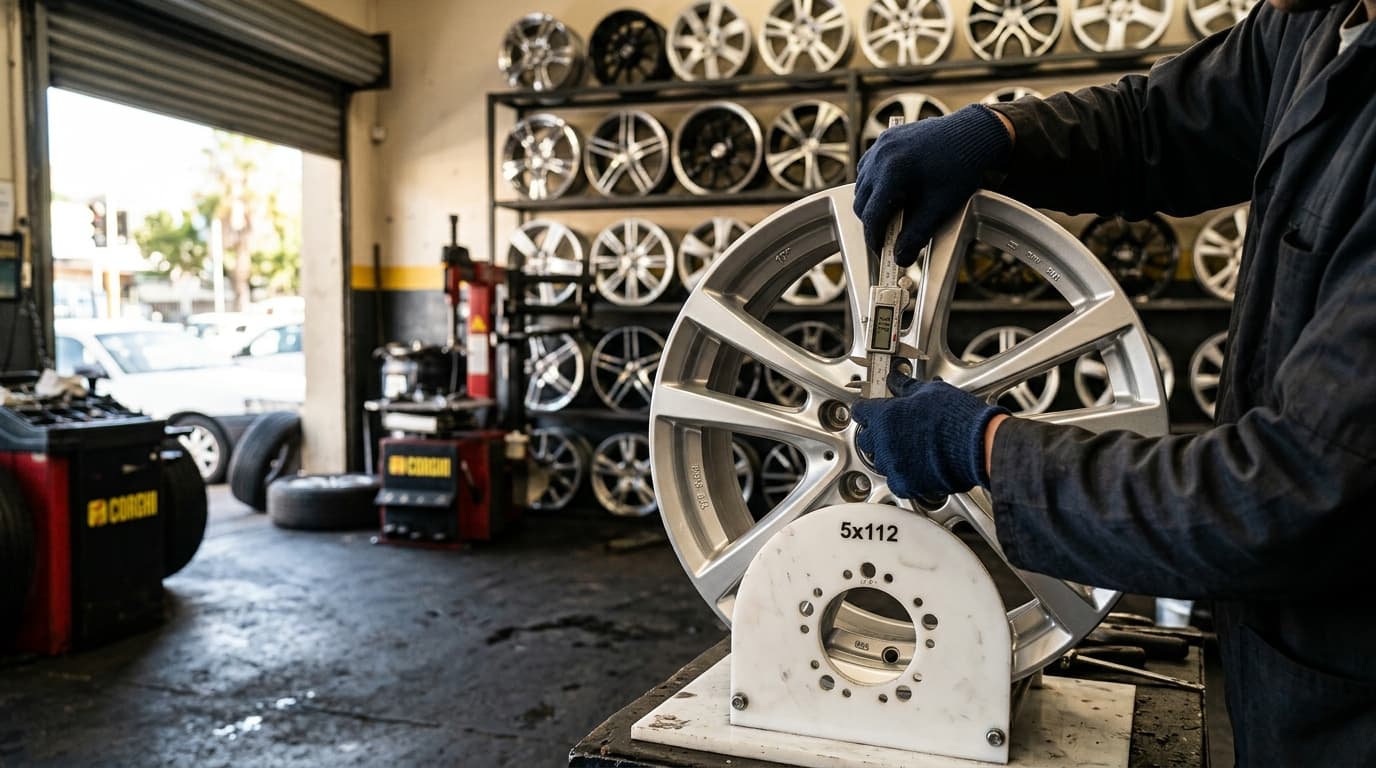
Choosing the Right Wheel Size for Your Car: A Cape Town Guide
Choosing the right wheel size for your car is one of those decisions that looks simple until you are standing in a fitment centre comparing two sets of mags that both claim to fit. Diameter, width, offset, bolt pattern and tyre choice all interact, and getting one number wrong can mean rubbing arches, a speedometer that lies, or a rim that cracks the first time you clip a Parow pothole.
This guide breaks the decision down the way our technicians at Speedline Mags explain it to customers every day: start with what the car was designed for, understand what changes when you deviate from it, and only then decide on a style. If you want the deeper technical background on the numbers themselves, our wheel sizes and fitment guide covers the measurements in detail.
Start With the Size Your Car Already Runs
Every vehicle leaves the factory with a wheel and tyre combination that engineers tested for clearance, load, braking and speedometer accuracy. That is your baseline, and it is printed in two useful places.
The tyre sidewall
Look at a tyre and you will see something like 225/45R17 91W. That reads as:
- 225 – section width in millimetres
- 45 – sidewall height as a percentage of the section width (the aspect ratio)
- R – radial construction
- 17 – wheel diameter in inches
- 91 – load index
- W – speed rating
The 17 tells you the wheel diameter. The 225/45 tells you roughly how wide the tyre is and how much sidewall you have. Together they define the overall rolling diameter, which is the number that actually matters for speedometer accuracy and clearance.
The vehicle placard
Open the driver's door and look at the jamb, or check the inside of the fuel flap. Most cars list recommended tyre sizes, sometimes a factory-approved optional size, and the pressures to match. This placard is the manufacturer telling you which sizes are safe. Anything outside it needs careful checking, not a guess.
For most modern passenger cars in South Africa, the placard will show a 17 or 18 inch option alongside a 16 inch base size. If your car lists two sizes, you already know the range the manufacturer is comfortable with.
What Actually Changes When You Go Up a Size
"Plus sizing" – going from a 16 to a 17 or 18 inch wheel – is the most common upgrade we see. The idea is to keep the overall wheel-plus-tyre diameter roughly the same while shrinking the sidewall.
If you go up one inch in wheel diameter, the tyre aspect ratio has to come down to compensate. A 205/55R16 and a 225/45R17 are close in overall diameter, which is why that pairing appears so often on cars like the VW Polo and Golf.
What you gain:
- Sharper steering response, because there is less sidewall to flex
- Better grip in dry conditions due to a wider contact patch
- A more purposeful look, especially on a lowered car
What you give up:
- Ride comfort, particularly over the coarse tar and expansion joints common on Cape Town's older roads
- Tyre cost, since larger low-profile tyres are more expensive and wear faster
- Kerb protection, because a thin sidewall cannot absorb the same impact before the rim takes the hit
There is a real limit to this. Beyond two sizes up from factory, you start fighting the suspension geometry you paid for. Our guide to low-profile tyres and rim damage explains what that trade-off looks like in practice on South African roads.
Width, Offset and Clearance
Diameter is only a third of the story. Width and offset decide whether the wheel actually clears your suspension, brakes and bodywork.
Width
Wheel width is measured in inches, usually written alongside the diameter, for example 17x7.5J. Bumping width up by half an inch is generally safe with the right tyre. Jumping from a 7 to a 9 inch wheel on the same car usually means arch work, liner trimming or rubbing on full lock.
Offset (ET)
Offset is the distance between the wheel's mounting face and its centreline, expressed in millimetres. Lower offset pushes the wheel outward, filling the arch. Higher offset tucks it inward. Manufacturers choose offset to keep the steering axis and bearing loads reasonable.
Two things to know:
- A wheel can have the correct bolt pattern and diameter and still be wrong on offset. This is the most common fitment mistake we see.
- Extreme low offset shortens wheel bearing life and can foul the brake caliper on performance models like the BMW 3 Series or Audi A4.
Bolt pattern (PCD)
The bolt pattern, or PCD, must match exactly – 5x112, 5x114.3, 5x120 and so on. There is no safe adaptor for daily driving on a heavy car. If you drive a German sedan or hatch, our breakdown of 5x112 bolt pattern cars in South Africa is a useful cross-check before you buy second-hand.
Centre bore and spigot rings
The centre bore centres the wheel on the hub. If an aftermarket wheel has a larger bore, you need a spigot ring, otherwise the wheel is located by the studs alone and will vibrate. It is a cheap part that many buyers forget.
Common Sizes on Popular Cape Town Cars
Here is a rough rule of thumb for what we see on the lift in Parow. Always confirm against your own placard.
- VW Polo and Polo Vivo – 15 to 17 inch, typically 6J to 7J wide, 5x100 or 5x112 depending on generation
- VW Golf 7 and 8 – 16 to 18 inch, 6.5J to 8J, 5x112
- Toyota Hilux and Fortuner – 17 to 18 inch, 7.5J to 8J, 6x139.7, with a much higher load requirement
- BMW 3 Series (F30, G20) – 17 to 19 inch, 7.5J to 8.5J, 5x120
- Mercedes-Benz C-Class – 17 to 19 inch, 5x112
- Ford Ranger – 17 to 18 inch, 6x139.7, load-rated rims only
Bakkies and SUVs deserve special caution. A Hilux or Ranger carrying a load or towing on a corrugated gravel road puts stresses through the rim that a passenger car never sees. Fitting a light, thin-spoke aftermarket rim rated for a hatchback is a genuine safety risk. Load rating matters as much as size.
Load Rating: The Number Most Buyers Ignore
Every wheel and tyre has a load rating. The tyre's load index (the 91 in 225/45R17 91W) tells you the maximum mass that tyre can carry. The wheel itself also has a rated load capacity.
On a Hilux with a canopy, a full tank, four adults and a trailer, you can easily exceed a passenger-car wheel's rating. The failure mode is not a slow leak – it is a cracked rim. If you drive a bakkie, an SUV or a fleet vehicle that works for a living, insist on wheels and tyres rated for the job. Talk to us about fleet wheel repair and fitment if you run multiple vehicles.
Potholes, Kerbs and the Reality of SA Roads
South African roads punish wheels in a specific way. Water sits in a pothole, the edge crumbles, and the resulting sharp lip is exactly what bends a rim. A wheel that survived a year in a European city can be buckled in a month here.
A few practical implications for size choice:
- More sidewall is more protection. If you commute on poorly maintained routes, a 17 inch wheel with a 50-series tyre will survive things an 19 inch wheel with a 35-series tyre will not.
- Check pressures monthly. Under-inflated tyres are the number one contributor to pothole rim damage. A tyre that is 20 percent low cannot protect the rim it sits on.
- Bent rims are repairable more often than people think. Our wheel straightening and bent rim repair guide walks through what can be saved, and our article on protecting wheels from pothole damage covers prevention in detail.
If you have already taken a hit, look for vibration through the steering wheel at 80 to 120 km/h, a visible wobble when the wheel is spun, or a slow pressure loss. Any of those means the wheel should be inspected on a balancing machine before your next long trip.
Does Wheel Size Affect Repair and Refurbishment Cost?
It does, mildly. Larger wheels take longer to strip, repair and refinish because of the surface area and the tighter tolerances around the spoke edges. A 19 inch diamond-cut wheel with a complex multi-spoke face costs more to refurbish than a simple 15 inch five-spoke. Damage type matters far more than size, though – a buckled rim is a buckled rim regardless of diameter.
For a realistic breakdown of what different jobs cost in South Africa, see our wheel repair cost price guide. The short version: repair is almost always cheaper than replacing an OEM wheel, and refurbishing a set of factory mags is often cheaper than buying a new aftermarket set.
Buying Second-Hand Wheels: A Checklist
Plenty of good wheels change hands in Cape Town. Plenty of bad ones do too. Before you pay:
- Confirm the PCD and offset – ask for a photo of the stamping on the back of the wheel.
- Spin the wheel or have it checked for runout. A wheel that wobbles on a balancer is bent, no matter how good the paint looks.
- Look for previous repairs. Weld lines near the bead seat, heavy filler under fresh paint, and mismatched paint between wheels are all red flags. Our guide on spotting a badly repaired alloy wheel shows what to look for.
- Check for corrosion around the bead – it causes slow leaks that only show up months later.
- Confirm centre bore and whether spigot rings are included.
- Budget for a refurbishment. Even a good used set usually needs a refinish to match. Our complete alloy wheel refurbishment guide explains the process from strip to powder coat.
After the Change: Balancing, Alignment and Pressure
Fitting new wheels is not the end of the job. Three things should happen afterwards:
- Balancing. Every wheel and tyre assembly must be balanced on a machine after mounting. If a fitment centre skips this on a large low-profile wheel, you will feel it.
- Alignment. Changing wheel width or offset shifts the geometry slightly and can change how the car tracks. A four-wheel alignment is cheap insurance, especially if the old wheels showed uneven wear. Our comparison of wheel alignment versus wheel balancing covers the difference if you are unsure which you need.
- Torque and re-torque. Wheels should be torqued to the manufacturer's spec with a torque wrench, not a rattle gun, and re-checked after 50 to 100 km.
Then keep an eye on them for the first few weeks. A slight vibration that appears after a wheel change usually means a balancing weight has come off, a spigot ring is missing, or a wheel is not sitting flat on the hub. None of those are things to live with.
When Bigger Is Not Better
We fit plenty of larger wheels, and we also talk customers out of them regularly. A bigger wheel is the wrong choice when:
- You commute daily on bad roads and value your suspension and your rims
- Your car is a workhorse – a bakkie, a panel van, a fleet vehicle
- The size you want requires stretched tyres, arch modifications or adaptors
- The wheels you like are not load rated for your vehicle
- You are chasing a look at the expense of ride quality your family will feel every day
The best wheel size for your car is the one that balances appearance with the conditions you actually drive in. For most Cape Town drivers, that means one size up from factory at most, with correct offset, correct load rating and a tyre with enough sidewall to survive a Northern Suburbs pothole.
Getting It Right the First Time
If you are unsure, have it checked rather than guessed. At Speedline Mags in Parow we fit, balance, straighten and refurbish wheels for drivers across Bellville, Durbanville, Table View, Goodwood and the wider Northern Suburbs. We will measure your existing setup, confirm what will and will not clear, and tell you honestly whether the size you want is a good idea for the way you use the car.
If your current wheels have already taken damage, we can assess them at the same time – a quick inspection catches buckling, cracks and bead corrosion long before they become a roadside problem. And if you simply want your existing mags looking factory-fresh again, our ultimate wheel care and maintenance guide shows how to keep them that way.
Contact Speedline Mags for a quote on wheel fitment, straightening, diamond cutting or powder coating. Bring your car in, or send us photos of the wheels and your tyre size, and we will come back with a straight answer and a clear price in rands. Getting the size right the first time is cheaper than fixing the consequences.