
Low-Profile Tyres and Rim Damage: Why SA Potholes Are a Risk
Low-profile tyres are one of the biggest reasons wheels end up on our workbench at Speedline Mags in Parow. They look fantastic, they sharpen up the handling, and on a smooth road they are a genuine upgrade. The problem is that South African roads are rarely smooth. When it comes to low profile tyres rim damage South Africa owners deal with every day, the culprit is almost always the same: a thin band of rubber that simply cannot absorb the shock of a pothole before the alloy takes the hit.
If you drive a VW Golf GTI, a BMW 3 Series, an Audi A4 or A5, or almost any modern performance or premium car in Cape Town, there is a good chance you are running 35, 40 or 45-series tyres. This guide explains exactly why those tyres put your rims at risk, which impacts do the most damage, and what you can do to keep your alloys straight and crack-free on our pothole-riddled roads.
What "Low-Profile" Actually Means
The number people call the "profile" is the aspect ratio printed on the sidewall. On a tyre marked 225/40 R18, the "40" means the sidewall height is 40% of the tyre's width. A 225/40 sidewall is roughly 90 mm tall. Compare that to an older 195/65 R15 fitment, where the sidewall is around 127 mm. That difference of 30 to 40 mm might not sound like much, but it is the entire crumple zone protecting your rim.
The lower the profile number, the less rubber sits between the road and the alloy. A 35 profile tyre rim damage risk is dramatically higher than a 55-profile setup, because there is barely any cushion left. Once that thin sidewall is fully compressed against the edge of a pothole, there is nothing left to give — so the rim flange bends, cracks or buckles instead.
Two things are happening at once when a car moves to bigger, lower-profile wheels:
- The wheel gets larger and heavier. An 18 or 19-inch alloy has more unsprung mass swinging into an impact.
- The tyre gets thinner. Less air volume and less sidewall means far less energy is absorbed before the metal is involved.
That combination is why performance fitments look great but need more care than the sensible 16-inch steel or alloy setup they replaced.
The Physics of a Pothole Impact
When your wheel drops into a pothole at speed, the leading edge on the far side of the hole acts like a blunt chisel. The tyre hits it first. On a tall sidewall, the rubber deforms, wraps around the edge and soaks up most of the blow — the tyre bulges, springs back, and the rim is often untouched.
On a low-profile tyre there is not enough sidewall to wrap. The rubber compresses completely in a fraction of a second and "bottoms out," pinching against the pothole edge. At that point the force is transmitted straight into the rim flange. Depending on the angle and speed, you get one of three outcomes:
- A flat spot or bend on the rim lip, where the flange is pushed inward.
- A buckle, where a section of the barrel deforms and the wheel no longer runs true.
- A crack, most common on cast alloys, where the metal simply fails at the point of impact.
Speed multiplies everything. The energy in an impact rises with the square of your speed, so hitting a pothole at 80 km/h delivers far more than double the punishment of hitting it at 40 km/h. This is exactly why low profile tyre pothole damage so often happens on open, faster roads and highways rather than in slow suburban traffic — drivers simply do not have time to react, and the impact energy is much higher.
South Africa adds two aggravating factors. First, our potholes are frequently deep with sharp, square edges rather than shallow and rounded. Second, they often appear after rain when they are hidden under water, so you cannot judge the depth or slow down in time. That is the perfect recipe for alloy wheel damage thin tyres simply cannot prevent.
Which Cars Are Most at Risk in Cape Town
Any car on low-profile rubber is exposed, but a few are regulars at our Parow workshop:
VW Golf GTI and R
The GTI and Golf R roll on 18 and 19-inch alloys with 35 and 40-series tyres. They are hugely popular across the Northern Suburbs, and the low, firm setup that makes them fun to drive is exactly what leaves the rims vulnerable. We see a lot of bent lips and buckles on these.
BMW 3 Series, 4 Series and M cars
BMW's staggered setups — wider wheels and tyres on the rear — mean the rear rims in particular take a beating. Run-flat tyres, common on BMWs, have stiffer sidewalls that transmit even more shock into the rim on a hard hit.
Audi A4, A5, S-line and RS models
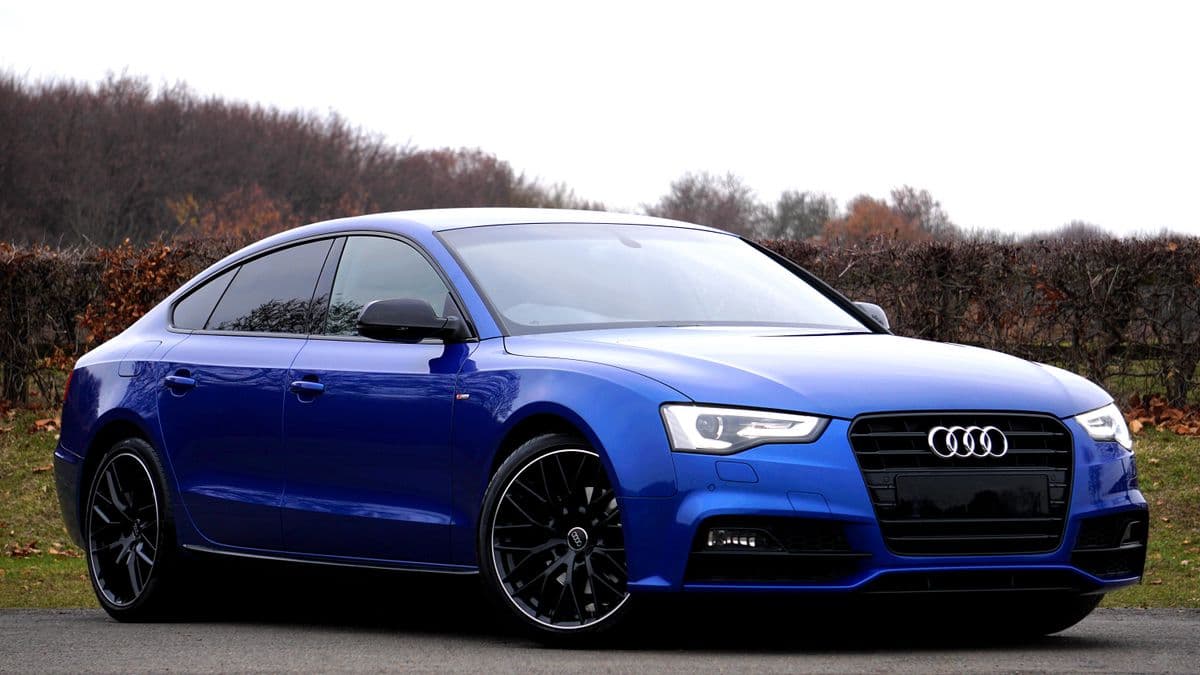
Audi's sportier trims sit on 19-inch wheels with very short sidewalls. The blue A5 in the photo above is a textbook example: gorgeous black alloys, almost no tyre sidewall, and a rim edge that is right in the firing line every time it meets a pothole.
Mercedes-Benz AMG line, and other premium fitments
AMG-line C-Class and similar models share the same story — big diameter, thin rubber, expensive alloys.
The pattern is clear. The cars people most want to protect are the ones most likely to need a repair. If you own one of these, understanding your fitment is worth a few minutes — our guide to wheel sizes and fitment breaks down what those numbers on your tyre actually mean.
Warning Signs You've Taken a Hit
Sometimes a pothole strike is obvious — a loud bang and an immediate pull. Other times the damage is subtle and only shows up over the following days. Watch for:
- A steering wheel vibration that appears or worsens at highway speed. This is a classic sign of a buckled or bent rim throwing the wheel out of balance. We cover the causes in detail in our article on wheel vibration at high speed.
- A slow puncture that keeps coming back. A bent rim flange stops sealing properly against the tyre bead, letting air escape.
- The car pulling to one side or feeling "off" through corners.
- Visible flat spots, scuffs or cracks on the rim edge when you crouch down and look.
- A tyre that keeps losing pressure even after being re-inflated.
If you spot any of these after a hard impact, get the wheel checked. A small bend caught early is a straightforward straighten. Left alone, it stresses the tyre bead, ruins your balance, and can turn into a crack.
Prevention: How to Protect Low-Profile Rims
You cannot fix South Africa's roads, but you can dramatically cut your risk. This is where a bit of discipline pays for itself many times over.
1. Keep Your Tyre Pressures Correct
This is the single most important habit. An under-inflated low-profile tyre has even less effective cushioning and bottoms out more easily — the rim hits the pothole edge sooner and harder. Over-inflation is not the answer either, because a rock-hard tyre transmits more shock and offers no give at all. Stick to the manufacturer's recommended pressure on the door-jamb sticker, and check it at least every two weeks. Cold mornings in the Northern Suburbs drop your pressures, so check when the tyres are cold.
2. Slow Down on Rough Roads
Because impact energy climbs with the square of speed, easing off from 80 to 50 km/h on a road you know is broken makes a genuine difference. If you regularly drive Voortrekker Road, the R300, or any stretch pockmarked after the winter rains, treat it with respect.
3. Look Ahead and Don't Brake on Impact
Scan the road surface, not just the car in front. If you cannot avoid a pothole, resist the instinct to brake hard right as you hit it. Braking pitches the car's weight forward and loads up the front wheels at the worst possible moment. It is usually better to be off the brakes as the wheel passes over the hole so the suspension can travel freely.
4. Never Straddle a Pothole You Can't See the Bottom Of
After rain, a water-filled pothole hides its depth. If you cannot safely change lanes, slow right down rather than guessing.
5. Consider Your Fitment
If you are constantly repairing rims, it is worth asking whether your setup suits your daily driving. A slightly taller sidewall — going from a 35 to a 40 series, for example, where the car allows it — buys you real protection with only a tiny change in look. For more on this trade-off, see our pothole damage prevention guide.
What to Do When Damage Happens
Even careful drivers get caught out. When it happens, the good news is that most low-profile rim damage is repairable — you rarely need to buy a new alloy.
Stop and assess safely. If the car is drivable and the tyre is holding air, get it home or to us. If the tyre is flat or the wheel is badly buckled, fit the spare or call for assistance rather than driving on it.
Get it inspected properly. At Speedline Mags we check the rim for bends, buckles and cracks — including hidden cracks that are not visible to the eye. A bent flange or a buckle can almost always be straightened on our machines and rebalanced to run true again. Our bent rim repair guide explains what is and isn't fixable.
Cracks need special care. A cracked alloy can sometimes be professionally welded and made safe, but only after proper assessment — a crack in the wrong place, or a poorly done weld, is a safety risk. We walk through this in our cracked wheel repair and welding safety guide. Never trust a crack repair to anyone who won't inspect it first.
Repair beats replacement almost every time. A new OEM alloy for a Golf GTI, BMW or Audi can run into many thousands of rand. A professional straighten and refinish is a fraction of that. Our wheel repair cost guide gives you realistic South African pricing so you know what to expect before you commit.
Low-Profile Tyres Aren't the Enemy — Neglect Is
None of this means you should rip off your alloys and go back to steelies. Low-profile tyres deliver the sharper steering and planted feel that make modern performance cars enjoyable to drive. The point is simply that they demand a bit more awareness on our roads. Correct pressures, sensible speed on rough surfaces, and a quick check after any hard impact will keep the vast majority of rims out of trouble.
And when a pothole does win the round — which, on South African roads, eventually happens to most of us — a bent or cracked rim is not the end of that expensive wheel. It is a repair.
Get Your Rims Checked at Speedline Mags
If you have hit a pothole, noticed a vibration, or you are fighting a slow puncture that won't go away, bring your car to Speedline Mags in Parow. We straighten, weld and refurbish alloy wheels for every make on the road — from Golf GTIs and 3 Series to Audi S-line and AMG fitments — and we will tell you honestly whether a wheel can be safely repaired.
Give us a call or send us your details for a quick assessment. We will get your low-profile rims straight, sealed and running true again — and get you back on the road with confidence.