
Audi Wheel Repair: A3, A4, Q5 Specialist Guide
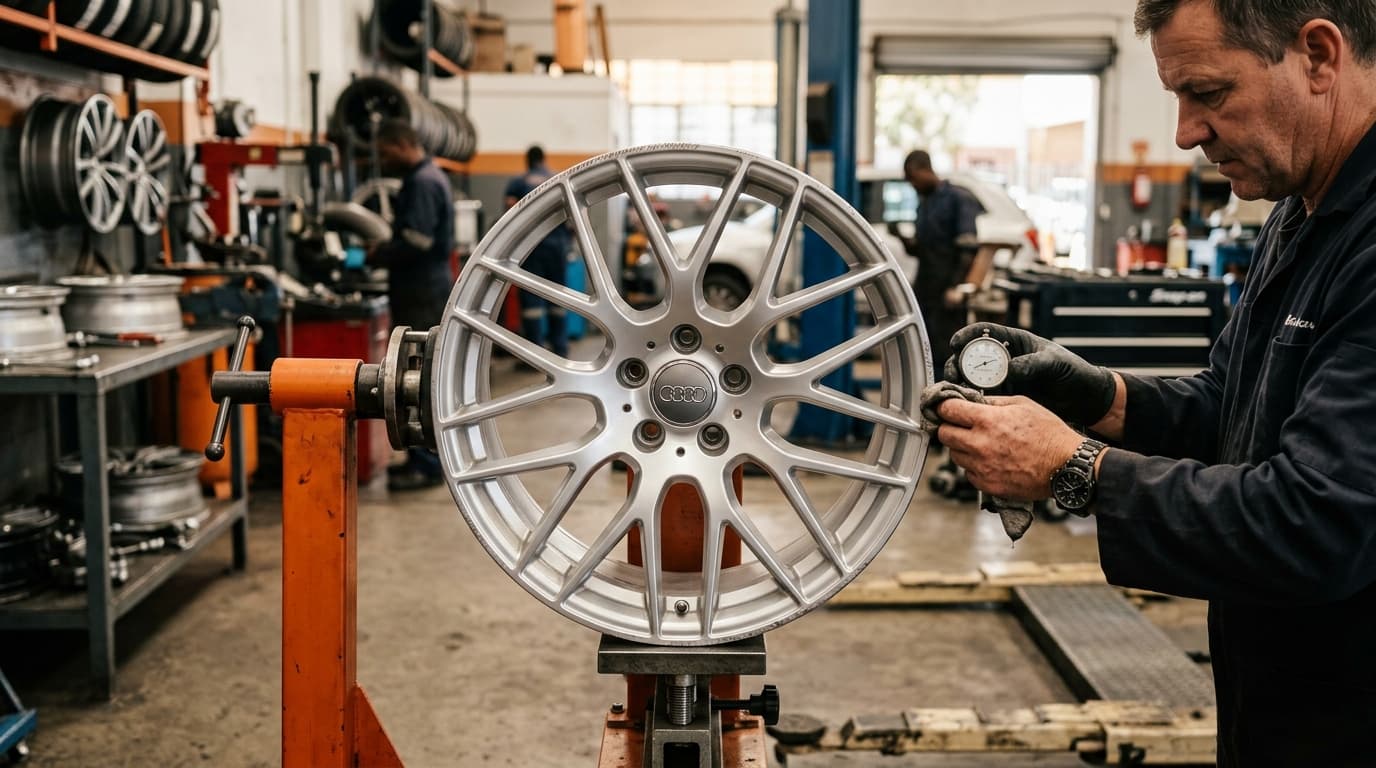
Audi alloys are part of the car’s character — multi-spoke designs, precision machining, and finishes that catch the light on the N1 morning run. They also take a hard hit from Cape Town kerbs, water-filled potholes, and tight parking bays in the Northern Suburbs. This audi wheel repair guide walks A3, A4, and Q5 owners through the damage we see most often, which repairs are safe, what refurbishment typically costs in ZAR, and how to keep OEM wheels looking factory-correct without rushing into expensive replacements.
Speedline Mags services Audi wheels daily from our Parow workshop — city A3 hatches, A4 sedans doing the Bellville commute, and Q5 family SUVs that live on the R300 and West Coast roads. German-car alloys need the right process: colour-matched powder coat where it belongs, diamond-cut wheel refurbishment where the face was machined, and honest structural assessment before any weld or straighten.
Why Audi Wheels Need Specialist Repair
Audi sits in the Volkswagen Group family, so PCD patterns, hub-centric rings, and finish systems overlap with related brands. That helps with parts availability — it does not make every workshop equally good at restoring an Audi face.
Soft outer lips and low-profile rubber
Many A3 and A4 trims ship with 17- to 19-inch alloys and relatively short sidewalls. The stance looks sharp; the cushioning does not. Clip a raised kerb outside Canal Walk or drop a wheel into a sharp hole on Voortrekker Road and the outer lip takes the scuff, flat spot, or crack first. Q5 models add vehicle weight on top of large diameters, so the same impact carries more energy into the rim.
Diamond-cut and two-tone factory finishes
Higher Audi trims frequently use diamond-cut or machined faces with tinted clear coat over a dark or contrast base. Stone chips, UV, and automatic car washes peel that clear layer and leave dull aluminium patches. Restoring the look means cutting the face true on a lathe, then applying a matching clear system — not a quick spray over the damage. A mismatched respray is obvious next to an untouched sister wheel on the same axle.
Hub-centric fitment and TPMS
Audi wheels are hub-centric. After repair or tyre work, the wheel must seat cleanly on the hub with the correct ring where required, and TPMS sensors must be handled carefully. A rushed fit shows up as vibration, ABS complaints, or a slow pressure warning a week later. If you already feel a shimmy above 100 km/h, read our notes on wheel vibration at high speed before assuming the tyres alone are at fault.
Audi A3 Wheel Repair: What Cape Town Owners Bring In
City parking and kerb rash
The A3 spends its life in multi-storeys, street bays, and narrow Northern Suburbs driveways. Light to moderate kerb damage on the outer rim is the daily special — clear coat and paint gone, soft aluminium rounded off. Cosmetic fill, shape, prime, and finish usually restores the lip without structural work.
Spoke scuffs and lacquer fade
Multi-spoke A3 designs catch trolley bumps and neighbouring car doors. Scuffed spoke edges and fogged lacquer respond well to careful prep and a matched topcoat. Full diamond-cut restore is reserved for faces that were factory-machined and have peeled across a large area.
Occasional buckles from sharp ramps
Steep driveway aprons and loading-zone lips can fold a soft outer or inner rim. Many A3 cast alloys straighten successfully when the metal has not cracked. After wheel straightening, we check runout and rebalance before the car leaves Parow.
Audi A4 Wheel Repair: Commuter Miles, Freeway Impacts
Pothole buckles on the N1 and R300
A4 owners covering daily kilometres between Bellville, Durbanville, and the city centre hit expansion joints and potholes at speed. Inner-lip buckles are common — harder to see than outer kerb rash, but they cause steering shake and uneven tyre wear. A hydraulic straighten plus balance often solves it when the barrel is intact.
Clear-coat peel on diamond-cut faces
Executive and S line alloys look premium until Cape Town UV and salt air lift the clear. Patching a peeled face with touch-up paint rarely blends. A proper diamond-cut cycle returns a uniform face; powder coating the barrel and spokes (where the factory design allows) protects the rest of the wheel.
Crack assessment after a hard hit
Hairline cracks on the outer lip after a buckle can be weldable on many cast Audi wheels when the crack is accessible and away from the hub. Cracks at stud holes or through a spoke into the barrel usually mean replacement. Our cracked alloy repair-or-replace guide explains the decision logic we use on the bench.
Audi Q5 Wheel Repair: SUV Weight, Bigger Diameters
Heavier loads, deeper gouges
The Q5 carries family weight, roof boxes, and weekend gear. A kerb kiss that would scuff an A3 can dig deeper metal out of a Q5 lip. Cosmetic repair still wins on cost versus a new OEM rim, but fill depth and structural checks matter more. For broader SUV habits, see SUV wheel care tips.
Off-camber roads and inner damage
West Coast and Winelands routes punish the inner rim. Drivers often notice a vibration or a slow leak long before they spot the bend. Inspect the inner barrel when you rotate tyres; catch buckled rim repair early and you avoid a ruined tyre.
Matching a set after one-corner damage
Q5 owners sometimes replace one wheel with an aftermarket or used OEM piece that does not quite match offset, finish, or load rating. Before you mix and match, read OEM vs aftermarket wheels. Refurbishing the damaged original usually keeps fitment, ABS behaviour, and visual match cleaner than a bargain rim from a classifieds listing.
Types of Damage We Repair on Audi Alloys
Kerb rash and cosmetic scuffs
Most common. Light rash is often a same-day or overnight cosmetic job. Deep gouges need fill and reshape, then colour and lacquer. Still typically a fraction of a new Audi OEM wheel price.
Buckles and bent lips
Hydraulic straightening restores many cast lips when no crack has formed. We measure lateral and radial runout, then balance with the tyre fitted. Driving on a bent rim flattens the tyre and stresses the suspension — fix the bend rather than chasing balance weights alone.
Cracks and weld decisions
Accessible lip cracks on cast wheels can be welded by a specialist who understands alloy chemistry and post-weld finishing. Hub-area cracks, spoke-root fractures into the barrel, and previously botched welds are replacement territory. Never treat welding as a DIY weekend job on a road wheel.
Corrosion and clear-coat failure
Brake dust, coastal moisture, and neglected washing etch lacquer and start white corrosion in the barrel. Early treatment and refinish stop the spread; advanced pitting may need aggressive prep or, in extreme cases, replacement. Prevention tips live in our wheel corrosion guide.
Slow leaks at the bead
A bent or corroded bead seat lets air escape slowly. Straightening, cleaning the seat, and correct tyre mounting often cures it. Persistent leaks after a clean mount deserve a dye or dunk test before you replace the tyre again.
Audi Wheel Repair Cost in Cape Town (ZAR Guide)
Prices vary with diameter, finish type, and damage depth. As a Cape Town workshop guide for 2026:
- Light cosmetic kerb rash (single wheel): typically from about R450–R900 depending on size and colour complexity
- Deep gouge with fill and full refinish: often R900–R1 800 per wheel
- Diamond-cut face restore: commonly R1 500–R2 800+ per wheel because of lathe time and clear-coat systems
- Straightening a buckle (no crack): roughly R600–R1 400 depending on severity and access
- Weld repair (where safe): quoted after inspection — structural work is never a fixed menu price
A new genuine Audi alloy can run several thousand rand per corner before tyre, sensor, and fitting. That is why thoughtful audi wheel repair so often beats replacement for single-corner damage. For broader SA pricing context, see our wheel repair cost guide and the repair vs replacement decision guide.
Diamond-Cut vs Powder Coating on Audi Wheels
Factory diamond-cut Audis need the face cut and cleared correctly. Powder coating suits barrels, spokes, and full-colour redesigns where the original face was painted rather than machined. Mixing the wrong process — powder over a machined face that should be cut, or a cheap wet paint over a peel — shows within months.
If you want a durable colour change rather than a factory restore, powder coating is the longer-wearing route for most solid colours. High-polish and show finishes have their own care needs; our high polish finish guide covers that niche.
When to Repair and When to Replace
Repair is usually the right call when:
- Damage is cosmetic or a mild-to-moderate buckle without cracking
- The wheel is OEM with correct offset, centre bore, and load rating
- Only one or two corners are affected and the rest of the set is sound
- Diamond-cut peel can be restored as a matched set or a careful single-wheel blend
Replacement is safer when:
- Cracks reach the hub, stud holes, or run through a spoke into the barrel
- Previous repairs have overheated or thinned the metal
- Runout cannot be brought into tolerance after straightening
- You cannot source a visual and dimensional match for a mixed set
Sister German brands follow similar logic — see our BMW wheel repair guide and Mercedes-Benz wheel repair notes if you run more than one badge in the driveway.
How the Speedline Mags Audi Repair Process Works
- Inspection: We assess lips, barrel, hub area, and finish type — diamond-cut, powder, or wet paint.
- Straighten if needed: Hydraulic correction with runout checks.
- Weld only when justified: Structural work after a clear go/no-go decision.
- Prep and finish: Fill, prime, colour match, or diamond-cut cycle with clear coat.
- Mount, balance, and road-ready check: TPMS handled carefully; vibration sources addressed before handover.
Drivers from Parow, Bellville, and the wider Northern Suburbs drop wheels in or book the car in for the day. Local context for the Bellville corridor is covered in our Bellville wheel repair guide.
Protecting Audi Alloys on Cape Town Roads
- Slow down for standing water — depth hides sharp edges
- Park a hand-width off the kerb in multi-storeys
- Wash brake dust regularly; do not let it bake into lacquer
- Avoid harsh acid cleaners on diamond-cut clear coats
- Inspect inner rims when you rotate or change tyres
- Fix vibration early rather than living with it for a season
Pothole strategy and prevention habits are expanded in protecting wheels from pothole damage. If you are unsure whether a mark is cosmetic or structural, use our signs your wheels need professional repair checklist, then get a workshop eye on it.
Audi Wheel Repair Near Parow: Why Local Matters
Shipping a wheel across town for a “cheap” respray often costs more once you add downtime, remounting, and a redo when the colour is wrong. A Parow-based specialist who sees A3, A4, and Q5 alloys weekly already knows the common finish codes, sensor pitfalls, and which buckles straighten cleanly. That experience shortens quotes and reduces surprises.
Porsche and other performance alloys in the same family of drivers sometimes share the workshop diary — our Porsche wheel repair guide covers that higher-spec end if you cross-shop brands.
Conclusion: Keep Your Audi Wheels Factory-Correct
Cape Town roads are hard on premium alloys, but most A3, A4, and Q5 damage is repairable when you catch it early and use the right process. Sensible audi wheel repair restores looks, preserves OEM fitment, and saves thousands of rand versus a full set of new genuine rims — especially when only one corner took the hit.
If your Audi is showing kerb rash, a mysterious vibration, clear-coat peel, or a slow leak at the bead, bring the wheel — or the car — to Speedline Mags in Parow. We will tell you plainly whether to repair, refinish, or replace, with pricing in ZAR and a finish matched to how the wheel left Ingolstadt.
Contact Speedline Mags to book an inspection or ask for a quote on your A3, A4, or Q5 alloys. Northern Suburbs drivers are welcome daily — let’s get your Audi rolling true and looking sharp again.