
Porsche Wheel Repair and Restoration
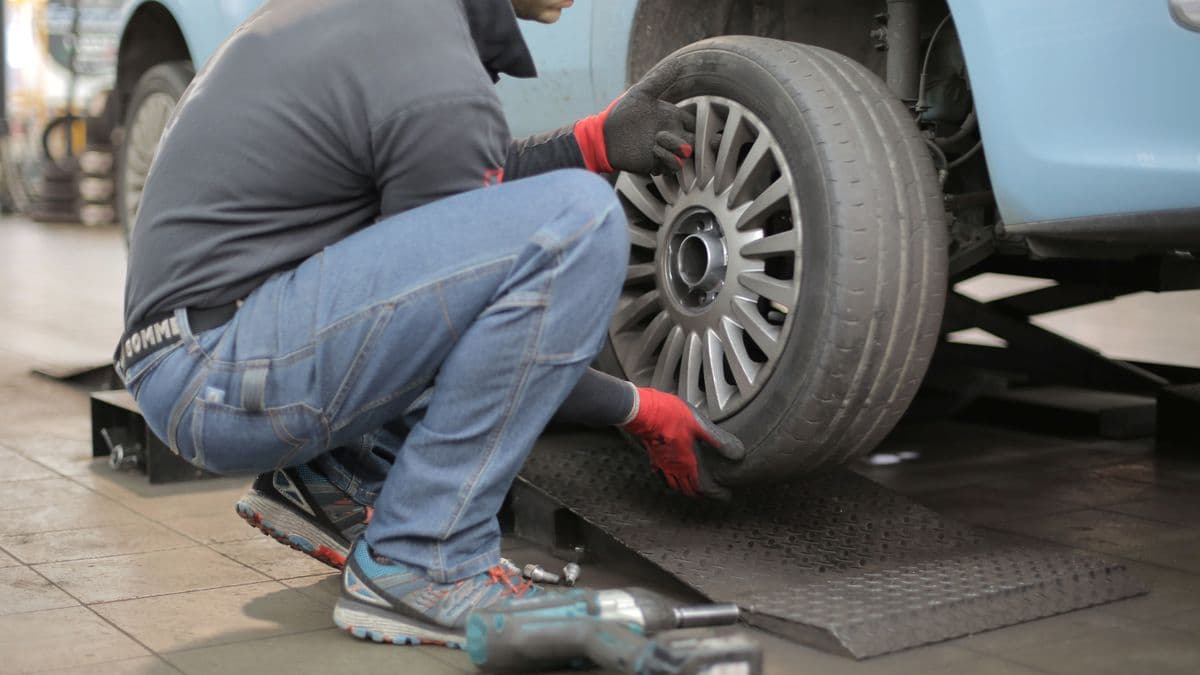
A Porsche wheel is not a cosmetic accessory — it is a load-bearing, heat-cycling, high-stress component engineered for a car that can corner at over 1.5 g and put 300 kW through two contact patches. That is exactly why Porsche wheel repair deserves more thought than a quick spray-and-pray touch-up. Whether you drive a 911 Carrera S through the Northern Suburbs, a Macan GTS in Durbanville, or a Cayman GT4 that spends weekends at Killarney, Cape Town's potholes, kerbs and coastal air will eventually take a toll on those rims.
This guide explains what makes Porsche wheels different, the damage we see most often in our Parow workshop, exactly how a proper restoration is carried out, what it costs in rands, and when replacement genuinely beats repair.
Why Porsche Wheels Are Different
Porsche has used an unusually wide spread of wheel technologies over the last three decades, and each one demands a different repair approach. Treating a forged GT3 rim the same way you would a cast Polo wheel is how expensive mistakes happen.
Forged and hollow-spoke construction
Most modern Porsche alloy wheels are forged rather than cast. Forging compresses the aluminium grain structure, producing a wheel that is lighter and significantly stronger for the same mass. The 911 Carrera S hollow-spoke wheel is a good example: the spokes are literally hollow inside, saving around 1 kg per corner over an equivalent solid design.
The upside is strength. The catch is that forged aluminium behaves differently under heat and pressure than cast aluminium. Welding a forged rim, or heating it indiscriminately before straightening, can locally alter its temper and create a soft spot. Repair on these wheels has to be done cold or with tightly controlled, low heat input.
On the extreme end, the 911 GT3 RS and certain RS models run magnesium wheels, while classic 911s and 944s still running around Cape Town use the iconic forged Fuchs. Magnesium is a specialist material that reacts aggressively to heat and moisture — it needs its own handling protocols, protective coatings and inspection regime. If your wheel is magnesium, tell the workshop before anything is touched.
Centre lock versus five-lug
911 Turbos, GT3s, GT4s and 911 S models fitted with the sports chassis use a central locking nut instead of five individual bolts. Centre-lock wheels are secured by a single nut torqued to roughly 600 Nm with a specific tightening sequence. Two consequences matter here:
- The wheel cannot simply be swapped onto a balancing machine with generic cones. Centre-lock rims require proper adapters so the wheel is centred on its bore, not squashed onto a tapered cone. A wheel balanced incorrectly will vibrate at 120 km/h regardless of how well it was refinished.
- The nut faces themselves suffer damage. Repeated impact-gun removal chews the nut's drive faces and, worse, the wheel's seating surface. Galling between the aluminium seat and the steel nut is common, and a liquid lubricant should never be applied to a centre-lock thread. Refinishing the nut and re-lapping the seat is part of a complete job.
Porsche fasteners use a ball seat
Porsche five-lug wheels use ball-seat (radius) lug bolts, not the conical seat used by most other manufacturers. This matters because corrosion, paint build-up, or a thick powder coat on the bolt seat can reduce the clamping surface. Over-sprayed bolt seats are a genuine safety issue, not a cosmetic one — a professional refit leaves the seats masked and clean. Offsets (ET) and widths on Porsche wheels are also model-specific, so if you are changing or adding a set, read our guide to wheel sizes and fitment first.
Finishes that are harder to reproduce
Porsche finishes range from simple satin black to GT Silver, Platinum Satin, Aurum, Neodyme and the machined-and-lacquered diamond cut look on Turbo and Sport Techno wheels. Many are multi-layer: a base colour, a machined face, a tinted lacquer, sometimes a clear anodised look. Reproducing them convincingly requires proper colour matching and, for diamond cut, a CNC lathe — not a hand-polished "close enough".
Common Porsche Wheel Damage We See in Cape Town
Kerb rash
By far the most frequent issue. Low-profile tyres up to 21-inch on a Macan, Cayenne or Taycan offer almost no sidewall protection, so a light scrape against a kerb while parking in Camps Bay, Sea Point or a Century City parking garage strips the lacquer and machines the rim lip. On diamond cut wheels this immediately exposes bare aluminium, which oxidises and spreads under the surrounding lacquer.
Pothole buckles and flat spots
The N1, N2, M3, Voortrekker Road and many suburban arterials in Bellville, Parow and Durbanville deliver a steady supply of sharp-edged impacts. A significant hit dents the inner or outer lip and, in worse cases, produces a flat spot that shows up as a vibration through the steering wheel at 100–140 km/h. If that sounds familiar, our breakdown of wheel vibration causes and fixes is a good diagnostic starting point. Buckled rims can normally be straightened — see how bent rims are fixed in this guide to wheel straightening.
Cracks from track use
Killarney generates real thermal and mechanical load. Repeated kerb strikes through the esses, combined with hot brakes, gradually fatigue aluminium at its weakest points — typically the spoke root or the transition from spoke to rim. Hairline cracks are genuinely dangerous: they are almost invisible from the outside until the wheel fails. Detecting them requires dye penetrant inspection or X-ray, plus careful cleaning before the wheel can be judged.
Lacquer failure and corrosion on machined finishes
Cape Town's winter rain and coastal salt air attack bare or thinly lacquered aluminium. Diamond cut and high-polish faces fail first, showing the classic white filiform corrosion that creeps under the surface. This is a common and fixable problem; our article on wheel corrosion causes and treatment covers the chemistry and the prevention.
Heavy-vehicle wear on Cayenne, Macan and Taycan
A Taycan Turbo tips the scales near 2.3 tonnes. Combine that mass with 21-inch wheels and 30-profile tyres, and both wheels and tyres work far harder than on a 911. We regularly see inner-lip deformation, bead-seat damage and tyre sidewall pinching on electric Porsches, all of which need to be assessed together with the wheel itself.
What a Proper Porsche Wheel Restoration Involves
A genuine restoration is a sequence, not a single operation. Skipping steps is where poor results and future failures come from.
1. Assessment and crack detection
Every wheel is cleaned, inspected under proper lighting and, for track or suspected-damage wheels, checked with dye penetrant or X-ray for cracks. Runout is measured to quantify how far the wheel deviates from true, both laterally and radially. You should receive a straight answer at this point: repairable, repairable with caveats, or replace.
2. Straightening
Bent lips and flat spots are corrected with controlled pressure applied gradually, with heat kept low on forged wheels. Over-straightening can work-harden a wheel or leave internal stress; done properly, the wheel ends up within original runout tolerance and holds air reliably.
3. Welding and metal build-up
Gouged lips and small cracks can be TIG welded using a compatible filler, then dressed back to profile. This is safe when the damage is in a non-critical area and the wheel is a conventional cast or forged aluminium design. It is not appropriate for structural cracks through a spoke root, for magnesium wheels, or for a wheel that has already been welded once. If you are weighing up the options, our guide to repair versus replacement walks through the decision properly.
4. Refinishing
Once the wheel is structurally sound and true, the finish is restored. Options include:
- Powder coating — durable, excellent for solid satin black, silver and custom colours, and very resistant to kerb rash and chemicals. See powder coating explained.
- Wet paint with clear coat — the only sensible route for exact factory colour matches and for tinted, metallic or pearlescent finishes such as Aurum or Neodyme.
- Diamond cutting — the machined face is re-cut on a CNC lathe, removing micro-metres of aluminium to recreate the original bright turned finish, then re-lacquered. Our specialist article on diamond cut wheel repair explains the tolerances involved. Note that diamond cutting can only be repeated a limited number of times before material thickness becomes a concern.
- Anodised-look treatments and satin clears — for Porsche finishes that are neither painted nor machined.
If you are comparing finishes, diamond cut versus powder coating sets out the trade-offs.
5. Balancing, TPMS and correct refitting
Finished wheels are balanced on equipment with correct centre-lock adapters, ideally with road-force analysis so that tyre and wheel runout are matched to minimise vibration. Tyre pressure sensors are refitted and tested. Bolt seats and centre-lock seats are cleaned and, where needed, lapped. Finally the wheel is torque-wrenched to spec — around 130–160 Nm for ball-seat five-lug Porsches, and about 600 Nm for centre lock — with a calibrated wrench, never a rattle gun at full send.
Typical Porsche Wheel Repair Costs in Cape Town (ZAR)
Prices depend heavily on wheel construction, finish type and damage severity. As a realistic guide:
| Service | Typical range per wheel | | --- | --- | | Kerb rash repair and repaint (single colour) | R1 200 – R2 500 | | Wheel straightening (buckle or flat spot) | R450 – R900 | | Crack or gouge welding | R950 – R1 800 | | Full refurbishment with diamond cut and re-lacquer | R2 000 – R3 500 | | Centre-lock nut refinish and seat clean-up | R650 – R1 200 | | Forged or magnesium restoration | Quoted individually, from R4 000 |
Sets of four usually attract a discount, and we price honestly: if a wheel is not economically repairable we will say so rather than take the job. Our broader wheel repair cost guide for South Africa puts these figures in context against replacement prices.
Repair or Replace? A Porsche-Specific View
Replacement makes sense when a genuine Porsche wheel has a crack through a spoke root, when it has been welded before, when magnesium has structural damage, or when the wheel is bent beyond the point where straightening can restore safe runout. Beyond safety, there is a long-term argument for repair: a repaired original Porsche wheel keeps the car's originality and the correct offset, load rating and appearance, which matters for resale and for forged versus cast wheel performance characteristics.
A full set of genuine 911 or GT wheels can run into the tens of thousands of rands, and matching a single discontinued rim to a set is often harder than repairing the original. For most cosmetic damage and moderate bends, restoration is both cheaper and better.
Protecting Porsche Wheels in Cape Town
- Inspect the lacquer annually, especially on diamond cut faces. A small stone chip that lets moisture under the lacquer becomes a spreading corrosion patch within one winter.
- Fit proper mudflaps or PPF on the inner lip if you spend time on gravel or badly maintained farm roads outside Durbanville and Stellenbosch.
- Avoid acid-based wheel cleaners, which etch anodised and machined surfaces. A pH-neutral shampoo, a soft brush and a ceramic coating are far kinder — see our complete wheel care guide.
- Drive potholes smart. Brake before, not in, and never take a hidden pothole at full travel. Our pothole damage prevention guide covers technique and protection.
- Check torque and centre-lock nuts after any tyre shop visit or track day. Loose fasteners cause far more expensive damage than a kerb rash ever will.
- Treat track days as a service interval. After Killarney, clean the wheels, inspect for cracks, check for pad deposit build-up and re-torque. Our guide to signs your wheels need professional repair lists the early warnings worth acting on.
Why Cape Town Porsche Owners Use Speedline Mags
We are a wheel-only specialist workshop in Parow, serving Bellville, Durbanville, Table View, Somerset West and the wider metro. Our workshop is equipped for the specifics of Porsche work: CNC diamond-cutting capability, a controlled powder coating line, colour matching for factory Porsche codes, correct centre-lock balancing adapters, and calibrated torque equipment. We understand that ball-seat bolts, forged hollow-spoke wheels and magnesium rims each need a different approach, and we inspect before we quote. If your car is not drivable or you would rather not risk the trip, we also offer mobile wheel repair across Cape Town for assessments and many cosmetic jobs. Local clients in the northern suburbs can also read about our work in Parow and Goodwood.
Conclusion
Porsche wheel repair is a technical discipline, not a cosmetic afterthought. The right outcome comes from correct assessment, crack detection, careful straightening with controlled heat, appropriate welding, an accurate finish that matches the factory look, and correct balancing and torque on refit. Done properly, a repaired Porsche wheel can be indistinguishable from new, stay true, and hold its finish for years.
If your Porsche wheels have kerb damage, a buckle, lacquer failure or you simply want them assessed before your next Cape Town track day, get in touch with Speedline Mags. Send us photos of the damage on WhatsApp, or bring the car to our Parow workshop for a free, no-obligation assessment and a clear written quote in rands. We will tell you honestly what is repairable, what is not, and what it will cost to restore your wheels to the standard a Porsche deserves.