
Understanding Wheel Offset and Fitment
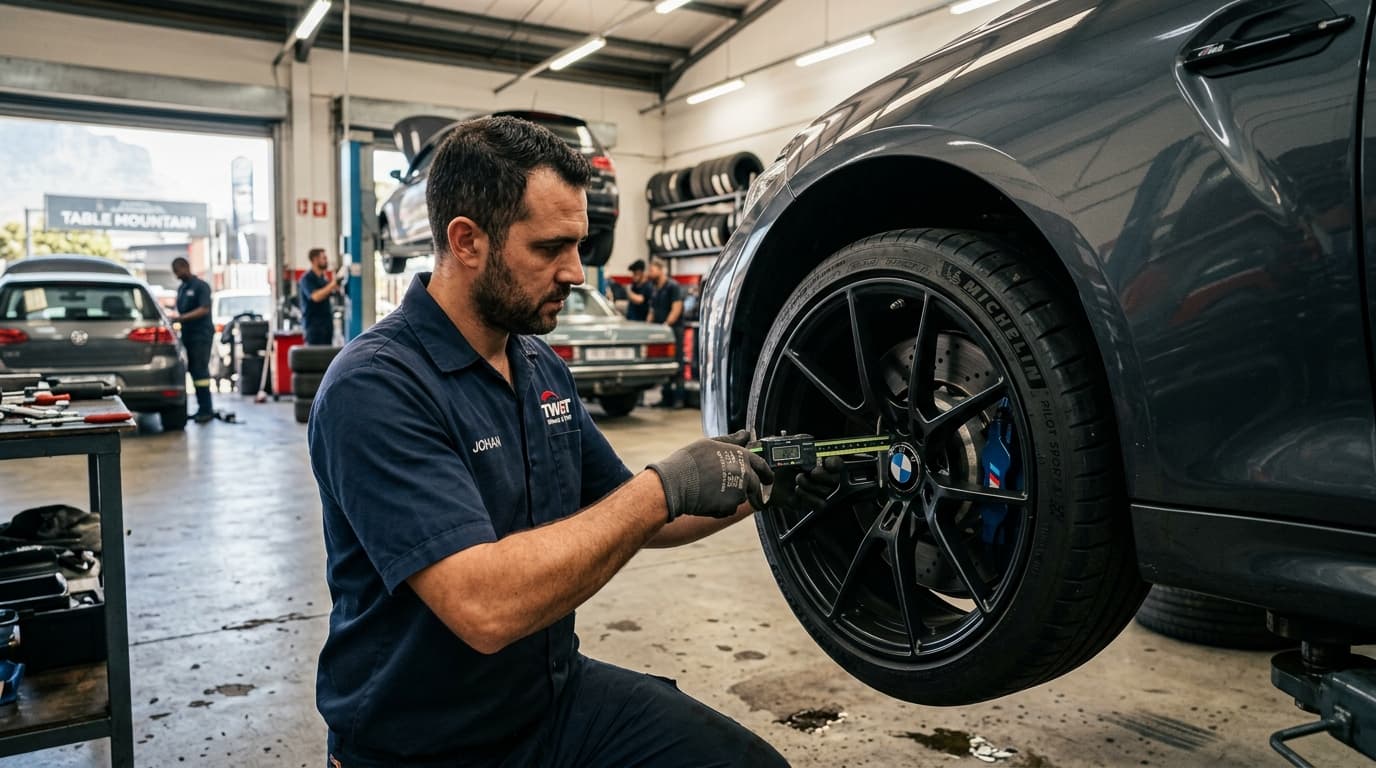
Understanding Wheel Offset and Fitment: Why ET Matters More Than Looks
If you have ever bought a set of aftermarket mags that "looked right" and then discovered they rubbed the arch on full lock, you have already met the most misunderstood number on a wheel: offset. A solid wheel offset fitment guide is less about fashion and more about geometry. Offset decides where the wheel sits in the arch, how much load your bearings and ball joints see, and whether your steering still feels the way the manufacturer intended.
At Speedline Mags in Parow we see this every week. A customer brings in a VW Polo, BMW 3 Series or Toyota Hilux with brand-new wheels that will not clear the strut, or a bakkie that suddenly tramlines on the N1 because the scrub radius changed. Diameter and width get all the attention in adverts. Offset is the quiet number that either makes the fitment work or quietly wrecks it.
This guide focuses on offset and real-world fitment for South African roads. For the broader size stack (diameter, width, PCD and centre bore), start with our wheel sizes and fitment guide, then come back here for the ET decision.
What Wheel Offset Actually Is
Offset is the distance, in millimetres, between the wheel's mounting face (the flat that bolts against the hub) and the centreline of the wheel. It is stamped on most alloy wheels as ET followed by a number — for example ET35, ET42 or ET20. ET comes from the German Einpresstiefe, which literally means insertion depth.
There are three practical cases:
- Positive offset – the mounting face sits toward the outside of the wheel. Most modern front-wheel-drive cars and many SUVs use relatively high positive offsets so the wheel tucks neatly under the arch and clears MacPherson struts.
- Zero offset – the mounting face is on the centreline. Rare on road cars, more common on older designs and some off-road wheels.
- Negative offset – the mounting face sits toward the inside of the wheel, pushing the rim outward. Common on deep-dish styles, some 4x4s and track-oriented setups.
A higher ET number pulls the wheel inward. A lower ET number pushes it outward. That single relationship is the core of every fitment conversation.
A quick mental model
Imagine the hub as a fixed point. The wheel is a drum bolted to that point. Offset tells you how much of the drum hangs outboard versus inboard of the bolt face. Change ET by 10 mm and you have moved the entire tyre contact patch 10 mm sideways relative to the car. Do that on both sides and the track width of the vehicle changes by 20 mm.
Why Offset Changes How the Car Drives
Wrong offset is not only a clearance problem. It changes the relationship between the tyre's contact patch and the steering axis.
Scrub radius and steering feel
When you push the wheel outward (lower ET), scrub radius usually increases. On Cape Town's crowned roads and uneven tar, that can show up as:
- Heavier or darty steering at low speed
- More kickback through the wheel when you clip a pothole
- A tendency to follow ruts and grooves on freeways
Pull the wheel too far inward (higher ET) and you can lose clearance around the strut, brake caliper or inner arch liner. Steering may feel nervous in the opposite direction, and the tyre can kiss the liner under compression.
Bearing and suspension load
Every millimetre of track change alters the lever arm on the hub bearing. Modest changes within the manufacturer's envelope are fine. Aggressive deep-dish fitments on a daily driver that already sees potholes in Bellville and Parow accelerate bearing wear and can stress lower control arm bushes. If you want longevity more than stance, stay close to OEM offset.
Stability under load
Bakkie and SUV owners feel this when towing or carrying tools. A Hilux or Ford Ranger with wheels pushed too far out can feel busier on corrugated gravel. The opposite problem — wheels tucked too far in — can reduce the feeling of plantedness in crosswinds. Fitment is a compromise between clearance, load and how you use the vehicle.
How to Read OEM Offset and Stay Safe
Before you order wheels, find the factory numbers.
Where to look
- Existing wheel stamp – remove a wheel and check the inner face. You will usually see something like
7.5Jx17 ET42plus the PCD. - Door placard and handbook – tyre size is listed more often than ET, but service manuals and reputable fitment databases list OEM offset ranges.
- Dealer or specialist measurement – if stamps are worn off, a workshop can measure offset with a straight edge and ruler.
OEM is your baseline, not a fashion suggestion. If your Polo left the factory on ET45–ET51 wheels, dropping straight to ET20 for a flush look is a large geometry change, not a subtle tweak.
Safe change ranges
As a practical rule used in many Cape Town workshops:
- ±5 mm from OEM – usually low risk if width is similar
- 5–12 mm change – often workable with care, test-fit required
- More than 12–15 mm – expect clearance checks, possible spacers or arch work, and altered steering feel
These are guidelines, not guarantees. Brake package, suspension design and tyre width all matter. A BMW with big M Sport brakes is less forgiving than a lightly optioned hatchback.
Offset, Width and Tyre Size Work as a Set
You cannot choose ET in isolation. Width and tyre section change how much rubber sits inboard and outboard of the rim.
Wider wheels need thoughtful ET
If you go from a 7J to an 8J wheel and keep the same ET, you have added roughly 12.5 mm of lip on each side of the centreline. That extra width eats clearance. Many fitment specialists drop ET slightly when increasing width so the extra metal does not pile up against the strut. Others keep ET and accept a more tucked look. Both approaches can work — the wrong combination is keeping a low ET on a much wider wheel and hoping the arch liner will somehow move.
Tyre section stretch and clearance
A 225 tyre on an 8J rim sits differently from a 225 on a 7J. Stretched fitments change the sidewall profile and can buy a few millimetres of outer clearance, at the cost of comfort and puncture resistance. On South African roads with broken edges and sudden potholes, aggressive stretch is a poor daily-driver choice. Our notes on protecting wheels from pothole damage apply doubly when the sidewall is already compromised.
Plus sizing still needs correct ET
Moving from 16 to 17 or 18 inch wheels for looks is common. Keep overall rolling diameter close, then confirm that the new wheel's ET still clears the caliper and strut at full lock and full bump. Size guides help with diameter; offset decides whether the larger wheel physically fits. See also choosing the right wheel size for your car.
Common Fitment Mistakes We See in Cape Town
Buying on looks alone
Online photos hide ET. Two wheels can share the same diameter and spoke design with completely different offsets. Always ask for the stamped ET, PCD and centre bore before paying a deposit.
Mixing offsets across an axle
Running different offsets left to right, or staggered setups without understanding scrub changes, creates uneven tyre wear and odd steering. If you want staggered widths (common on some BMWs), use the manufacturer's staggered ET pairings or a verified fitment sheet.
Spacers as a first resort
Spacers effectively reduce offset. A 15 mm spacer on an ET45 wheel behaves like roughly ET30. Quality hub-centric spacers with correct stud length can be legitimate. Cheap plate spacers on elongated studs are a safety problem. If you need more than a small spacer to make wheels fit, you bought the wrong wheels.
Ignoring centre bore and PCD
Offset will not save a wheel with the wrong bolt pattern. PCD must match. Centre bore should match or be adapted with proper spigot rings so the wheel is hub-centric. Lug-centric fitment on a daily driver often shows up later as vibration — something we cover when diagnosing wheel vibration at high speed.
Assuming bakkie wheels are universal
Hilux, Ranger, Navara and D-Max offsets are not interchangeable just because the diameters look similar. Load rating, PCD and ET all differ by generation. Measure twice.
Brand Snapshots: What Cape Town Drivers Usually Run
Exact numbers vary by year and option pack, so treat these as orientation, not a shopping list.
- VW Polo and Golf – typically high positive offsets; flush aftermarket looks often drop ET more than owners expect, and GTI/R brake packages are tighter. Confirm ET before copying a set — see our VW Polo and Golf wheel repair guide.
- BMW 3 Series, X3 and X5 – sensitive to bearing loads and brake clearance; copy the OEM ET for that chassis where possible (BMW wheel repair guide).
- Toyota Hilux and Fortuner – load rating matters as much as ET; lower-offset off-road wheels change scrub and stone-throwing into arches (Toyota Hilux wheel issues).
- Mercedes-Benz – high positive offsets with strict centre-bore needs; deep-dish replicas that ignore ET often rub (Mercedes refurbishment guidance).
How to Measure Offset Yourself
If stamps are gone, measure roughly at home, then confirm at a workshop: lay the wheel face-down, place a straight edge across the inboard flanges, measure down to the mounting pad, then compare to half the overall width. Workshop gauges remove the ambiguity. A five-minute check at Speedline Mags is cheaper than a set of wheels that do not fit.
Test-Fitting: The Step People Skip
Even perfect spreadsheet numbers deserve a physical check.
- Mount one front wheel and turn the steering lock to lock with the car on the ground and then with weight transfer simulated if possible.
- Check strut, spring, liner and caliper clearance.
- Bounce the corner or turn under load if safe to do so.
- Check the rears for leaf spring, fuel filler and inner arch clearance on bakkies.
Only then torque the rest of the set and book a wheel balance plus alignment check. Offset changes can reveal that tracking was already marginal.
Damaged Wheels and Offset: A Hidden Link
Bent or cracked wheels sometimes show up after an offset change because the new geometry put more shock into the rim lip. Low-profile tyres plus lower ET plus Cape Town potholes is a common failure pattern. If a wheel is already buckled, fixing fitment without repairing the rim only masks part of the problem. See buckled rim repair and repair versus replacement.
Refurbishment does not change ET, but poorly done repairs can affect how the wheel seats on the hub. That is one reason a professional alloy wheel refurbishment should include a check that the mounting face is true.
Pricing Context in ZAR
Wrong offset is expensive even when the wheels were a bargain. Returning incorrect aftermarket sets can cost R1,500–R5,000+ once courier and restocking are counted. Quality hub-centric spacers typically run R800–R2,500 per axle. Arch liner damage and premature tyre wear add up quietly. Professional repair of kerb-rashed or buckled OEM wheels is usually far cheaper than replacing a full set — see our wheel repair cost guide. An hour of fitment checks before purchase is the cheapest insurance available.
A Practical Checklist Before You Buy Wheels
- Confirm OEM diameter, width, ET, PCD and centre bore for your exact model year.
- Decide your goal: OEM+ look, mild flush, off-road clearance, or track stance.
- Choose width and tyre size that keep overall diameter sensible for speedometer and gearing.
- Pick an ET within a safe window of OEM for that goal.
- Verify brake and strut clearance from a trusted fitment database or specialist.
- Insist on hub-centric mounting and correct torque.
- Balance and align after fitment.
- Re-check clearance after the first 100 km of mixed Cape Town roads.
If you are still deciding between repairing existing OEM wheels and buying new aftermarket pieces, repair is often the better geometric choice because you keep the offset the car was designed around. That is a major reason repair can beat replacement for daily drivers in Parow, Bellville and the wider Northern Suburbs.
Conclusion: Treat Offset as a Safety Spec
A proper wheel offset fitment guide ends where good workshop practice begins: measure, compare to OEM, change deliberately, and test-fit. Offset is not a styling slider. It is a safety and durability specification that decides clearance, steering behaviour and how your bearings cope with South African roads.
If you are unsure about the ET on a set you are about to buy, or you already have wheels that rub, vibrate or sit oddly in the arch, bring the vehicle and the wheels to Speedline Mags in Parow. We will measure offset, check fitment against your chassis, and tell you straight whether the setup is safe to run, needs spacers, needs different wheels, or whether repairing your original mags is the smarter move.
Get the geometry right once, and every drive after that feels the way the car was meant to feel.