
Forged vs Cast Alloy Wheels: Which Is Stronger?
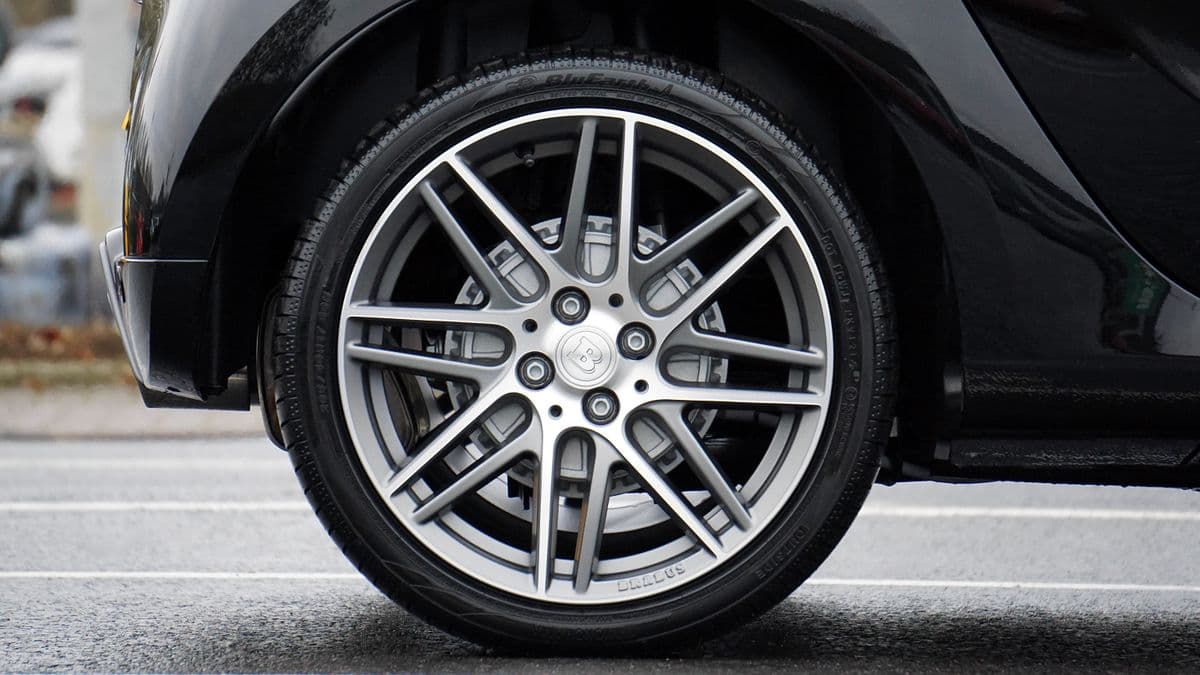
Ask any wheel specialist which is stronger in the forged vs cast alloy wheels debate and you'll get the same short answer: forged. Ask why, and whether it matters for your car, and the answer gets far more interesting — because the honest truth is that most drivers in Cape Town are better served by a good cast wheel than a cheap forged one.
Both wheel types are made from aluminium alloy. The difference isn't the metal. It's how that metal is shaped, and what that shaping does to the internal grain structure of the material. That single manufacturing difference is what decides how your wheel behaves when the tyre finds a pothole on Voortrekker Road at 60km/h.
At our Parow workshop we see both types come through the doors every week, and the damage patterns are genuinely different. This guide explains why.
How Cast Alloy Wheels Are Made
Casting is the older, simpler and vastly more common process. Molten aluminium alloy is poured or drawn into a mould shaped like the finished wheel, allowed to cool and solidify, then machined to final tolerances.
There are three main variations, and the differences matter:
Gravity Casting
Molten alloy is simply poured into the mould and gravity does the work. It's the cheapest method and produces the heaviest wheels, because the metal needs extra thickness to hit strength targets. Porosity — tiny air pockets trapped as the metal cools — is most common here. Budget replica wheels are almost always gravity cast.
Low-Pressure Casting
The alloy is pushed into the mould under positive pressure instead of just falling in. This produces a denser, more consistent structure with fewer voids, allowing thinner sections and less weight for the same strength. The overwhelming majority of OEM wheels fitted to cars sold in South Africa — your VW Polo, Toyota Hilux, BMW 3 Series — are low-pressure cast.
Flow Forming (Rotary Forged)
This is the clever middle ground. The wheel starts as a low-pressure cast blank, then the barrel is spun at speed while rollers press and stretch the metal outward into its final shape. That stretching compresses and aligns the grain structure in the barrel — the part of the wheel that takes the most impact — giving properties closer to forging at a fraction of the cost.
Note the marketing trap: "rotary forged" is a flow-formed cast wheel. It is a genuinely good product, but it is not a forged wheel.
How Forged Alloy Wheels Are Made
Forging starts with a solid billet of aluminium alloy — no melting, no pouring. That billet is heated and then squeezed into shape under enormous pressure, typically thousands of tonnes, before being machined down to the final design.
The metal is never liquid during forming. It is pushed, and that changes everything at the microscopic level.
When aluminium solidifies from a liquid it forms randomly oriented crystal grains with weak boundaries between them. When you force solid metal to flow under pressure, those grains elongate and align themselves along the direction of the stress. The result is a denser material with essentially no porosity and a grain structure that runs continuously through the wheel rather than stopping at random boundaries.
The practical outcome: a forged wheel can be roughly 20–30% lighter than a cast equivalent while still being stronger. That's not a small margin, and it's why forged wheels dominate motorsport and high-end performance cars.
Forged vs Cast Alloy Wheels: The Real-World Differences
Here's what those manufacturing differences translate to on actual South African roads.
Strength and Impact Behaviour
Forged wheels are stronger, but the more useful distinction is how they fail. Because forged alloy is more ductile, a forged wheel struck hard tends to bend and deform before it cracks. A cast wheel, with its more brittle grain structure, is more likely to crack or shatter at the same impact energy — often at the spoke junction or the inner barrel where stress concentrates.
This is a real safety and cost difference. A bent wheel usually holds air long enough to get you home. A cracked one may not. It also affects what we can do for you afterwards, which we'll come back to.
Weight
Lighter wheels reduce unsprung mass — the weight not supported by the suspension springs. Less unsprung mass means the suspension can react faster to road surface changes, which improves ride quality, grip over broken tarmac and braking response. It's also rotating mass, so it marginally helps acceleration and fuel consumption.
Is it noticeable? On a track day car or a sharp-handling hot hatch, yes. On a Hilux doing the school run and the N1, honestly not much.
Cost
This is where the argument usually ends for most buyers. Forging requires a huge press, expensive tooling and far more machining time, and much of that billet ends up as swarf on the workshop floor. A set of genuine forged wheels typically runs several times the price of a comparable cast set — often in the R30,000+ bracket for a quality branded set, against R8,000–R15,000 for good cast wheels in the same size.
For most Cape Town drivers, that difference buys a lot of tyres, servicing and the occasional wheel repair.
Design Freedom
Casting wins here. Molten metal fills complex mould geometry easily, so intricate multi-spoke designs, deep concave profiles and fine detailing are cheap and easy to produce. Forged designs are constrained by what a press and CNC machine can practically shape, which is why forged wheels often have cleaner, simpler spoke patterns.
Which Should You Actually Buy?
Skip the specs sheet for a moment and answer this honestly: what do you do with the car?
Choose cast (or flow-formed) if you're a daily driver, the car is a normal road car, you're replacing a damaged OEM wheel, or you want a specific look without a five-figure spend. Low-pressure cast and flow-formed wheels from reputable manufacturers are genuinely strong, well-tested products. Millions of them survive worse roads than ours every day.
Choose forged if you do track days, you're running significantly wider or larger wheels where weight is climbing fast, you have a heavy performance car with serious power and braking loads, or you simply want the best and the budget allows.
Avoid cheap unbranded replicas entirely. This is the more important warning. A poorly gravity-cast replica with high porosity is the weakest wheel you can put on a car, and we see the results — cracks appearing from impacts that a decent OEM wheel would have shrugged off. Fitment matters too; if you're buying non-OEM, read our guide to wheel sizes and fitment first.
If you're still weighing alloy against the alternative on a workhorse vehicle, our alloy vs steel wheels comparison covers that decision separately.
What This Means for Wheel Repair
This is where the forged vs cast alloy wheels question stops being academic and starts affecting your wallet, and it's the part most buying guides leave out.
Straightening
Forged wheels straighten well. The ductile, aligned grain structure tolerates being pressed back into true without the metal fracturing, and results are generally excellent. Cast wheels can also be straightened successfully — we do it constantly — but the process demands more care, controlled heat and an honest assessment of how far the metal has already been worked. Push a brittle cast wheel too aggressively and you create the crack you were trying to avoid. Our wheel straightening guide covers the process in detail.
Cracks and Welding
Cast aluminium can be welded, but porosity in the parent metal complicates it — trapped gas contaminates the weld pool and can leave the repair weaker than intended. Forged material, being dense and void-free, generally welds more predictably.
In both cases the location of the crack matters more than the wheel type. Cracks in the inner barrel are often repairable. Cracks running through a spoke or across the mounting face usually are not, regardless of how the wheel was made. We explain where the line sits in our cracked wheel repair and welding safety guide.
Refinishing
Here the two are essentially equal. Powder coating, painting and diamond cutting all work on either construction, and the choice is about the finish you want rather than the wheel's origin. See diamond cut vs powder coating if you're deciding.
One caveat worth knowing: if a forged wheel has a specialist multi-piece construction with a bolted barrel and centre, refinishing may require disassembly. Tell us upfront and we'll plan for it.
The Repair-or-Replace Maths Flips
Because a genuine forged wheel might cost R8,000–R12,000 to replace individually, repairing it is almost always the sensible call. A common cast wheel with readily available used stock changes that calculation. We work through it properly in our repair vs replacement decision guide.
The South African Reality Check
Our roads are hard on wheels. Pothole damage is the single most common reason wheels arrive at our Parow workshop, and no manufacturing process makes a wheel immune. A forged wheel hit hard enough at the wrong angle will still bend.
What actually protects your wheels, in rough order of effectiveness:
- Tyre sidewall height. This is the big one. A 17-inch wheel with a taller sidewall has far more cushion between the rim and the road than a 20-inch wheel with a rubber band tyre. Going up two wheel sizes will damage more wheels than any casting process will save.
- Correct tyre pressure. Under-inflated tyres let the rim bottom out on impacts a properly inflated tyre would absorb. Check monthly.
- Reading the road. Obvious, but effective — especially on known problem stretches in the Northern Suburbs after winter rain.
Our guide on protecting wheels from pothole damage goes deeper, and the ultimate wheel care guide covers ongoing maintenance for either type.
Quick Summary
| | Cast | Forged | |---|---|---| | Strength | Good | Best | | Weight | Heavier | 20–30% lighter | | Failure mode | Cracks more readily | Bends before cracking | | Cost | R8,000–R15,000/set | R30,000+/set | | Design options | Extensive | More limited | | Best for | Daily driving, most cars | Track use, performance builds |
For the vast majority of drivers in Cape Town, a quality low-pressure cast or flow-formed wheel is the right answer. Forged is better in absolute engineering terms — that isn't in dispute — but "better" and "worth it for you" are different questions.
Talk to Speedline Mags
Whether your wheels are forged, cast or flow-formed, we can tell you exactly what condition they're in and what can safely be done about them. We straighten bent rims, repair cracks where it's safe to do so, and refinish wheels in powder coat, custom colours and diamond cut — and we'll tell you honestly when a wheel is beyond saving rather than sell you a repair that shouldn't be made.
We're based in Parow and serve drivers across Bellville and the Northern Suburbs, Goodwood and Parow Central, Durbanville, Brackenfell and the wider Cape Town area.
Not sure whether your wheels are forged or cast, or whether that damage is repairable? Bring them in or send us photos — contact Speedline Mags and we'll give you a straight assessment.