
Wheel Refurbishment Near Me: How to Find a Trusted Local Specialist
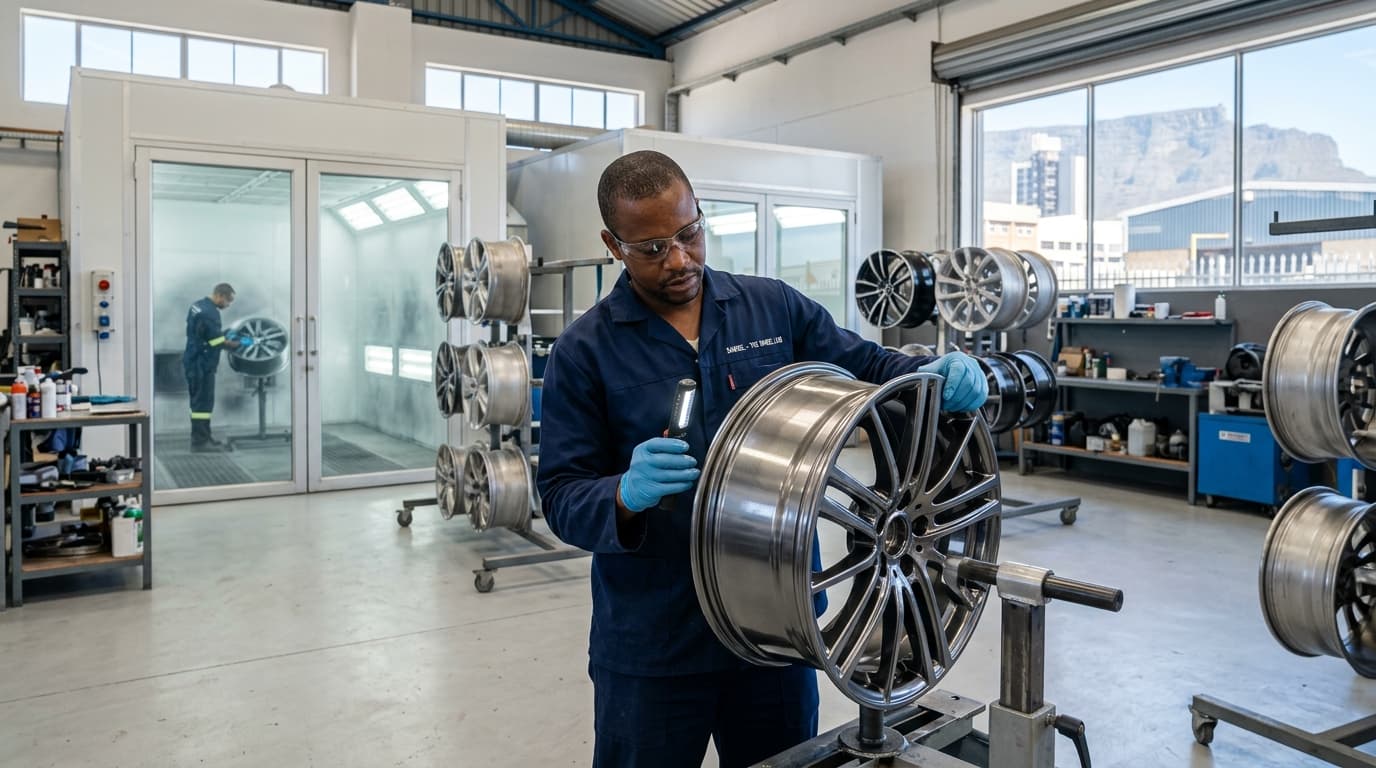
When your alloy wheels start looking worse for wear — scuffed from a kerb, pitted from pothole damage, or just dulled by years of brake dust and Cape Town's coastal air — the temptation is to type "wheel refurbishment near me" and go with whoever comes up first. That approach can work out fine. But it can also end with poorly painted wheels that start peeling within six months, or worse, structurally compromised rims that weren't properly inspected before being dressed up and returned to you.
This guide gives you everything you need to find a genuinely trusted wheel refurbishment specialist — what the process should actually involve, the right questions to ask, red flags that should make you walk away, and how to tell whether a quote represents real value or a shortcut waiting to happen.
What Wheel Refurbishment Actually Involves
True alloy wheel refurbishment is a multi-stage process. Many people don't realise how involved it is when done properly, which is why it's easy to get caught out by operators who skip steps.
Step 1: Structural Assessment
Before anything cosmetic happens, a reputable specialist should assess the structural integrity of your wheel. This means checking for cracks, stress fractures, and significant bends or buckles. A cracked wheel is not a candidate for refurbishment — it's a safety issue. Any shop that jumps straight to stripping and painting without this inspection is cutting corners you shouldn't be comfortable with.
Step 2: Stripping the Old Finish
All existing paint, lacquer, and coating must be completely removed before refurbishment begins. This is typically done via chemical stripping, sandblasting, or a combination of both. Partial stripping — where the old finish is just keyed (scuffed) and painted over — is a common shortcut. It looks fine initially but leads to peeling and bubbling far sooner than a properly stripped wheel.
Step 3: Repairs to the Surface
Once stripped, the bare metal should be inspected again in detail. Kerb damage, scuffs, and shallow corrosion are repaired at this stage using specialist filler, shaping tools, and sanding. The goal is to restore the wheel's profile before any primer touches it.
Step 4: Priming
A proper etch primer is applied first to promote adhesion and protect the bare metal. After the etch coat, a high-build filler primer is applied and sanded to achieve a perfectly smooth surface. Rushing through this stage is one of the most common causes of a substandard finish.
Step 5: Paint Application
The colour coat is applied in controlled conditions — ideally a dust-free spray booth. Multiple thin coats are far better than one heavy coat. A proper spray booth is not optional for quality work; it's the difference between a finish that stays pristine and one that shows orange peel texture, dust nibs, and runs within a few weeks.
Step 6: Lacquer and Curing
A high-quality clear lacquer topcoat protects the colour and provides gloss and durability. After lacquering, the wheel needs adequate curing time — either air-dried or oven-cured at the right temperature. Oven curing produces a harder, more durable finish. If you're quoted a turnaround so fast there's no time for proper curing, that's a red flag.
Optional: Diamond Cutting
For diamond-cut finishes — where the face of the wheel is machined to a bright, mirror-like cut before lacquering — a CNC lathe is required. This is a specialist service and not every refurbisher offers it. If your wheels have a factory diamond-cut finish, you'll want to confirm the shop has the equipment and experience to replicate it. Our guide on diamond-cut wheel repair and restoring the factory finish goes into more detail on this process.
Questions to Ask Before You Book
A reputable wheel refurbishment specialist will have no problem answering these questions. If you're met with vague answers or impatience, take note.
1. Do you strip wheels completely before refinishing?
The answer should be yes. If they mention "respraying over the existing coating" or describe a process that doesn't involve full stripping, ask why. There are very limited cases where this is acceptable — fresh factory-condition wheels with no adhesion issues — and this won't describe most wheels coming in for repair.
2. Do you have a spray booth?
A dust-free, temperature-controlled spray booth is essential for professional results. Ask to see it if you're visiting the premises. A spray booth isn't just nice to have — it's a basic indicator of whether the operation takes quality seriously.
3. What primer system do you use?
You don't need to understand the chemistry in detail, but a professional will be able to tell you they use an etch primer followed by a filler primer. If they can't describe their primer system, they may not be applying one properly.
4. How do you handle curing?
Ask whether wheels are oven-cured or air-dried. Oven curing is superior, but well-controlled air drying with appropriate curing time can also produce excellent results. The problem is when there's insufficient time for either — wheels returned same-day are almost certainly not fully cured.
5. Do you offer a warranty on the finish?
A confident, reputable shop will back their work. A 6-12 month warranty against peeling, bubbling, or delamination under normal use is reasonable. No warranty offered? That tells you something about their confidence in the result.
6. Can you check for structural damage before you start?
Any good refurbisher will do this as standard. If they seem surprised by the question, that's a concern. If they confirm they'll assess and inform you of any structural issues before proceeding, that's the right answer.
Red Flags to Watch For
Not every "wheel refurbishment near me" search result is created equal. Here are the warning signs that should prompt you to keep looking.
Extremely Low Pricing
Quality wheel refurbishment in South Africa costs money because it involves time, materials, and equipment. Pricing that seems too good to be true almost always reflects shortcuts: skipped primer coats, no spray booth, insufficient curing, or poor-quality paint. Our wheel repair cost guide for South Africa gives you a realistic benchmark for what proper work should cost.
Promises of Unrealistically Fast Turnaround
A single wheel done properly — stripping, repair, primer, paint, lacquer, curing — takes time. If a shop is quoting you a same-day turnaround on four wheels, they're not doing it properly. You can sometimes get a single wheel done fast by a specialist who manages their workflow efficiently, but four wheels in four hours is a shortcut operation.
No Physical Workshop Address
Mobile refurbishment exists and can be legitimate for touch-up work, but full wheel refurbishment done from the back of a van is extremely unlikely to produce quality results. A proper setup requires a spray booth, a compressor, stripping equipment, and curing facilities. Always prefer a business with a verifiable physical address and premises you can visit. If you're in Cape Town's Northern Suburbs, check our location guides for Bellville and surrounds and Table View and Blouberg.
Reviews That Don't Mention Specifics
Generic positive reviews that say things like "great service, fast, cheap" without any specifics about the work quality are easy to fake and hard to trust. Look for reviews that mention the type of finish, whether the repair held up over time, or specific detail about the process. Negative reviews that mention peeling or bubbling within months are a serious warning sign.
Refusing to Show You the Process or Premises
A legitimate workshop will be comfortable letting you see where your wheels will be worked on. If a refurbisher is evasive about their setup or refuses to explain their process clearly, treat that as a significant red flag.
How to Evaluate Quotes
Getting multiple quotes for wheel refurbishment is sensible, but price alone isn't the right way to compare them. Here's how to evaluate what you're actually being quoted for.
Clarify What's Included
Ask each business to specify: Is full stripping included? How many primer coats? What paint brand? Is a spray booth used? Is lacquering included? Is there a warranty? Two quotes at different prices may actually be for entirely different scopes of work.
Consider the Finish Type
Standard powder coating and spray painting are different processes with different outcomes, price points, and appropriate use cases. Diamond-cut refurbishment is more expensive and requires specialist equipment. Make sure you're comparing like-for-like. Our breakdown of diamond cut vs powder coating for wheels explains the differences clearly.
Factor in Turnaround Time
If you're getting your daily driver refurbished, turnaround time matters practically. But don't let urgency push you toward a low-quality job. A reputable specialist managing their workflow efficiently can often accommodate reasonable timelines without compromising quality.
Assess the Communication
A specialist who takes the time to explain the process, asks about your wheels before quoting, and talks through options is far more likely to do quality work than someone who gives you a number and moves on. Professionalism in the consultation stage is usually reflected in the work.
Alloy Wheel Refurbishment Near Me: Cape Town Northern Suburbs
If you're searching for mag wheel refurbishment near me in the Cape Town Northern Suburbs area — including Parow, Bellville, Durbanville, Table View, or surrounding areas — Speedline Mags is based in Parow and services the broader Northern Suburbs and beyond.
We handle the full refurbishment process in-house: structural assessment, complete stripping, surface repair, professional priming, spray-booth paint application, and lacquer finishing. Our team works on everything from daily drivers to prestige vehicles, including BMWs, Mercedes-Benz, Volkswagen Polos and Golfs, Toyota Hiluxes and Fortuners, and more.
For location-specific information on our service coverage, visit our guides for Durbanville wheel refurbishment and Somerset West and Strand wheel repair.
Protecting Your Wheels After Refurbishment
Once you've invested in a proper refurbishment, protecting that finish makes sense. A few practices will significantly extend the life of your new finish:
Wash regularly and correctly. Brake dust is acidic and will attack wheel paint over time. Washing your wheels with a pH-neutral wheel cleaner — not a general all-purpose detergent — keeps the finish in better condition. Our full guide on alloy wheel care and maintenance covers this in detail.
Apply a wheel sealant. A specialist wheel sealant or ceramic coating applied after refurbishment adds a protective layer that makes cleaning easier and slows the degradation of the finish.
Drive attentively near kerbs. Kerb damage is the most common reason refurbished wheels come back for repairs. Being mindful when parking — especially in Cape Town's tighter urban areas — goes a long way. If you do catch a kerb, it's better to get it addressed early than to let the damage worsen.
Watch for pothole damage. Cape Town's roads have improved in some areas but potholes remain a consistent hazard. Pothole impacts can cause structural damage and can crack or bubble a fresh finish. Knowing how to protect your wheels from pothole damage helps you drive defensively.
Final Thoughts
When you search for wheel refurbishment near me, you deserve to get a result that's actually trustworthy — not just the business with the biggest advertising budget. Knowing what the process should involve, which questions to ask, and what red flags to avoid puts you in a far stronger position to make a good decision.
The right specialist will be transparent about their process, confident enough to back their work with a warranty, and willing to assess your wheels structurally before touching them cosmetically. That level of care is the difference between a refurbishment that lasts years and one that starts failing within months.
If you're in the Cape Town area and want a no-obligation assessment of your wheels, contact the Speedline Mags team for a quote. We're based in Parow and work with customers across the Northern Suburbs and greater Cape Town.