
Wheel Colour Change Guide: Custom Finishes for Your Alloy Wheels
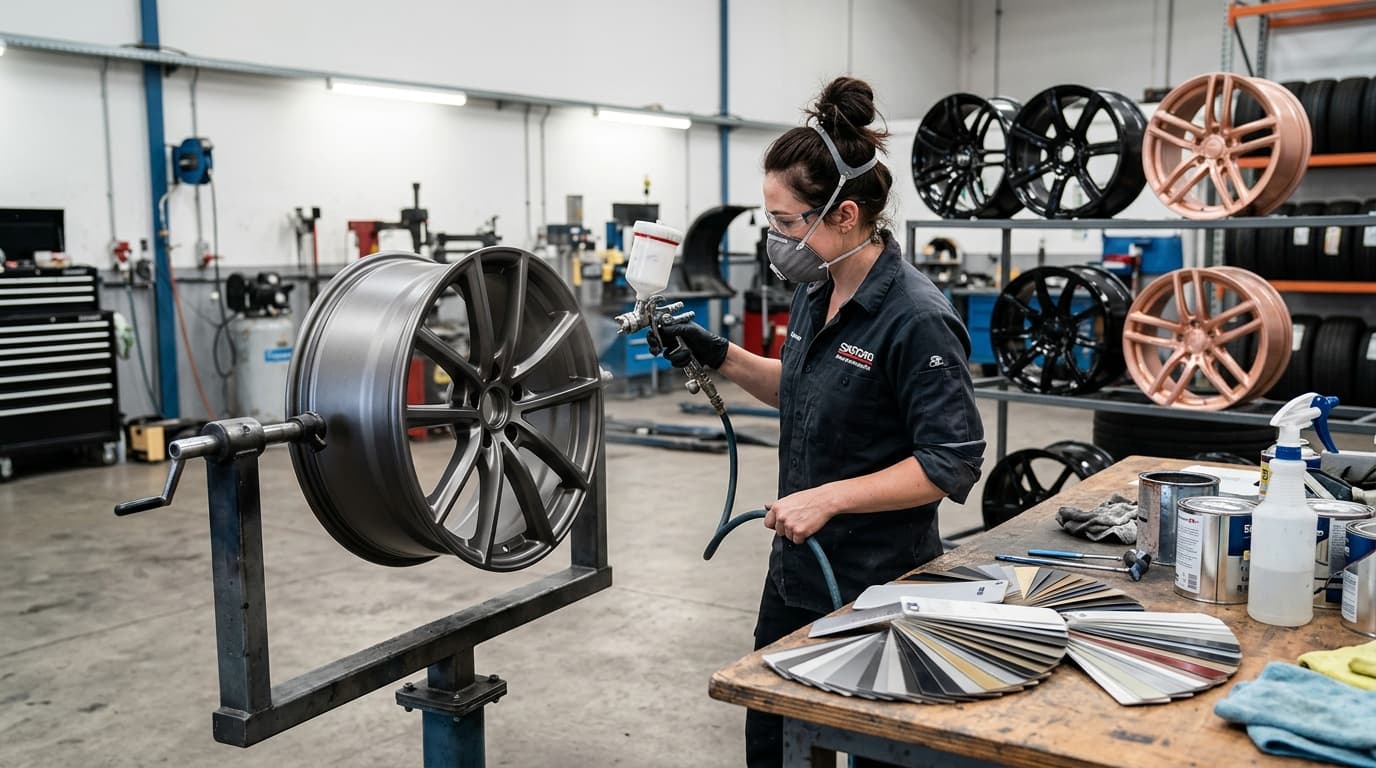
Changing the colour of your alloy wheels is one of the most impactful modifications you can make to your car — and it doesn't require a full respray or expensive new rims. Whether you're after a sleek gloss black, a head-turning rose gold, or a subtle satin gunmetal, a professional wheel colour change in South Africa can transform your car's look for a fraction of what new wheels cost.
At Speedline Mags in Parow, Cape Town, we handle wheel colour changes for everything from a VW Polo to a BMW X5. In this guide, we'll walk you through every finish option, the process behind a proper colour change, what it realistically costs, and what to watch out for when choosing a shop.
Why Change Your Wheel Colour?
Your factory wheels were painted to suit a broad market — not necessarily your taste. A colour change lets you:
- Personalise your build without spending on new rims
- Restore faded or peeling OEM finishes that look tired
- Match a new car wrap or body colour
- Repair corrosion or kerb damage at the same time as a colour refresh
- Increase resale appeal with a clean, consistent finish
Many Cape Town drivers go black or dark gunmetal — those finishes hide brake dust brilliantly and stay looking clean longer. Others opt for something more striking. Either way, a colour change done right will outlast a cheap respray by years.
Finish Options: What's Actually Available
Gloss Black
The most popular choice by a wide margin. Gloss black suits almost every car — from a Toyota Hilux bakkie to a Porsche Cayenne. It's dramatic, clean, and pairs well with nearly any body colour. The trade-off: fingerprints and minor swirl marks are visible on a perfectly clean gloss surface. Regular washing keeps this in check.
Satin Black
Satin (sometimes called semi-gloss) gives you the drama of black without the mirror-like reflection. It hides light surface marks better than gloss, and has a modern, premium feel. Very popular on sports-oriented builds and lowered hatchbacks.
Matte Black
True matte is a flat, non-reflective finish. It's striking but demanding — matte coatings cannot be machine polished, so any scratches require a respray. Not recommended for daily-driven vehicles in Cape Town's pothole-heavy suburbs unless you're disciplined about washing.
Gunmetal and Dark Grey
A classic in the enthusiast community. Gunmetal sits between silver and charcoal, often with a subtle metallic flake. It reads as premium without being as aggressive as black, and complements factory body colours far better than silver OEM finishes. Available in gloss, satin, and matte variants.
Hyper Silver / Brushed Silver
A step up from the standard silver most cars come with. Hyper silver has a brighter, slightly warm tone that mimics machined billet aluminium. It works particularly well on German cars — Audi, BMW, and Mercedes alloys that were originally diamond-cut often suit a hyper silver powder coat when the lathe finish has started to peel.
White and Light Grey
Polarising but effective. White wheels look striking on blacked-out or dark-bodied cars and have been trending on bakkies and SUVs. Light grey is more understated and sits close to OEM on many European vehicles.
Rose Gold and Bronze
These warm-toned finishes have moved from niche to mainstream in the last few years. Rose gold looks particularly good on black, white, or grey body paint. Bronze is slightly darker and earthier — popular on lifted 4x4 builds. Both are available as gloss or satin.
Two-Tone Finishes
Two-tone work involves masking and applying two separate colours — typically a dark barrel with a lighter face, or a polished face with a coloured barrel. The process is more labour-intensive and costs more, but the result is genuinely custom. If you've seen wheels with a black outer rim and a brushed silver spoke face, that's a two-tone application.
For a deeper comparison of two specific finish types, see our guide on satin vs gloss wheel finishes and our breakdown of diamond cut vs powder coating.
Tinted Clear Coat
Not technically a colour — but tinted clear coats add a subtle warm gold, smoke, or bronze tone over the existing wheel, preserving the machined or polished look while shifting the colour slightly. Ideal for OEM diamond-cut wheels where you want a custom touch without changing the finish type.
Powder Coating vs Wheel Painting: Which Is Right for a Colour Change?
This is the most important decision in any wheel colour change project.
Powder Coating
Powder coating involves electrostatically applying a dry powder to the wheel, then curing it in an oven at around 200°C. The result is an extremely hard, chip-resistant finish that bonds to the metal at a molecular level.
Advantages:
- Superior durability — lasts 5–10 years with proper care
- Consistent colour with no runs or sags
- Wide range of RAL and custom colours
- Environmentally cleaner than liquid paint (no solvents)
Limitations:
- Requires complete wheel strip and prep
- Wheels must be disassembled from the car
- Some intricate textures are harder to achieve vs liquid paint
Powder coating is the standard for quality wheel colour changes in Cape Town. For a full breakdown of the process, see our powder coating wheels guide.
Liquid Wheel Paint / Respray
A skilled painter can achieve excellent results with liquid automotive paint, particularly for metallic finishes or very specific colour matches. However, it's more vulnerable to chipping than powder coat and requires a clear coat over the top.
Liquid paint is often used for repairs to sections of a wheel, or for two-tone finishes where different areas need different sheens or colours.
Avoid: aerosol wheel paint kits from hardware stores. These have no real durability, peel within months, and require re-doing properly — meaning you end up paying twice.
The Wheel Colour Change Process at Speedline Mags
Here's exactly what happens when you bring your wheels in for a colour change:
1. Assessment and Strip
Wheels are removed from your vehicle and stripped of tyres. All existing paint, powder coat, or lacquer is removed — either chemically, by bead blasting, or by sanding. This step is non-negotiable. Painting over an old finish is how peeling happens.
2. Surface Preparation
Any damage found during stripping — kerb marks, minor corrosion, hairline cracks — is repaired at this stage. Surface prep is the most labour-intensive part of a quality job. The wheel is cleaned, degreased, and prepared to accept primer or powder.
3. Priming (if applicable)
Powder coat doesn't always require a separate primer, but liquid paint applications do. A self-etching or zinc-phosphate primer bonds to the bare metal and provides corrosion resistance.
4. Colour Application
Powder is electrostatically applied and then oven-cured, or liquid paint is sprayed and allowed to flash off between coats. Two-tone work requires masking between the application of each colour.
5. Clear Coat (for liquid paint)
A UV-resistant automotive clear coat is applied to protect the colour layer. Powder coats are typically formulated with gloss or satin built in, so a separate clear isn't always needed — though a clear powder over a colour coat is used for a high-gloss result.
6. Reassembly and Balancing
Tyres are remounted and balanced before the wheels go back on your car.
Wheel Colour Change Cost in South Africa (2026)
Prices vary based on wheel size, complexity of the finish, and the amount of prep work required. These are realistic ranges for the Cape Town market:
| Service | Price Range (ZAR) | |---|---| | Single colour powder coat (per wheel) | R500 – R900 | | Full set of 4 (standard 17–18") | R2,000 – R3,500 | | Two-tone finish (per wheel) | R900 – R1,500 | | Liquid respray with clear coat (per wheel) | R600 – R1,000 | | Colour change + kerb damage repair (per wheel) | R800 – R1,400 | | Tinted clear over existing finish (per wheel) | R400 – R700 |
Larger wheels (19" and above), deeper dish designs, and multi-spoke faces add to the labour cost due to the surface area involved.
Note: if your wheels need crack welding or straightening before the colour change, that's an additional cost. See our wheel repair vs replacement guide and our alloy wheel refurbishment guide for more context on combined repair and refinish packages.
What to Watch Out For: Red Flags in Wheel Colour Work
Painting Without Stripping
Any shop that offers to spray colour directly over your existing finish without stripping is cutting corners. The new coat will peel within months. Always ask: "Do you strip the wheel back to bare metal before coating?"
No Wheel Balancing After Remounting
Powder coating adds a small amount of weight to the wheel. Reputable shops balance your wheels after remounting the tyres. Skip this step and you'll feel vibration at highway speed.
Cheap Aerosol "Colour Change" Kits
These are not a professional alternative. While they're fine for a temporary look, they have no structural bond to the metal and will flake off with the first serious wash or kerb impact.
Online Colour Matches Without Sample Approval
Colours look different on a screen vs on your actual wheel. Good shops will show you a colour swatch or finished sample before proceeding. Ask.
Will a Colour Change Damage Your OEM Finish?
For most alloy wheels, the answer is no — a proper strip and powder coat replaces the OEM finish entirely with something typically more durable.
The one exception is diamond-cut wheels with a factory lathe finish. The lathe process removes material from the spoke face to create that mirror-bright machined look. Once it's been machined, you cannot re-machine it at home — you'd need a CNC lathe. If you powder coat over a diamond-cut face, you lose the machined look permanently.
That said, diamond-cut finishes are notorious for delaminating and peeling in Cape Town's climate, especially with regular car washes. Many owners choose to convert their diamond-cut wheels to a full gloss or satin powder coat precisely because it's more durable. See our detailed guide on diamond cut wheel refurbishment if this is your situation.
Popular Colour Change Combinations at Speedline Mags
Based on what Cape Town drivers bring in most often:
- VW Polo / Golf → Gloss black or satin gunmetal (from silver OEM)
- BMW 3 Series / X3 → Hyper silver or satin black (from diamond cut or OEM silver)
- Toyota Hilux → Matte black or bronze (from OEM silver or gunmetal)
- Ford Ranger → Gloss black or two-tone black/gunmetal
- Mercedes C-Class / GLC → Hyper silver, satin anthracite, or tinted clear
- Audi A3 / Q5 → Gloss black or dark graphite powder coat
For vehicle-specific advice, see our BMW wheel repair and refinish guide, Mercedes-Benz wheel refurbishment guide, and VW wheel repair guide.
How Long Does a Wheel Colour Change Take?
A standard set of four wheels with a single colour powder coat typically takes 3–5 working days from drop-off, including stripping, prep, coating, curing, and remounting. Two-tone or heavily damaged wheels requiring repair work may take 5–7 days.
At Speedline Mags, we communicate turnaround times upfront and will advise if additional work is discovered during stripping.
Caring for Your Newly Coloured Wheels
Once your wheels are back on the car, the following care practices will protect the finish:
- Wait 48–72 hours before washing after a fresh powder coat to allow full cure
- Use a pH-neutral wheel cleaner — avoid acidic brake dust removers on coloured finishes
- Rinse wheels after every drive in wet or salty conditions (Cape Town coastal drivers especially)
- Apply a wheel sealant or ceramic spray every 3–6 months for extra protection
- Address any chips or damage early — powder coat won't spread rust like bare metal, but any breach in the coating should be touched up
For a full maintenance routine, see our ultimate wheel care guide.
Get a Quote for Your Wheel Colour Change in Cape Town
Speedline Mags is based in Parow, with clients across Bellville, Durbanville, Table View, and the broader Cape Town Northern Suburbs. We handle everything from a simple gloss black powder coat to full two-tone custom work, and we strip every wheel back to bare metal before any colour goes on.
If you're looking to change your wheel colour, get a wheel repair or kerb damage assessment while you're at it — combining repair and refinish in a single visit saves time and often reduces the total cost.
Contact Speedline Mags for a no-obligation quote. Bring your car in, or send us photos of your wheels and the colour you're after — we'll advise on the best approach and give you an accurate price upfront.