
VW Polo and Golf Wheel Repair: What to Expect
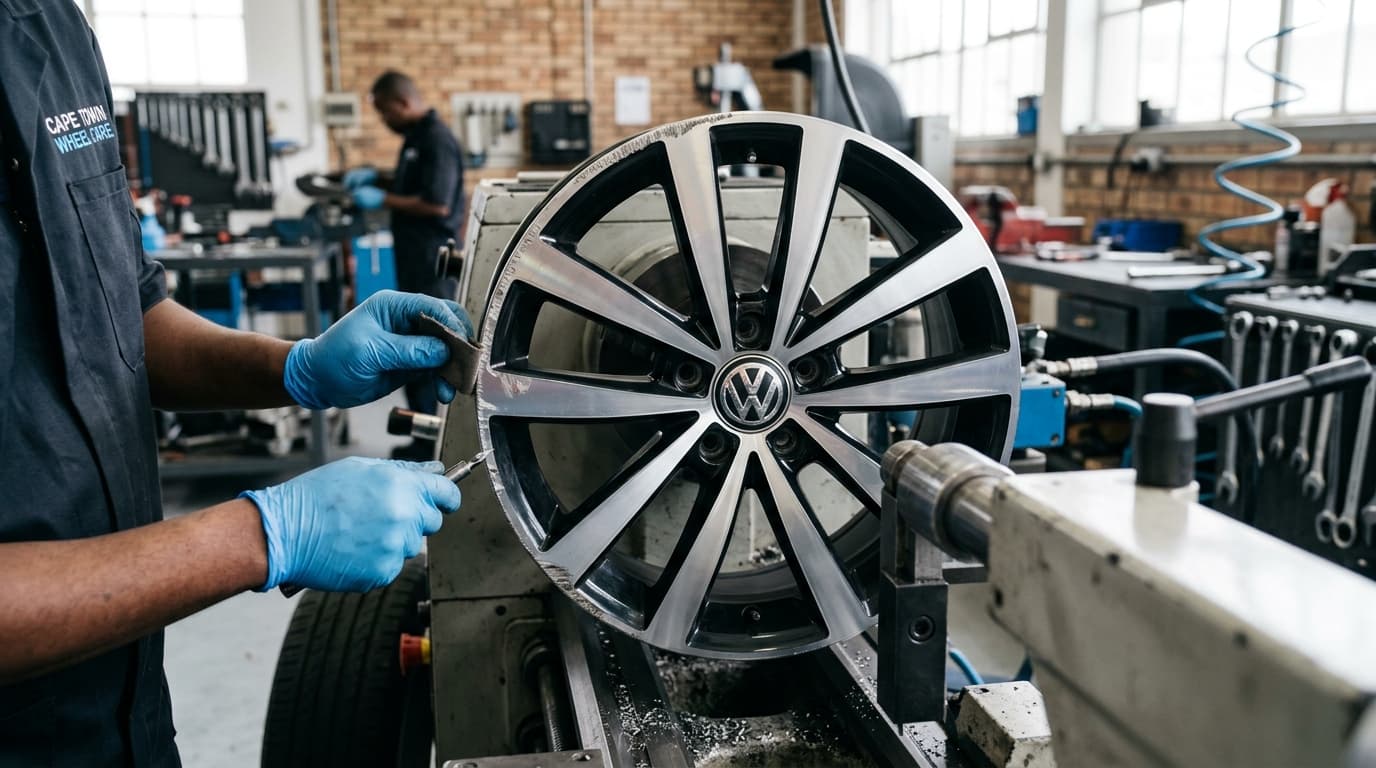
If you drive a Volkswagen Polo or Golf on Cape Town roads, you already know how quickly a sharp kerb or a deep pothole can ruin a clean set of alloys. VW Polo Golf wheel repair is one of the most common jobs we see at Speedline Mags in Parow — not because these cars are fragile, but because they are everywhere in the Northern Suburbs, and their factory wheels are often diamond-cut, low-profile, and expensive to replace. This guide walks you through what to expect when you bring a damaged Polo or Golf wheel in for professional repair: the damage we see most often, what can (and cannot) be fixed, how long it takes, what it costs in rand, and how to choose a finish that lasts on South African roads.
Whether you run a daily-driver Polo Vivo, a Mk7 Golf, a Golf R, or a Tiguan sharing the same VW alloy family, the repair process is similar. Understanding it upfront saves you from surprise quotes and half-finished work.
Why Polo and Golf Wheels Get Damaged So Often in Cape Town
Volkswagen's volume models are a huge part of Cape Town traffic for a reason: they are reliable, parts are easy to find, and the used market is deep. That popularity means we see their wheels every week.
Several factors stack the odds against Polo and Golf alloys locally:
- Low-profile factory fitments. Many Golfs and higher-spec Polos leave the factory on 16-, 17-, or 18-inch wheels with short sidewalls. There is less rubber between the rim and the road, so a pothole on the N1, the R300, or a suburban street in Bellville transfers more impact straight into the alloy.
- Diamond-cut factory finishes. A large share of modern VW alloys use a diamond-cut (CNC lathe) face with a clear lacquer. They look sharp when new, but the clear coat chips easily on kerbs, and once moisture gets under the lacquer the face starts to oxidise and peel. Our diamond-cut wheel repair guide covers why this finish needs specialist equipment to restore properly.
- Urban parking and kerbs. Parallel parking in town, shopping-centre kerbs in Parow and Durbanville, and tight underground bays are classic sources of kerb damage on the outer rim lip.
- Pothole season. After heavy Cape winter rain, potholes open up fast. A single hard hit can buckle the inner barrel of the rim even when the face still looks fine. See our guide on protecting wheels from pothole damage for prevention tips.
None of this means you should avoid VW alloys — it means you should know that vw polo golf wheel repair is a normal part of ownership here, not a rare emergency.
Common Polo and Golf Wheel Problems We See
When a Polo or Golf owner books a repair, the damage usually falls into one of these categories.
Curb rash and scuffed lips
The classic scrape along the outer edge from a concrete kerb. On painted or powder-coated wheels this is often a cosmetic fix. On diamond-cut wheels it usually means the lacquer is breached and the aluminium face needs to be re-cut or refinished. DIY touch-up paints rarely blend on a diamond-cut face — they look worse under daylight. If you are tempted to try a home fix first, read how to fix curb rash on alloy wheels so you know where DIY ends and specialist work begins.
Buckled or bent rims
A pothole or speed-hump impact can bend the rim out of true. Symptoms include a vibration that builds with speed, a steering shimmy, or a tyre that will not hold air because the bead no longer seals cleanly. Many buckles can be straightened on a hydraulic machine if the alloy has not cracked. Details on the process are in our wheel straightening guide.
Cracks
Cracks usually start at the inner barrel, spoke roots, or bead seat after a hard impact. Some cracks can be welded by a specialist; others — especially structural cracks near the hub or multiple spoke cracks — mean the wheel should be replaced for safety. We never weld a crack and send a wheel out without a clear structural assessment. For the decision framework, see wheel repair vs replacement.
Peeling clear coat and corrosion
On diamond-cut VW wheels, once the lacquer fails, white oxidation blooms across the face and the finish starts flaking. At that point a simple polish will not save it. The wheel needs the old lacquer stripped, the face re-machined or refinished, and a fresh clear coat applied and cured properly.
Slow leaks
A slow leak is not always a tyre puncture. Bent bead seats, corrosion under the tyre bead, or a hairline crack can all let air out overnight. If your Polo or Golf needs air every few days and the tyre looks fine, have the rim pressure-tested.
What Happens During a Professional VW Wheel Repair
Here is the typical workflow when you bring a Polo or Golf wheel to a specialist workshop like Speedline Mags.
1. Inspection and diagnosis
We strip the wheel (or work with a bare rim if you already had the tyre removed) and inspect it under good light. We check for cracks with dye penetrant or visual magnification where needed, measure run-out if the rim may be bent, and note the original finish type — painted, powder-coated, diamond-cut, or two-tone. This step decides repairability before any money is spent on refinishing.
2. Straightening (if required)
Bent rims go on a wheel-straightening machine. Controlled pressure brings the barrel and lips back into true. Not every buckle is recoverable — severe folds or cracked metal after straightening attempts mean replacement is safer.
3. Welding (only when safe)
Where a crack is in a weldable zone and the alloy grade allows it, a TIG weld restores the section, followed by machining flush. Alloy welding is a specialist skill; a poor weld can hide a weak joint. Our stance on alloy wheel welding is conservative on purpose — if a crack is in the wrong place, we recommend replacement rather than a risky weld.
4. Surface preparation
Old lacquer, paint, and corrosion are removed. For diamond-cut faces this often means CNC re-cutting on a lathe so the bright aluminium face matches the original factory look. For colour-change or durable daily-driver finishes, we may recommend powder coating instead of chasing a fragile diamond-cut clear coat again.
5. Finishing and curing
Paint or powder is applied in controlled conditions, or a fresh lacquer goes over a freshly cut face. Proper curing matters — rushing this step is how "repaired" wheels peel again within months.
6. Tyre fitment, balancing, and final check
The tyre goes back on, the assembly is balanced, and we check for leaks. Balancing after any rim work is non-negotiable if you want a smooth drive on the highway.
Repair or Replace? A Practical Decision Guide
Polo and Golf owners often ask whether it is worth repairing a damaged alloy or simply buying a replacement. Use these rules of thumb:
Repair is usually the better choice when:
- Damage is cosmetic (kerb rash, peeling lacquer) on an otherwise sound wheel.
- A single buckle can be straightened without cracking.
- You need a matched set — one replacement OEM wheel can be hard to colour-match to three aged originals.
- Cost of repair is well below a genuine VW replacement rim (often the case).
Replace when:
- There is a crack through a critical structural area.
- The wheel has been badly repaired before and the metal is work-hardened or distorted.
- Multiple spokes are damaged or the hub bore is out of round.
- The wheel has already been welded more than once in the same area.
OEM VW alloys are not cheap, and aftermarket replicas vary wildly in quality. Repairing a sound original rim often keeps the car safer and looking factory-correct for less money. For pricing context across South Africa, see our wheel repair cost guide.
Diamond Cut vs Powder Coating for VW Alloys
This is the big finish decision for Polo and Golf owners.
Diamond cut restores that sharp two-tone factory look: bright machined face with a coloured recessed background under clear lacquer. It photographs beautifully and matches what left Wolfsburg — but the lacquer remains the weak point on Cape Town kerbs and in coastal air. If you re-cut a wheel, expect to protect it carefully and accept that another kerb kiss may mean another trip back to the lathe. Compare options in diamond cut vs powder coating.
Powder coating lays down a tougher, more uniform colour finish. Satin black, gloss black, gunmetal, and silver are popular on Golfs and Polos used as daily drivers. You lose the bright diamond-cut face, but you gain chip resistance and easier touch-up economics over the life of the car. For many Northern Suburbs commuters, powder coat is the smarter long-term call.
We will show you both options against your specific wheels so you can choose style versus durability with your eyes open.
How Long Does VW Polo and Golf Wheel Repair Take?
Turnaround depends on the job:
- Cosmetic kerb repair on a painted/powder wheel: often same day or next day.
- Straightening plus balance: typically same day if the workshop is not backlogged.
- Full diamond-cut refurbishment: usually a few days, because of machining, lacquer, and curing time.
- Full set powder coat (four wheels): commonly several days depending on colour and schedule.
If you only have one spare and need the car mobile, ask about staggered work or a temporary steel spare. Mobile repair can handle light cosmetic jobs in some cases, but structural straightening, welding, and proper diamond-cut work belong in a workshop — see mobile wheel repair vs workshop.
What Does VW Wheel Repair Cost in South Africa (ZAR)?
Exact quotes depend on wheel size, finish, and damage, but these 2026 ballparks help set expectations for Polo and Golf alloys in Cape Town:
- Minor kerb rash repair (painted/powder): roughly R350–R700 per wheel.
- Diamond-cut face repair / re-lacquer: commonly R800–R1,800+ per wheel depending on size and how much machining is needed.
- Rim straightening: often R450–R900 per wheel when repairable.
- Crack welding (where safe): typically R600–R1,200+ depending on location and prep.
- Full powder coat per wheel: commonly R700–R1,400 depending on colour, prep, and size.
A full set refurbished together is usually more cost-effective than fixing one wheel to "almost match" three tired originals. Always ask whether balancing, valve stems, and tyre remounting are included. Insurance may contribute if the damage came from a claimed incident — our insurance claims for wheel damage guide explains how that process usually works in SA.
Model-Specific Notes: Polo, Golf, and Related VW Alloys
VW Polo / Polo Vivo
Polo wheels are often 14- to 16-inch on base models and larger on higher trims. Smaller diameters are generally cheaper to refinish, but thin decorative alloys still crack if abused. Vivo owners in particular tend to keep cars for many years — keeping original alloys healthy is cheaper than hunting matching second-hand rims later.
VW Golf (Mk6, Mk7, Mk8)
Golf alloys are frequently diamond-cut and larger (17–19 inch on GTI and R models). Bigger wheels mean more machining time and higher replacement cost, which tilts the economics toward repair when the structure is sound. Performance models also show buckles more often because of low-profile tyre packages.
Shared platform cousins
Tiguan, T-Roc, and some Audi alloys share similar construction and finish types. If you also run another VAG vehicle in the family, the same workshop process applies. Related reading: Volkswagen wheel repair for Polo, Golf and Tiguan.
How to Spot a Bad Previous Repair Before You Buy or Drive
Buying a used Polo or Golf? Check the wheels carefully:
- Uneven spoke texture or wavy reflections on a "diamond-cut" face often mean a poor re-cut or filled damage.
- Colour mismatch between wheels suggests one was refinished badly.
- Fresh paint that chips off in sheets usually means inadequate prep.
- A vibration that remains after balancing can point to a rim that was never properly straightened.
Knowing the warning signs of a poor prior repair protects you whether you are buying a car or evaluating a previous workshop's work. Compare notes with our signs wheels need professional repair checklist.
Aftercare: Keeping Your Polo or Golf Wheels Looking New
A good repair lasts longer with basic care:
- Wash wheels with pH-neutral cleaner; avoid aggressive acid cleaners on fresh lacquer.
- Dry the wheels, especially through winter when road salt substitutes and coastal moisture accelerate corrosion — see wheel corrosion prevention.
- Inspect after any hard pothole hit; catch a buckle early before it ruins the tyre.
- Do not ignore slow leaks or new vibration — both are early warnings.
- Follow a simple maintenance routine from our ultimate wheel care guide.
Why Cape Town Northern Suburbs Drivers Choose a Specialist Workshop
Generic panel shops and quick-fit centres can sometimes spray a wheel. They rarely have CNC lathes for diamond-cut restoration, proper straightening equipment, or the judgement to refuse an unsafe weld. Polo and Golf alloys — especially diamond-cut sets — need a wheel specialist.
Speedline Mags is based in Parow and serves drivers across Bellville, Durbanville, Goodwood, Table View, and the wider Northern Suburbs. We inspect honestly: if a wheel should be replaced, we say so. If powder coat will serve you better than another fragile diamond-cut clear coat, we explain why. See our Bellville and Northern Suburbs wheel repair guide.
What to Bring and Ask When You Book
To make the booking smooth:
- Tell us the model (e.g. Polo Vivo, Golf VII GTI), wheel size, and whether the finish is diamond-cut.
- Describe the damage (kerb, buckle, crack, peeling lacquer) and send clear photos if you can.
- Ask whether the quote includes tyre removal, balancing, and new valves.
- Confirm turnaround before you drop the car or wheels off.
- Ask about finish options if you are open to powder coat versus factory diamond-cut restoration.
Conclusion: What to Expect From VW Polo Golf Wheel Repair
VW Polo Golf wheel repair in Cape Town is a high-value service when done by people who understand Volkswagen alloys — especially diamond-cut finishes and local impact damage. Expect a proper inspection, an honest repair-versus-replace call, a clear timeline, and a finish that matches how you drive. Most cosmetic and many structural issues cost far less to restore than OEM replacement, provided safety comes first.
If your Polo or Golf shows kerb rash, a buckle, peeling lacquer, or a mystery slow leak, bring it in. Speedline Mags in Parow will inspect your alloys, explain your options plainly, and return wheels that are safe, balanced, and ready for Cape Town roads. Contact us to book your VW wheel repair today.