
Renault Kiger Tyre Pressure Guide: All Models & PSI Settings
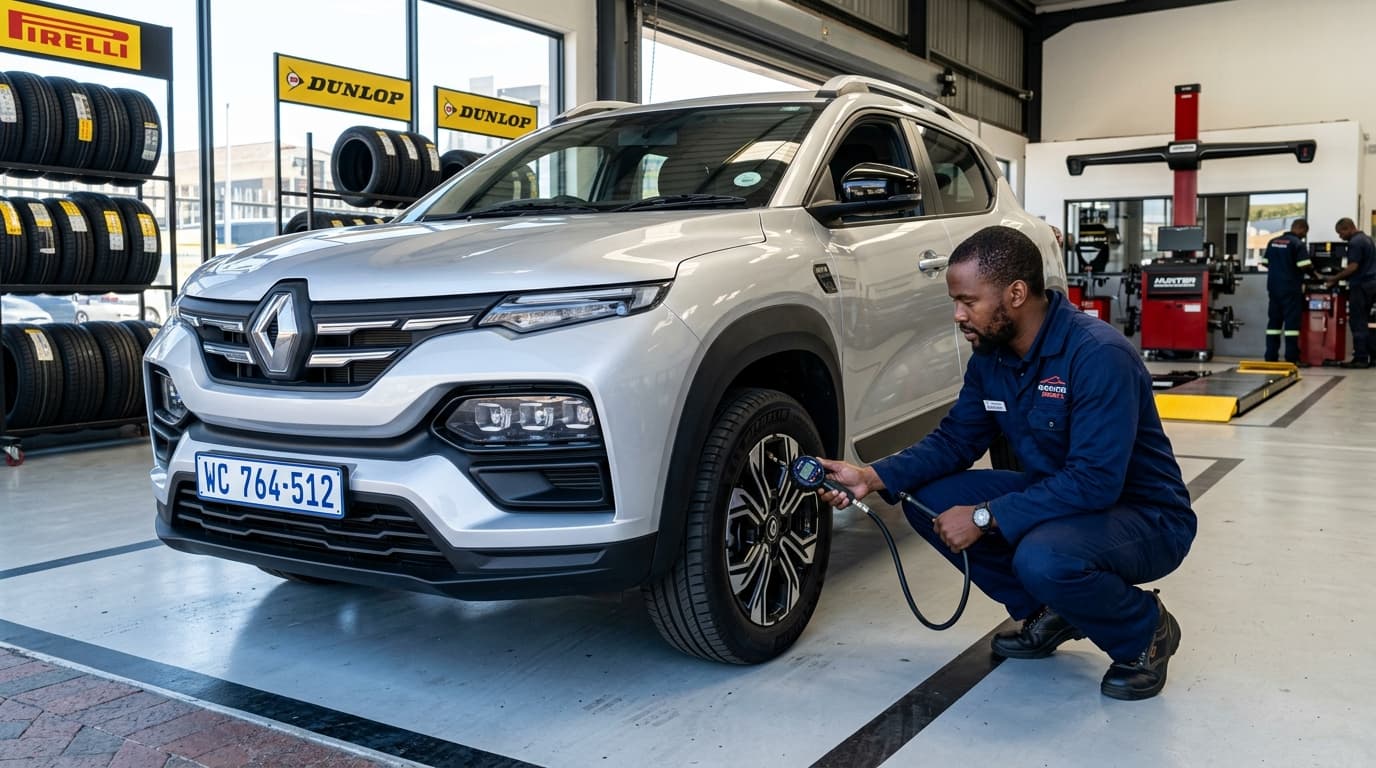
If you own a Renault Kiger, one of the most important — and most overlooked — maintenance tasks is keeping your tyres at the correct pressure. Getting the Kiger tyre pressure right affects fuel economy, tyre lifespan, ride comfort and, most critically, your safety on South Africa's roads. This guide covers everything you need: the exact PSI settings for all Kiger models, how and when to check, and what to do if something looks off with your wheels.
What Is the Correct Tyre Pressure for the Renault Kiger?
The Renault Kiger uses 215/60 R16 tyres across most variants sold in South Africa. Renault recommends the following tyre pressure settings:
| Load Condition | Front | Rear | |---|---|---| | Normal load (up to 3 passengers) | 33 PSI (2.3 bar) | 33 PSI (2.3 bar) | | Full load (4–5 passengers + luggage) | 36 PSI (2.5 bar) | 38 PSI (2.6 bar) |
These are cold tyre pressure figures — meaning you should check them before driving, or at least 3 hours after the vehicle has been stationary.
Always refer to your Kiger's door jamb sticker or owner's manual for the most authoritative figures. Specific trim variants or market editions may vary slightly.
Kiger Air Pressure by Trim Level
Renault South Africa sells the Kiger in several trims — Zen, Intens, and the top-spec Intens CVT. The recommended Kiger air pressure is consistent across all trims at:
- Normal driving: 33 PSI / 2.3 bar (front and rear)
- Heavy load: 36–38 PSI / 2.5–2.6 bar
Some Kiger owners have experimented with running the fronts at 35 PSI for a slightly firmer feel on highway driving, but the manufacturer spec of 33 PSI offers the best balance of comfort and tyre wear for most conditions.
Why Tyre Pressure Matters for Your Kiger
South African roads present unique challenges — from the smooth N1 to pothole-riddled residential streets in Cape Town's Northern Suburbs and beyond. Incorrect Kiger tyre pressure PSI directly impacts how your car behaves on all of them.
Under-Inflation: The Quiet Damage Builder
Running your Kiger's tyres too soft is the most common problem. The effects include:
- Uneven tyre wear — particularly on the outer edges, which is expensive to fix
- Higher rolling resistance — meaning your Kiger's 1.0-litre turbo engine has to work harder, burning more petrol
- Overheating — under-inflated tyres flex excessively, generating heat that can cause blowouts at speed
- Poor handling — the car will feel sluggish to respond, especially in corners
- Alloy wheel damage — a soft tyre offers less cushioning, making your alloy wheels far more vulnerable to pothole strikes and kerb damage
Even 3–4 PSI below the recommended Kiger air pressure is enough to accelerate tyre wear noticeably.
Over-Inflation: Less Obvious, Still Harmful
Over-inflated tyres are a different kind of problem. With too much air:
- The contact patch shrinks — only the centre of the tread wears, leaving the edges untouched
- Ride quality suffers significantly, especially on our uneven roads
- The tyre becomes more susceptible to sudden punctures from sharp objects
There's a widespread myth that running higher pressure saves fuel. In the Kiger, exceeding 36 PSI under normal conditions will cost you more in premature tyre replacement than any marginal fuel saving.
How to Check Your Renault Kiger Tyre Pressure
Checking the kiger tyre pressure is a 5-minute task that's worth doing at least once a month. Here's exactly how to do it:
What You Need
- A digital tyre pressure gauge (far more accurate than the old dial types)
- Access to an air compressor — most petrol stations have one
- Your Kiger's recommended PSI (33 PSI normal, or as per door jamb)
Step-by-Step Process
-
Check cold. Either first thing in the morning before driving or after the car has sat for at least 3 hours. Driving heats the air inside the tyre, raising pressure by 4–6 PSI — checking hot will give a false reading.
-
Remove the valve cap. Each wheel has a rubber or metal valve stem. Unscrew the cap and keep it somewhere safe.
-
Press the gauge firmly onto the valve. A digital gauge will read instantly. If you hear hissing, you don't have a complete seal — press harder or re-seat the gauge.
-
Compare to the spec. 33 PSI for normal Kiger driving. Add air if low, press the small pin inside the valve to release air if over.
-
Replace the valve cap. These protect the valve core from dust and moisture. Don't skip this step.
-
Check the spare. The Kiger comes with a space-saver spare — keep it at the manufacturer-specified pressure (typically 60 PSI), which is printed on the tyre sidewall.
Don't Forget the TPMS
Newer Kiger variants sold in SA are equipped with a Tyre Pressure Monitoring System (TPMS). This is a helpful early warning system — when a tyre drops below threshold, a warning light appears on the dash.
However, TPMS is not a substitute for manual checks. The system typically only triggers when pressure has dropped around 25% below normal — by which point you've already been driving on under-inflated rubber for a while. Manual monthly checks catch problems earlier.
When Should You Check Kiger Tyre Pressure?
Make it a habit to check your Renault Kiger tyre pressure in these situations:
- Monthly — at minimum, regardless of driving distance
- Before a long trip — driving from Cape Town to Johannesburg, for example, warrants a full check
- Seasonal changes — Cape Town winters can drop temperatures by 10°C, which reduces tyre pressure by roughly 1 PSI for every 6°C drop
- After a pothole strike or kerb hit — even if the tyre looks fine, a hard impact can alter pressure or damage the wheel internally
- When you notice any handling change — pulling to one side, unusual steering weight, or a rougher ride than normal
Renault Kiger Specs: Tyre and Wheel Overview
For reference, here are the complete Renault Kiger specs related to tyres and wheels:
| Specification | Detail | |---|---| | Tyre size (all variants) | 215/60 R16 | | Wheel size | 16-inch alloy (Intens) / 16-inch steel (Zen) | | Rim width | 6.5J | | Spare tyre | Space-saver (T125/80 R16) | | Spare tyre pressure | 60 PSI (as marked on tyre sidewall) | | TPMS | Standard on Intens, optional on Zen |
The Kiger's 16-inch alloys on the Intens trim are attractive and lightweight, but like all alloys, they're susceptible to damage from Cape Town's notorious road conditions. More on that below.
Alloy Wheels and the Kiger: What Cape Town Roads Do to Them
Cape Town's roads — particularly around the Northern Suburbs and connecting routes — are notoriously hard on wheels. The combination of speed humps, loose gravel on verges, and the odd pothole creates an environment where alloy damage is common.
The most frequent alloy wheel issues Kiger owners bring to us include:
Kerb Rash
The Kiger's alloys have a fairly exposed lip, making them vulnerable to kerb contact during parking. The damage ranges from surface scuffs to deeper gouges. In most cases, this is fully repairable without replacement. If your Kiger's rims look worse for wear, read our guide on how to fix curb rash on alloy wheels to understand what repair options exist.
Pothole Damage
A hard pothole strike at speed can buckle a rim or cause hairline cracks in the alloy. If you notice vibration after hitting a pothole — particularly at highway speeds — don't ignore it. A slightly bent rim will continue to deteriorate and can eventually cause tyre bead seal failure. We cover this in detail in our piece on protecting your wheels from pothole damage.
Corrosion
Alloy wheels can corrode over time, especially if the lacquer coating is compromised by kerb contact or stone chips. Salt air in coastal areas like the Cape Peninsula accelerates this. If you're seeing white or grey pitting on your Kiger's alloys, early treatment is cheaper than full refurbishment later.
When to See a Specialist: Wheel and Tyre Warning Signs
Correct tyre pressure extends the life of your Kiger's alloys — but there are situations where the wheels themselves need professional attention. Look out for:
- Persistent slow leak — if you're losing pressure in the same tyre every few days, the culprit may be a damaged valve, rim seal failure, or a puncture. Don't keep re-inflating and hoping for the best.
- Vibration through the steering wheel — this can indicate a buckled rim, wheel balance issue, or a damaged tyre. Have it checked promptly.
- Visible cracks in the alloy — any crack, no matter how small, needs professional assessment. A cracked rim cannot be relied upon. Read our guide on cracked alloy wheel repair vs replacement to understand your options.
- Tyre wearing unevenly — if you can see more wear on one edge than the other, something is wrong. It could be incorrect pressure, but it could also be alignment or suspension-related.
Understanding when your wheels need professional repair — versus when it's safe to wait — is outlined in our guide to signs your wheels need professional attention.
Maintaining Your Kiger's Wheels: Practical Tips
Beyond getting the Kiger tyre pressure right, there are a few habits that will keep your wheels in better shape for longer:
Rotate your tyres every 10,000 km. The Kiger is front-wheel drive, meaning the front tyres do more work — they steer, accelerate and brake simultaneously. Regular rotation evens out wear across all four tyres, extending overall tyre life.
Inspect your alloys monthly. While you're checking pressure, take a moment to look at each rim. Early detection of kerb damage or corrosion means cheaper repairs.
Wash your wheels regularly. Brake dust contains iron particles that bond to alloy surfaces over time. Use a pH-neutral wheel cleaner and a soft brush. Avoid harsh detergents or wire brushes. Our ultimate wheel care guide covers the full routine.
Be mindful of load. When the Kiger carries a full complement of passengers and luggage — perhaps on a family road trip to the Winelands — bump the rear tyre pressure to 38 PSI as Renault recommends. Under-inflating a loaded tyre is when blowout risk is highest.
Tyre Pressure and Fuel Economy
South Africa's fuel prices make running costs a real concern for Kiger owners. The good news is that correct tyre pressure is one of the simplest, cheapest ways to keep fuel costs down.
Running 6 PSI below recommended can increase rolling resistance by roughly 3%, which translates directly to higher fuel consumption. For a Kiger averaging 1,000 km per month, that's a meaningful difference over a year — potentially an extra tank of petrol or more.
Getting the Kiger air pressure right won't transform your fuel bill overnight, but it's a consistent, accumulating saving that requires zero ongoing cost.
Get Your Kiger's Wheels and Tyres Checked in Cape Town
If you're in Cape Town and your Renault Kiger's tyres or alloy wheels need attention — whether that's addressing damage from a pothole, repairing a kerbed rim, or simply getting expert advice on a persistent slow leak — Speedline Mags in Parow is here to help.
We specialise in alloy wheel repair, refurbishment, and tyre-related services for all makes and models, including the full Renault Kiger range. Our workshop serves customers across Cape Town's Northern Suburbs: Parow, Bellville, Durbanville, Goodwood, and surrounding areas.
Contact Speedline Mags today to book your Kiger in for an inspection or to get a quote on any wheel repairs. Keeping your tyres at the right pressure and your rims in top condition is an investment in your car's performance, your fuel economy, and ultimately your safety on the road.
Related reading: Alloy Wheel Repair — Can It Be Fixed? | Powder Coating vs Diamond Cut Wheels | Wheel Refurbishment in Cape Town's Northern Suburbs