
VW Golf Tyre Pressure Guide: GTI, GTS, TSI & TDI PSI Settings
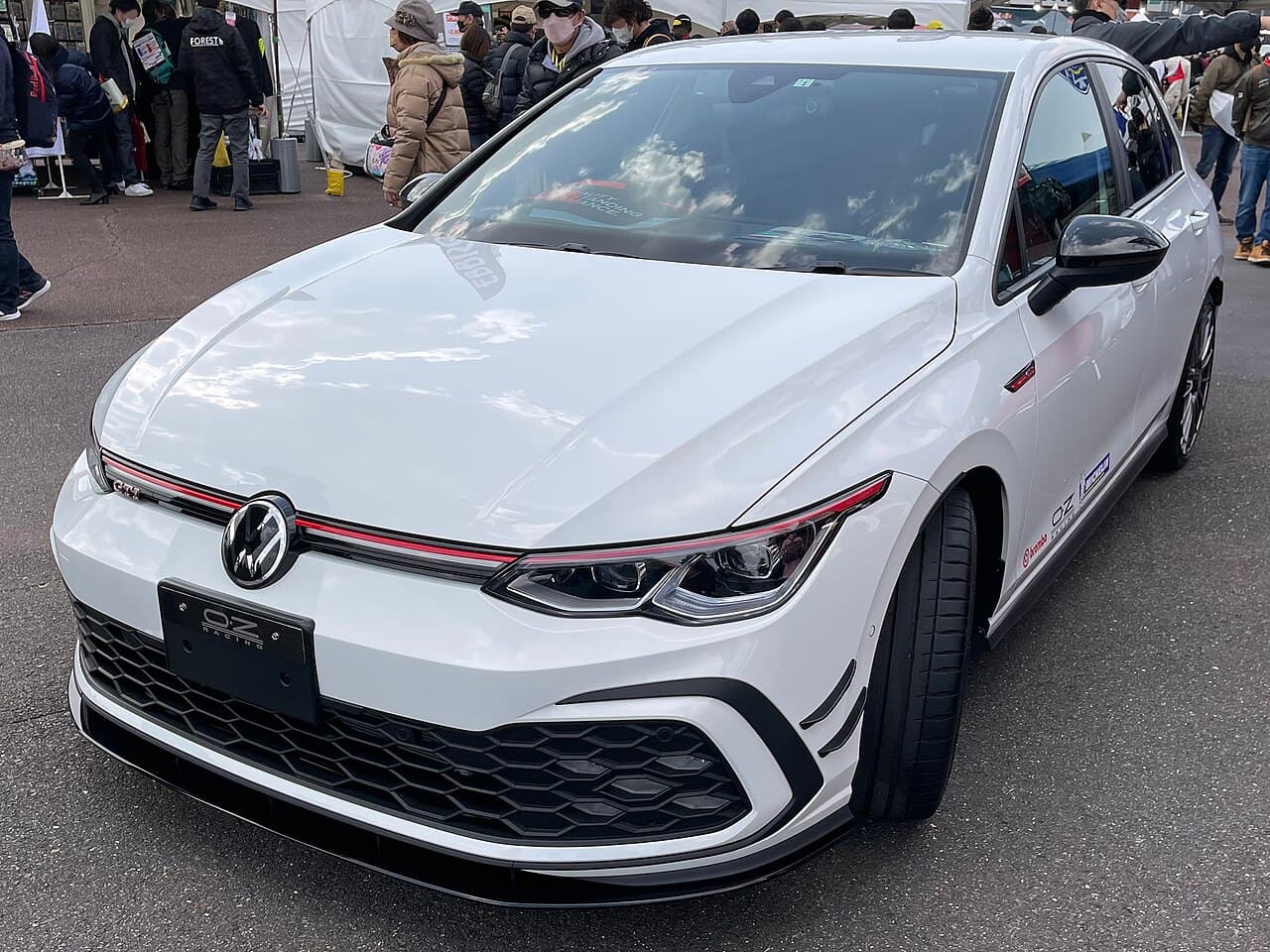
Getting your VW Golf tyre pressure right is one of the cheapest, most effective things you can do for your car — and one of the most overlooked. Correct pressures protect your alloy rims from Cape Town's notorious potholes, keep your low-profile tyres wearing evenly, sharpen the handling you paid for (especially on a GTI or Golf R), and can shave a few rand off every tank of fuel. Get it wrong and you're inviting kerb damage, buckled rims, blowouts and premature tyre wear.
This guide covers the recommended cold tyre pressures for every common Golf sold in South Africa — from the frugal 1.0 TSI to the fire-breathing Golf R — along with the front-versus-rear differences, how the TPMS warning light works, run-flat considerations, and why the Golf's low-profile setup is so hard on alloy wheels on our roads. At Speedline Mags in Parow, we straighten and refurbish more Golf rims than almost any other model, so we know exactly where things go wrong.
Why Correct VW Golf Tyre Pressure Matters More Than You Think
The Golf runs relatively low-profile tyres, particularly from the GTI and R Line trims upward. A 225/40 R18 or 235/35 R19 tyre has very little sidewall between the road and your expensive alloy. That short sidewall is fantastic for steering response, but it offers almost no cushioning when you hit a pothole or a sharp kerb.
Run those tyres a few PSI under the recommended pressure and the sidewall flexes and bottoms out even more easily. The result is a pinched, cracked or buckled rim — the single most common Golf wheel injury we see in the Northern Suburbs. Over-inflate them and you get a harsh ride, a smaller contact patch, faster centre-tread wear and an even greater risk of the tyre and rim taking the full shock of an impact.
Correct pressure is the sweet spot: enough air to support the car and resist impacts, not so much that you lose grip and comfort. For a full breakdown of how tyre and rim sizing work together, see our guide to understanding wheel sizes and fitment.
Where to Find Your Golf's Official Pressures
Before the tables below, the golden rule: your car's placard is the final word. Every Golf has a tyre pressure sticker, and the figures on it are specific to your exact model, engine and factory tyre size. You'll find it in one of two places:
- On the driver's side B-pillar (open the driver's door and look at the frame), or
- On the inside of the fuel filler flap.
VW prints these pressures in bar, not PSI, because that's the metric standard. To convert, remember that 1 bar ≈ 14.5 PSI. Most tyre gauges and garage compressors in South Africa read in either unit, so it helps to know both.
Always check and set pressures when the tyres are cold — that means before you drive, or after less than about 2 km at low speed. A warm tyre reads 3–4 PSI higher, and if you "correct" a hot tyre down to the placard figure, you'll be badly under-inflated once it cools.
VW Golf Tyre Pressure Chart (TSI, TDI, GTI, R & GTE)
The figures below are typical VW factory recommendations for normal load (up to three occupants), cold. Use them as a sanity check, but defer to your own placard for the definitive number.
Golf TSI (1.0, 1.4, 1.5) — Golf 7 and Golf 8
For the standard petrol Golf on 16"–17" wheels with 205/55 or 225/45 tyres:
- Front: 2.2 bar (32 PSI)
- Rear: 2.1 bar (30 PSI)
Fully loaded (five people plus luggage for a road trip), step up to roughly 2.5 bar (36 PSI) front and 2.9 bar (42 PSI) rear. This higher vw golf 7 tyre pressure for full load is important — the rear axle takes most of the extra weight, which is why the rear jumps more than the front.
Golf TDI (2.0 Diesel)
The diesel is slightly heavier over the front axle. Typical settings:
- Front: 2.3 bar (33 PSI)
- Rear: 2.1 bar (30 PSI)
For load-carrying or long highway runs, add around 0.3 bar (4–5 PSI) to each axle, again favouring the rear.
Golf 8 Standard Petrol
For the current-generation golf 8 tyre pressure on 17"–18" wheels (typically 225/45 R17 or 225/40 R18):
- Front: 2.4 bar (35 PSI)
- Rear: 2.2 bar (32 PSI)
The Golf 8 tends to run a touch higher than the Golf 7 because of its larger standard wheels and lower-profile tyres.
Golf GTI (Golf 7 GTI, Golf 8 GTI)
The GTI runs 225/40 R18 or 235/35 R19 performance tyres. The correct golf gti psi for spirited but everyday driving is usually:
- Front: 2.4 bar (35 PSI)
- Rear: 2.2 bar (32 PSI)
For track days or sustained high-speed motorway cruising, VW often specifies a higher "high-speed" pressure of around 2.6 bar (38 PSI) front and 2.4 bar (35 PSI) rear. Never exceed the maximum pressure moulded into the tyre sidewall.
Golf R (2.0 TSI 4Motion)
The all-wheel-drive Golf R is heavier and more powerful, so it asks for a firmer setup. Typical golf r tyre pressure on 235/35 R19:
- Front: 2.5 bar (36 PSI)
- Rear: 2.3 bar (33 PSI)
Because the R carries more weight and generates more heat under hard driving, keeping it at the correct pressure is critical to avoid overheating the tyre and losing grip.
Golf GTE / GTD (Plug-in Hybrid and Performance Diesel)
The GTE plug-in hybrid carries a heavy battery pack, which nudges pressures up slightly:
- Front: 2.4 bar (35 PSI)
- Rear: 2.3 bar (33 PSI)
The GTD performance diesel is similar. As always, the placard on your specific car wins.
Front vs Rear: Why Golf Pressures Aren't Symmetrical
Notice that almost every Golf runs a higher front pressure than rear under normal load. That's because the engine, gearbox and most of the car's weight sit over the front axle. VW balances the pressures to keep the contact patches even and the handling neutral.
This is exactly why you should never just "set them all to 32" and forget it. If you equalise front and rear, you'll typically end up with an over-firm rear that skips over bumps (worsening pothole impacts) and a front that wears its shoulders. When you rotate your tyres, remember to reset each corner to its correct front or rear figure.
And when you load up for a December trip to the coast, adjust for the extra weight — under-inflated tyres carrying a full load build dangerous heat and are far more likely to fail or let the rim strike a pothole.
Understanding Your Golf's TPMS Warning Light
Every modern Golf has a Tyre Pressure Monitoring System (TPMS), and understanding which type yours uses changes how you respond to that yellow warning light.
- Indirect TPMS (most common on Golf 7 and many Golf 8 models) doesn't measure pressure directly. Instead, it uses the ABS wheel-speed sensors to detect when one tyre is rotating slightly faster than the others — which happens when it loses pressure and its rolling diameter shrinks. It's clever and low-maintenance, but it can't tell you an exact PSI figure, and it needs to be reset (re-calibrated) every time you adjust pressures or rotate tyres.
- Direct TPMS uses a pressure sensor inside each wheel that broadcasts the actual reading to the dash. More precise, but the sensors have batteries that eventually die and can be damaged during careless tyre fitting.
To reset an indirect system after inflating: set all four tyres correctly when cold, then go into the infotainment menu — usually Car > Setup (or Vehicle Settings) > Tyres > Set/Store tyre pressures — and confirm. This tells the car "these are the correct pressures, learn them as the baseline." Skip this step and the light may either stay on or fail to warn you properly later.
If your TPMS light comes on, don't ignore it. Check all four tyres with a proper gauge as soon as it's safe. A slow leak often points to a small puncture or, on our roads, a hairline crack in the rim from an earlier pothole hit — one of the tell-tale signs your wheels need professional repair.
Run-Flat Tyres on a Golf: What to Know
Here's a common misconception: most Golfs do not come with run-flat tyres from the factory. Instead, VW ships them with a tyre mobility kit (a sealant bottle and a small compressor) in place of a spare wheel, to save weight and boot space.
That matters for pressure and for rim safety. Because there's no spare, a badly damaged tyre or a cracked rim can leave you stranded — so keeping pressures correct to avoid impact damage in the first place is doubly important. If you've fitted aftermarket run-flats (identifiable by markings like RFT, ROF, or SSR), remember they have much stiffer sidewalls. They tolerate zero pressure for a limited distance, but they also transmit more shock to the rim and can hide a slow leak until the damage is done. Run-flats must be inflated to the vehicle placard pressures, not a generic figure.
Whichever setup you have, a repair kit only fixes small tread punctures — it does nothing for a bent or cracked rim, which needs professional attention.
Low-Profile Golf Tyres and the Cape Town Pothole Problem
This is where the theory meets reality on Western Cape roads. The Golf's sporty, low-profile tyre setup — brilliant on smooth tarmac — is genuinely vulnerable to the potholes and broken edges you'll find on stretches of Voortrekker Road, the R300, and countless suburban streets across Parow, Bellville and Goodwood.
When a low-profile tyre hits a sharp-edged pothole at speed, the thin sidewall compresses fully in a fraction of a second and the alloy rim slams directly into the pothole edge. The outcome is one or more of:
- A buckled or bent rim (you'll feel a vibration through the steering, especially around 80–100 km/h)
- A cracked rim (often invisible at a glance, showing up as a slow leak and a recurring TPMS light)
- Kerb and curb rash on the outer lip
- A pinched or blown tyre
Correct tyre pressure is your first line of defence, because a properly inflated tyre absorbs more of the initial impact before the rim gets involved. For a deeper look at prevention, read our guide on protecting your wheels from pothole damage. Keeping your alloys clean and sealed also helps — see what causes wheel corrosion and how to prevent it, which is especially relevant in our coastal, salt-laden air.
Practical Tyre Pressure Habits for Golf Owners
A few simple routines will keep your Golf's tyres and rims in good shape:
- Check monthly and before long trips. Tyres lose 1–2 PSI a month naturally, faster in hot weather.
- Always check cold. First thing in the morning is ideal.
- Use a trusted gauge. The free garage compressors are often wildly inaccurate — a decent handheld gauge pays for itself.
- Don't forget the load adjustment for holiday trips and heavy loads.
- Reset your TPMS after every adjustment or rotation.
- Inspect the rim, not just the tyre. If a tyre keeps losing pressure despite no visible puncture, suspect the rim.
When to Bring Your Golf's Wheels to Speedline Mags
If you've hit a pothole hard, feel a new vibration, notice a wheel that won't hold pressure, or see kerb damage on your alloys, don't wait. A small crack or buckle only gets worse, and it can turn a repairable rim into a replacement. At Speedline Mags, our Parow workshop handles the full range of Golf wheel work — straightening buckled rims, welding and machining cracks, refurbishing kerbed alloys, and colour-matched refinishing — for every Golf from the 7 to the latest 8. We work on Polos, Golfs and Tiguans daily, so we know these wheels inside out; you can read more on our Volkswagen wheel repair page for Polo, Golf and Tiguan.
Correct vw golf tyre pressure protects your rims, your fuel bill and your safety — but Cape Town's roads mean even careful drivers eventually meet a pothole they couldn't avoid. When that happens, get an honest assessment before assuming you need a new wheel; more often than not, a professional repair will restore your rim to factory strength and finish for a fraction of the replacement cost.
Damaged a Golf rim, or not sure if a wheel is safe? Contact Speedline Mags in Parow, Cape Town for a free assessment and quote. Bring the wheel in and we'll tell you straight whether it can be repaired — and get you back on the road with confidence.