
Tyre and Wheel Safety: A Driver's Complete Guide
Tyre and Wheel Safety: A Driver's Complete Guide
Most Cape Town drivers only think about tyres and rims when something goes wrong — a puncture on the N1, a vibration on the freeway, or a kerb strike outside a shopping centre. By then, the damage is already done. This tyre wheel safety guide walks through the checks, warning signs and habits that keep alloy wheels and tyres roadworthy on South African roads, from Parow and Bellville to the Helderberg commute.
Wheels and tyres are a single safety system. Soft tyre pressure, a buckled rim, or worn tread does not stay isolated — it changes braking distance, steering feel and how the car behaves in an emergency. Treat them together and you reduce the chance of a roadside surprise.
Why Tyre and Wheel Safety Matters on Cape Town Roads
Cape Town roads punish wheels harder than many drivers expect. Potholes after winter rain, sharp suburban kerbs, construction zones on the N2 and salt air near the coast all accelerate wear. Bakkie owners on a Toyota Hilux and hatchback drivers in a VW Polo face different loads, but the same physics: if the contact patch or rim geometry is compromised, grip and control suffer.
A solid tyre wheel safety guide starts with local context:
- Potholes bend rims and bruise tyre sidewalls in a single hit
- Kerb rash looks cosmetic until it reaches the bead seat and causes slow leaks
- Under-inflation overheats the tyre and accelerates shoulder wear
- Unbalanced or bent wheels create vibration that fatigues suspension components
If you already suspect damage, read our overview of signs your wheels need professional repair and then book an inspection rather than waiting for the next long trip.
The Five Checks Every Driver Should Do Monthly
You do not need a workshop to catch most problems early. Set a calendar reminder once a month — or before any trip longer than 200 km — and run through these five checks.
1. Tyre pressure (cold)
Check pressures when the car has been parked for a few hours. Use the sticker in the door jamb or the owner's manual, not the sidewall maximum. Cape Town summer heat raises hot-tyre readings, so a cold check is more reliable.
Under-inflated tyres flex more, run hotter and wear the outer edges. Over-inflated tyres ride harshly, wear the centre of the tread and lose wet-weather grip. Either condition shortens tyre life and hurts braking.
2. Tread depth across the full width
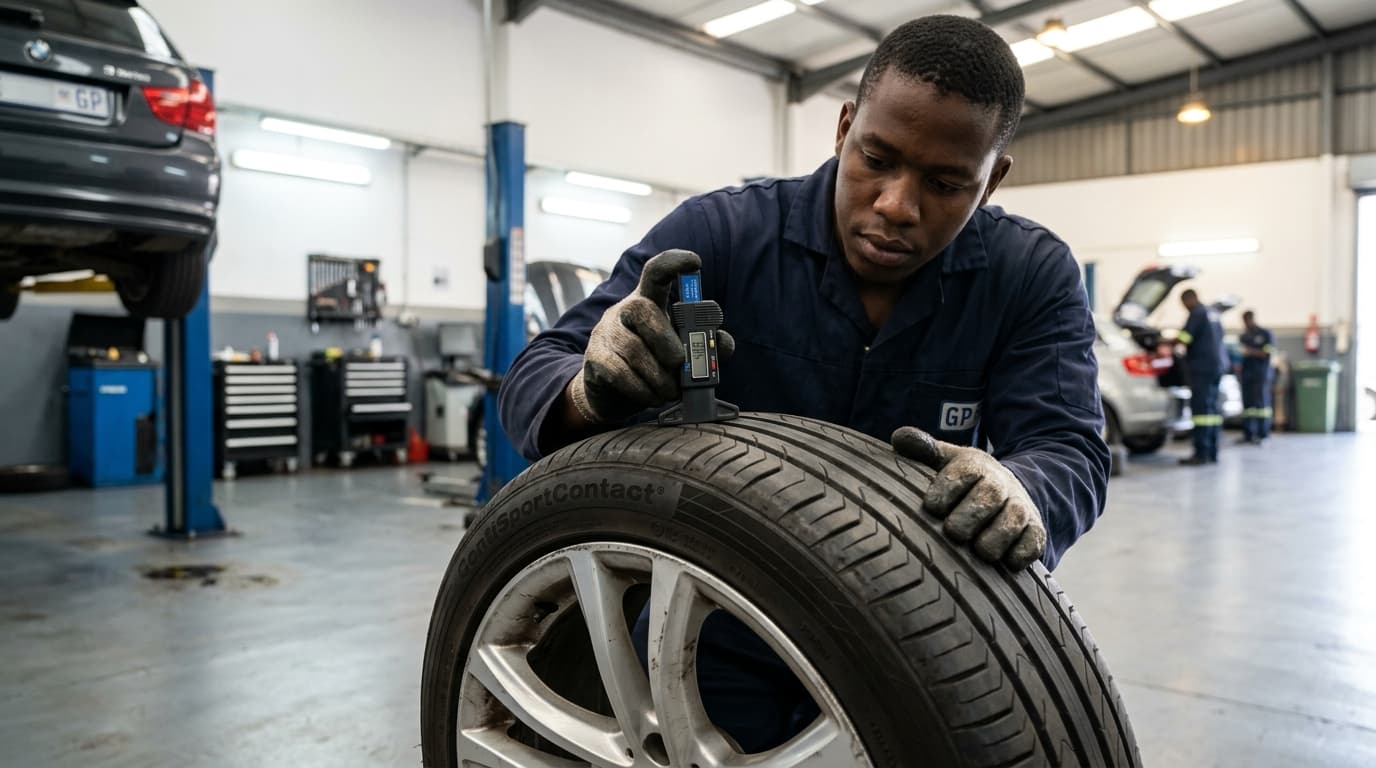
South African law requires a minimum of 1 mm across the tread, but performance drops well before that — especially in Cape Town's winter rain. Many technicians recommend replacing around 3 mm for safer wet braking. Use a tread depth gauge or the built-in wear indicators in the grooves.
Check the inner shoulder as well as the outer face. Uneven wear often points to alignment, suspension or pressure issues rather than simple age.
3. Sidewall and bead condition
Look for bulges, cuts, cracking or exposed cords. A bulge after a pothole hit is a structural failure waiting to blow out — replace the tyre, do not "monitor" it. Also inspect where the tyre meets the rim: corrosion or damage here is a common cause of slow leaks. Our guide on repairing a wheel with a slow leak explains when the rim is salvageable.
4. Rim integrity
Walk around the car and check each alloy for cracks, deep kerb rash, missing chunks of finish and obvious bends. Shine a torch across the inner barrel if you can safely lift the car or remove the wheel. Cracks near the spoke roots or bead seat are safety-critical — see cracked alloy wheel: repair or replace.
5. Vibration and pull while driving
On a quiet stretch of road at 80–100 km/h, note vibration through the steering wheel or seat. Steering pull can be alignment, brake drag or uneven tyre pressure. High-speed shimmy often means balance weights missing or a bent rim — covered in detail in wheel vibration at high speed: causes and fixes.
Tyre Safety Fundamentals Drivers Overlook
Load index and speed rating
Fitting a cheaper tyre with a lower load index than the OEM specification is unsafe, especially on bakkies and SUVs that tow or carry tools. Match or exceed the original load and speed ratings. If you have changed wheel size, confirm the tyre's load capacity still covers the vehicle's axle ratings — our wheel size fitment guide explains the trade-offs.
Ageing and UV damage
Tyres age even with low mileage. Sidewall cracking, hardening and ozone damage appear after years of Cape Town sun. Many manufacturers advise replacement around six to ten years from the DOT date, regardless of tread left. Check the four-digit week/year code on the sidewall.
Spare wheel readiness
A flat spare, wrong-size temporary spare, or missing wheel brace turns a minor puncture into a tow. Confirm the spare holds pressure and that the jack points match your vehicle. Space-savers have speed and distance limits — respect them.
Mixing tyre types
Do not mix radial and cross-ply, or radically different tread patterns on the same axle. On AWD vehicles, mismatched tread depths can damage the drivetrain. Replace in axle pairs at minimum; full sets are cleaner for grip consistency.
Wheel Safety: When the Rim Is the Weak Link
Tyres get the attention; rims carry the structure. A tyre that looks fine on a buckled rim will still vibrate, leak or fail the bead seal.
Buckled and bent rims
Pothole impacts ovalise the rim. Even a few millimetres of runout causes vibration, uneven tyre wear and stress on wheel bearings. Professional wheel straightening can restore many alloys when the metal is not cracked. Severe buckles or castings with porosity may need replacement — a good workshop will tell you honestly which is safer.
Cracks and weld repairs
Not every crack is weldable. Structural cracks in high-stress zones, multi-piece forged wheels with complex metallurgy, or previous poor repairs may be beyond safe repair. When welding is appropriate, it must be done by specialists who understand aluminium alloys — see alloy wheel welding: when is it safe.
Corrosion at the bead seat
Coastal moisture and neglected brake dust strip protective finishes. Once bare aluminium oxidises at the bead, sealing becomes unreliable. Cleaning and refinishing, or in advanced cases machining and resealing, restores airtight contact. Prevention tips live in our wheel corrosion guide.
Finish damage that becomes safety damage
Kerb rash is often dismissed as cosmetic. Deep gouges that reach the bead seat or remove enough metal to change the seating surface are not cosmetic. Catching kerb damage early keeps repair costs in the cosmetic range — our kerb damage guide covers typical patterns on Cape Town cars.
Seasonal Safety for Western Cape Drivers
Winter rain and cold mornings
Wet roads expose worn tread quickly. Increase following distance, avoid painted lines and metal manhole covers when braking, and recheck pressures as temperatures drop. Winter also hides potholes under puddles — hit one and you may need both tyre and rim attention. Prevention habits are covered in protecting alloy wheels from pothole damage.
Summer heat and holiday trips
Long N1 or Garden Route trips heat tyres. Start with correct cold pressures, pack a gauge, and inspect wheels before you leave. A weekend check before December traffic is cheaper than a call-out near Worcester. If you are preparing a set of refurbished wheels for the season, powder coating and diamond-cut options both need proper curing and balancing afterwards.
Professional Inspection: What Speedline Mags Looks For
At Speedline Mags in Parow, a safety-focused wheel assessment goes beyond a quick visual:
- Visual and tactile inspection of spokes, barrels and bead seats
- Runout measurement to quantify bends
- Leak testing where pressure loss is reported
- Finish assessment for corrosion under clear coat or powder
- Advice on repair vs replace based on structural integrity, not upselling
Drivers from the Northern Suburbs — Bellville, Durbanville, Goodwood, Table View — routinely drop wheels for same-week turnaround on common repairs. Brand-specific wear patterns differ: BMW run-flats punish rims harder; Hilux owners see more pothole buckles under load; Polo and Golf city cars collect kerb rash. Matching repair method to the alloy matters more than a one-size-fits-all polish.
If cost is part of the decision, compare realistic ranges in our mag wheel repair cost guide and the broader repair vs replacement decision guide. Repair is often the safer and more economical path when the casting is sound.
Building a Simple Safety Routine
Use this tyre wheel safety guide as a living checklist rather than a one-off read:
| Cadence | Action | | --- | --- | | Weekly | Quick visual of all four tyres and the spare; check for nails or obvious lean | | Monthly | Cold pressures, tread depth, sidewall and rim face inspection | | Every 10,000 km | Balance check, alignment if pull/uneven wear, professional rim inspection if vibration persists | | After any impact | Immediate inspection — do not wait for the next service |
Keep a quality gauge in the glovebox. Phone torch photos of each wheel after a kerb or pothole hit help a technician compare change over time.
Common Myths That Compromise Safety
"It still holds air, so it is fine." Slow structural cracks and hairline bends can hold air until heat or load opens them.
"New tyres fix vibration." They often mask a bent rim for a few hundred kilometres, then the shimmy returns. Balance and rim geometry must be checked together.
"Mobile DIY weld kits are enough." Improper aluminium welding can create brittle joints that fail under cornering loads. Leave structural work to specialists.
"All four tyres must match brand forever." Matching construction, size and similar tread depth on an axle is the real requirement; full matching sets are ideal but not the only safe setup for two-wheel-drive cars.
Conclusion: Make Tyre Wheel Safety a Habit
A practical tyre wheel safety guide is less about exotic products and more about consistent checks: pressure, tread, sidewalls, rim condition and how the car feels at speed. On Cape Town roads — with potholes, coastal corrosion and daily kerb risk — those five minutes a month prevent most avoidable failures.
If your inspection turns up buckles, cracks, kerb damage or unexplained vibration, bring the wheels to Speedline Mags in Parow. We assess structural safety first, then restore finish and balance so the car feels right again. Contact Speedline Mags to book a wheel and tyre safety inspection, get a clear repair-or-replace recommendation, and get back on the road with confidence.