
Types of Alloy Wheel Damage: How to Identify and Prevent Each
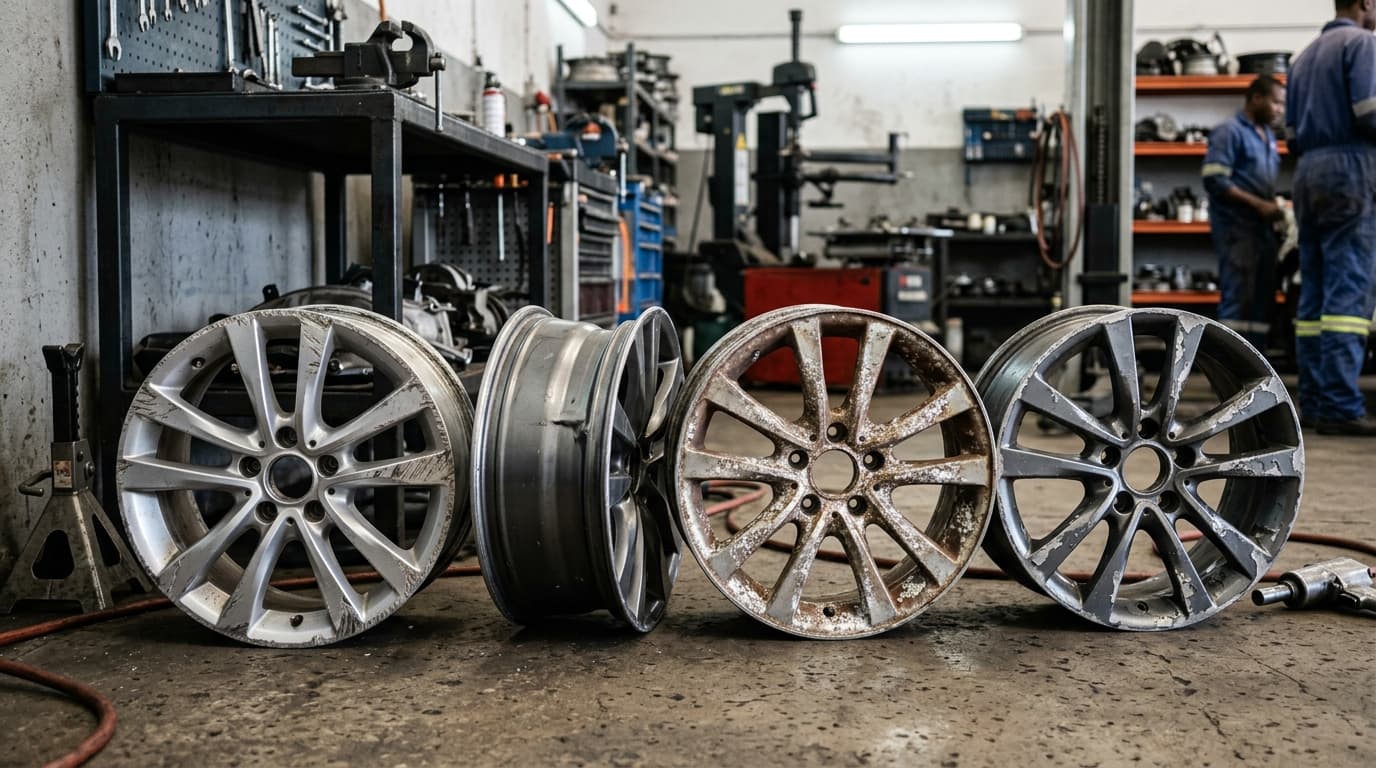
Alloy wheels look great when they're fresh — polished, sharp-edged, and catching the light just right. But Cape Town's roads are not kind to them. Between the potholes on the N1, the tight parking bays at Canal Walk, and the curbs along the Cape Flats, wheel damage is a near-constant reality for local drivers.
Understanding the types of wheel damage you're dealing with matters more than most people realise. Not all damage is equal — some is purely cosmetic, some affects safety, and some sits right in between. The sooner you identify what you're looking at, the better your options and the lower the cost.
This guide covers the six most common alloy wheel damage types, how to spot each one, what causes them, how to prevent them, and what repair typically costs at a Cape Town specialist like Speedline Mags.
1. Kerb Rash (Curb Damage)
What It Looks Like
Kerb rash is the most common type of alloy wheel damage in urban driving. It presents as scrapes, gouges, or scuff marks along the outer rim lip — typically silver or raw metal exposed through the paint or lacquer. In mild cases it's a thin scratch line. In severe cases you'll see chunks of alloy missing and deep grooves running several centimetres along the rim face.
What Causes It
Parking too close to a pavement, misjudging a tight corner, or catching a high kerb edge at speed. Narrow Cape Town roads and parking lots are a primary culprit — even experienced drivers accumulate this over time.
Safety Impact
Light kerb rash is cosmetic. Deep kerb rash that removes significant rim material can compromise the structural integrity of the wheel, particularly if the damage is near the bead seat (where the tyre seats against the rim). In this case, slow leaks or tyre blowouts become a real risk.
Prevention Tips
- Use parking sensors or rear cameras when parking against a kerb
- Approach parking bays at a shallower angle
- Be cautious of raised painted kerbs and sidewalk lips in tight parking areas
Repair Cost
- Light kerb rash: R350–R650 per wheel (scuff filling, repaint, lacquer)
- Deep gouging with rim lip damage: R700–R1,200 per wheel
For a full breakdown, see our wheel repair cost guide for South Africa.
2. Buckled Rims (Bent Wheels)
What It Looks Like
A buckled rim is a wheel that has been bent out of its original circular shape. You won't always see it easily — sometimes it requires placing the wheel on a flat surface or spinning it on a balancing machine. Visible signs include a wobble in the wheel when spinning, an uneven gap between the tyre and the road, or a visible flat spot on the rim edge when viewed head-on.
While driving, you'll feel it as a rhythmic vibration in the steering wheel, a shimmy at certain speeds, or steering that pulls to one side.
What Causes It
Buckled rims in South Africa are almost always caused by hitting potholes — particularly at speed. The sharp edge of a pothole lip concentrates enormous force on the rim in an instant. This type of rim damage is especially common on low-profile tyre setups (like 45 or 40 series tyres), where the tyre sidewall offers almost no cushioning.
Heavy kerb impacts and speed bumps taken at too high a speed can also buckle rims.
Safety Impact
A buckled rim is a structural problem, not cosmetic. It creates an imbalanced wheel, which causes uneven tyre wear, suspension stress, and reduced handling precision. In severe cases, a badly buckled rim can cause a sudden tyre blowout.
Prevention Tips
- Slow down significantly before potholes — even partial speed reduction dramatically reduces impact force
- Increase tyre profile if your current setup feels harsh
- Keep tyres properly inflated — underinflated tyres are more susceptible to pothole buckles
For more detail, read our guide on protecting your wheels from pothole damage.
Repair Cost
- Minor buckle (< 3mm deviation): R400–R700 per wheel (hydraulic press straightening)
- Moderate buckle: R700–R1,100 per wheel
- Severe buckle: replacement may be recommended
Learn more in our wheel straightening guide.
3. Cracked Alloy Wheels
What It Looks Like
Cracks in alloy wheels range from hairline fractures that are nearly invisible to obvious splits that run across the rim face or through the wheel barrel. Common locations include the spoke bases, the barrel wall, and the area around wheel stud holes.
Hairline cracks are often only visible under strong light at an angle, or detected when a wheel leaks air persistently despite no tyre damage.
What Causes It
Heavy impacts — severe potholes, high-speed kerb strikes, and major accidents. Cracking can also result from long-term metal fatigue in wheels that have been improperly repaired previously, or in cheaper aftermarket alloys that used inferior casting.
Safety Impact
Cracks are the most serious form of alloy wheel damage. Even a hairline crack can propagate under driving stress and lead to sudden wheel failure. This is not a problem to ignore or drive on.
Prevention Tips
- Drive at appropriate speeds on rough roads
- Avoid wheels that show prior repair history if buying second-hand
- Have wheels inspected by a professional if you experience a severe impact
Repair Cost
- Hairline crack repair (welding): R800–R1,500 per wheel depending on location
- Structural cracks near stud holes or barrel: replacement is typically required
See our cracked alloy wheel guide for more on repair vs replacement decision-making.
4. Corrosion and Oxidation
What It Looks Like
Corrosion manifests as white or grey powdery spots, pitting, or rough texture on the wheel surface — particularly around the bead seat (the inner edge where the tyre sits) and along the back face. On polished or diamond-cut wheels, it appears as dull, cloudy patches. On painted wheels, you'll see bubbling or flaking of the finish underneath the lacquer.
What Causes It
Moisture infiltrating through damaged lacquer is the primary cause. Cape Town's coastal climate accelerates corrosion — salty air and morning dew create the perfect conditions. Road-salt contamination, harsh wheel cleaning chemicals, and acid rain also contribute. Bead seat corrosion is particularly common on older wheels where the factory seal has worn through.
Bead seat corrosion causes slow air leaks — the tyre loses pressure gradually because the corrosion prevents a proper seal between tyre and rim.
Safety Impact
Surface corrosion is cosmetic. Bead seat corrosion can cause persistent slow leaks and, in advanced stages, structural weakening. Deep pitting on load-bearing areas is a structural concern.
Prevention Tips
- Keep lacquer or coating intact — repair chips and scratches promptly before moisture penetrates
- Use pH-neutral wheel cleaners, not acidic or alkaline wheel cleaners
- Apply a quality wheel wax or sealant after cleaning, particularly in coastal Cape Town areas
- Rinse wheels regularly in winter to remove road contamination
Repair Cost
- Surface corrosion clean-up and re-lacquer: R600–R900 per wheel
- Bead seat corrosion treatment with repaint: R800–R1,200 per wheel
For more on this, see our wheel corrosion prevention guide.
5. Peeling Lacquer and Paint Failure
What It Looks Like
Lacquer peeling shows as lifting, bubbling, or flaking of the clear coat over painted or polished surfaces. It often starts at chip points or scratches, then spreads progressively. Underneath the peeling lacquer you'll find either oxidised paint, bare alloy, or corrosion already forming. On diamond-cut wheels, peeling lacquer is particularly noticeable because the machined surface dulls rapidly when unprotected.
What Causes It
Lacquer failure is typically caused by:
- Impact chips breaking the seal and allowing moisture under the clear coat
- UV degradation over years of sun exposure (Cape Town's UV index is high)
- Poor original application — thin lacquer from factory or a previous spray job
- Harsh cleaners that strip the clear coat chemistry over time
- Heat cycling — repeated heating and cooling of the wheel from braking
Safety Impact
Purely cosmetic. However, once lacquer is compromised, corrosion accelerates rapidly underneath, which can eventually become a structural concern.
Prevention Tips
- Apply UV-resistant wheel wax or sealant twice a year
- Repair paint chips promptly with touch-up lacquer
- Avoid automatic car washes with aggressive brushes — they strip lacquer faster than hand washing
Repair Cost
- Full respray with fresh lacquer: R650–R1,100 per wheel (depending on size and finish)
- Diamond cut re-machining + lacquer: R900–R1,600 per wheel
Read our full comparison: diamond cut vs powder coating wheels.
6. Pothole Impact Damage (Combination Damage)
What It Looks Like
Severe pothole strikes often cause a combination of wheel damage types simultaneously: a buckle plus a rim lip crack, or bead seat damage alongside paint chipping. You may also see a flat tyre as a secondary consequence, which masks the wheel damage underneath.
After a hard pothole hit, check for:
- Visible rim deformation or flat spots when looking at the wheel edge-on
- Any cracking at the spoke bases or rim barrel
- Air leaking from the bead area
- Vibration or pulling when driving
What Causes It
South African roads — particularly in the Northern Suburbs, the N7 corridor, Bellville, and suburban Cape Town — are known for their pothole problem. Heavy rain exacerbates this, washing out road sub-base and creating deep, sharp-edged potholes that can generate thousands of kilograms of force on a rim in milliseconds.
Safety Impact
Varies from cosmetic (paint chips only) to critical (structural cracking). Always have wheels professionally inspected after a severe pothole strike.
Prevention Tips
- Maintain correct tyre pressure — a slightly higher pressure (within manufacturer spec) increases resistance to pinch flats and buckles
- Replace worn tyres with adequate tread depth — good tread helps absorb impact energy
- Slow down on unfamiliar roads, especially after rain
Repair Cost
- Depends on damage combination — typically R800–R2,000+ per wheel for combined damage
- Insurance claims are possible in many cases
See our guide on how insurance claims work for wheel damage in SA.
How to Inspect Your Wheels Yourself
You don't need workshop equipment to do a basic check. Here's a simple inspection routine:
Visual inspection (monthly): In good light, walk around the car and examine each wheel. Look for scratches, gouges, cracks at spoke bases, bubbling lacquer, or white/grey corrosion spots. Run your fingers along the inner rim lip — you can sometimes feel a crack or buckle that's difficult to see.
Tyre pressure check (weekly): Unexplained slow pressure loss on one wheel often indicates a bead seat leak caused by corrosion — a sign the wheel needs workshop attention.
Driving feel check (ongoing): New vibrations, steering pull, or an unusual shimmy at highway speeds warrants a wheel inspection. These are classic signs of a buckled rim.
When to Repair vs Replace
Not all damaged wheels are repairable. As a general rule:
- Repair is appropriate for kerb rash, minor buckles, surface corrosion, lacquer peeling, and small cosmetic cracks in non-structural areas
- Replacement is recommended for structural cracks (especially near stud holes), severe buckles beyond tolerance, and any wheel where prior poor repairs have compromised integrity
A reputable specialist will never recommend unnecessary replacement — but they also won't clear a wheel for use if it poses a safety risk. At Speedline Mags, every wheel undergoes a structural assessment before repair work begins.
For more on this, read our wheel repair vs replacement decision guide.
Get Your Wheels Assessed in Cape Town
If you've spotted any of these types of wheel damage on your vehicle, the safest next step is a professional assessment. Speedline Mags is based in Parow, Cape Town, and serves drivers across the Northern Suburbs — Bellville, Durbanville, Brackenfell, Kraaifontein, and beyond.
We assess all rim damage types, provide honest repair recommendations, and carry out everything from basic kerb rash touch-ups to full refurbishments and diamond cut restorations. Most jobs are turned around quickly so you're not off the road for long.
Contact Speedline Mags to book your wheel assessment — or come in for a free quote. Our team will tell you exactly what you're dealing with and what it will cost to fix it properly.