
Pothole Damage to Rims: What Happens Inside Your Wheel and How to Fix It
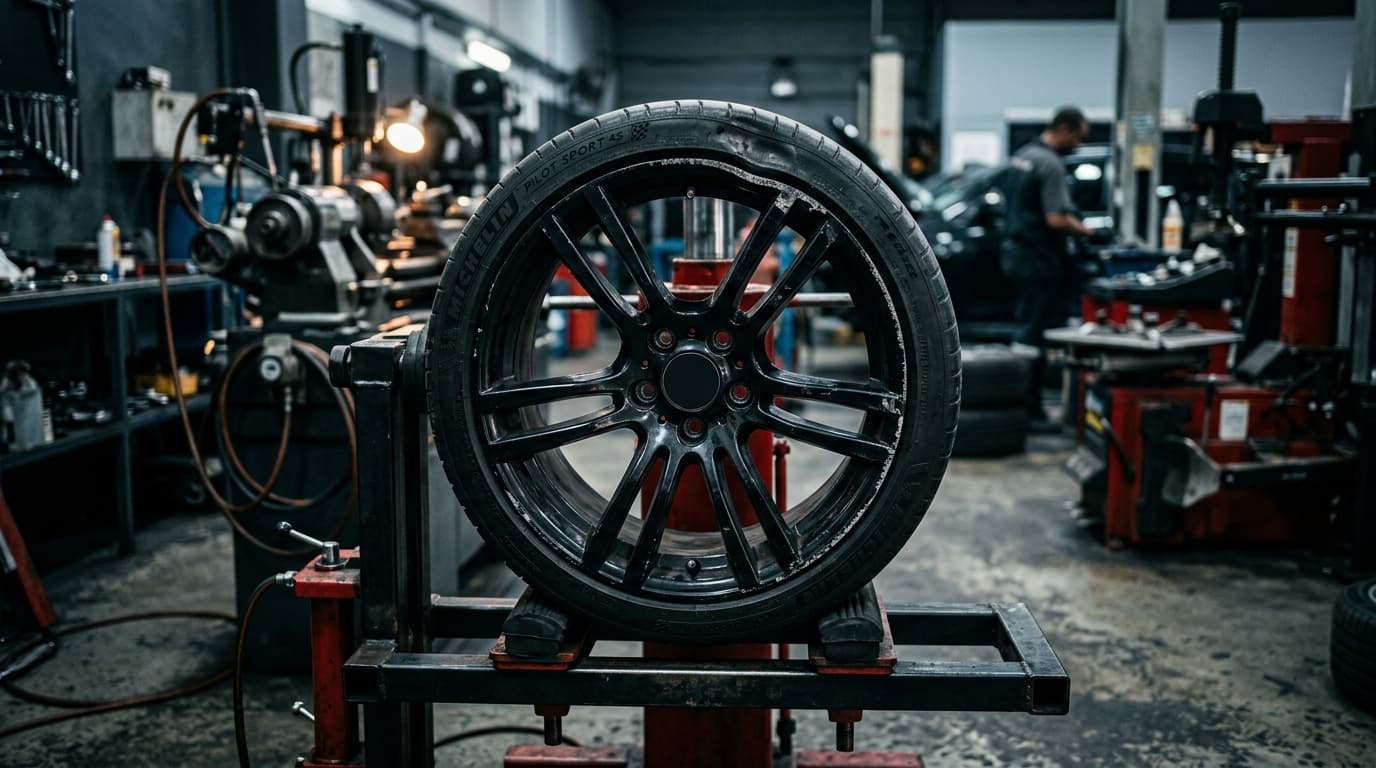
Anyone who drives regularly in South Africa has a pothole story. You're cruising down the N1, the R300, or a backroad in Parow when the tar disappears under your front wheel and the car crashes into what feels like a small crater. The steering wheel jolts, you hear that sickening metallic clunk, and for the next few kilometres you're holding your breath wondering what you've just done to your wheels.
Pothole rim damage is easily the most common wheel injury we see at our Parow workshop, and it's only getting worse as South African road maintenance struggles to keep up with the Cape's rainy-season potholes, load-shedding-era road decay, and surging traffic. This guide walks you through exactly what happens inside your wheel when you hit a pothole, how to spot the damage (including the invisible kind), and what your repair options look like in 2026.
What Actually Happens When Your Rim Hits a Pothole
A pothole looks harmless from the driver's seat — a patch of shadow, a shallow-looking dip. What you don't see is the vertical wall at the far edge. When your tyre drops into the hole and then slams into that opposing edge at 60 km/h, the energy transfer is brutal. The tyre sidewall compresses until it bottoms out against the rim, and for a split second the rim itself absorbs the full kinetic shock.
At that moment, several things can happen simultaneously inside your wheel:
The rim flange (the outer lip that holds the tyre bead) can fold inward. This is what we call a buckle, and it's the most common form of pothole rim damage we repair.
The inner barrel of the wheel can crack. Aluminium is strong, but when the impact exceeds its yield strength, stress fractures form — often running radially from the bead seat inward.
The spokes can deform. Multi-spoke and split-spoke designs are particularly vulnerable because the thinner spokes concentrate stress at the hub connection points.
The bead seat can warp. This causes the tyre to lose its airtight seal, producing the slow leak that drivers often notice two or three days after the impact.
In severe impacts, the wheel structure itself can distort enough to throw off wheel alignment and camber, sending extra wear into your suspension, control arms, and tie rods.
Visible vs Invisible Pothole Damage
One of the most misunderstood aspects of pothole rim damage is that what you see on the outside is rarely the full story. There are two categories of damage every driver needs to know about.
Visible Damage
This is the stuff you can see in the parking lot as you kneel down to inspect your car. It includes bent or buckled rim edges where the outer flange is visibly curled, cracks running along the rim lip or spokes, deep gouges and chips in the face of the wheel, and obvious out-of-round distortion where the wheel no longer sits true.
If you can see any of these, the wheel needs professional attention before your next long trip. A buckled rim will affect balance, a crack will grow under load, and distortion will wreck your tyres within weeks.
Invisible (Structural) Damage
This is what keeps experienced wheel technicians up at night. Invisible pothole damage is the reason we insist on a full inspection for any wheel that has taken a serious impact — even when the outside looks fine.
Hidden cracks on the inside of the barrel, where the wheel curves back toward the hub, are extremely common in hard impacts. These micro-fractures are usually undetectable without removing the tyre and scanning the inside with specialist equipment or a dye-penetrant test.
Internal structural deformation can compromise the wheel's ability to hold air pressure over time even if it currently looks fine. Slow leaks appearing days or weeks after a pothole hit are a classic symptom.
Altered wheel geometry — where the wheel is now a millimetre or two out of true — causes vibrations that get worse with speed, chews through tyres unevenly, and can load-up your suspension components.
This is why "it looks okay from here" is the single most dangerous sentence in wheel repair. We've seen wheels that passed a visual check in a driveway turn out to have barrel cracks that would have failed catastrophically at motorway speed.
The Three Main Types of Pothole Rim Damage
Understanding what kind of damage you're dealing with helps you make the right repair decision. We sort pothole damage into three categories.
1. The Buckle
A buckled rim is a bend, deformation, or distortion of the rim's outer lip or inner flange. The rim is still intact — no material is missing, no cracks have formed — but the metal has been pushed out of its original shape. You'll often see this as a flat spot on a round wheel, or a raised ridge where the flange has folded back on itself.
Buckles are usually repairable. Using a specialised hydraulic wheel straightening machine, we heat the affected area, apply controlled pressure, and gradually reshape the rim back to its original geometry. A good buckle repair returns the wheel to factory roundness within acceptable tolerances (typically under 0.5 mm runout).
For more on the straightening process, see our full guide to wheel straightening and bent rim repair.
2. The Chip and the Chunk
Lower-severity impacts often just take a bite out of the rim flange. You'll see chips, missing paint and clear-coat, and sometimes shallow gouges across the face of the wheel. These are cosmetic to structural depending on depth.
Shallow chips that don't reach the structural aluminium can be repaired cosmetically with filler, sanding, and a refinish — typically powder coating or a matched paint system. Deeper chunks that expose the raw alloy and compromise the bead seat need welding and machining before refinishing.
3. The Crack
A cracked rim is the most serious pothole injury. Aluminium alloy wheels don't bend back like steel — past a certain stress threshold, they split. Cracks can start as a hairline on the inside of the barrel and run outward under every subsequent load cycle.
Whether a cracked wheel can be saved depends on where the crack is and how long it is. Short cracks in non-load-bearing areas of the face or inner barrel can often be welded by a qualified aluminium TIG welder, heat-treated, machined, and refinished. Cracks that run across the bead seat, through the spoke root, or around the hub centre almost always mean replacement — the risk of catastrophic failure is too high.
Our general rule is that if a crack is longer than roughly 50 mm, runs into a structural area, or has propagated through the full thickness of the barrel, the wheel is beyond safe repair. For a deeper dive, read our cracked alloy wheel repair vs replace guide.
How to Tell If Your Wheel Has Pothole Damage
Not every pothole strike leaves a visible mark, so here's the symptom checklist we run through with customers who come in after a hit.
Steering wheel vibration that appears or gets worse at highway speeds (typically 80–120 km/h) is the single clearest sign of wheel imbalance or runout caused by a pothole. If it wasn't there before the hit, the wheel is almost certainly out of round.
Pulling to one side — especially if the car tracks straight before and drifts after a known pothole impact — suggests either a bent rim, damaged suspension, or both.
Slow tyre pressure loss that appears within 48–72 hours of the impact is a classic bead-seat warp symptom. The tyre still holds air under normal conditions but loses a few psi every day or two.
Uneven tyre wear on a previously straight-wearing tyre, usually showing up over two to four weeks as feathering or cupping, is another fingerprint of rim runout.
Visible damage or marks on the rim edge — chips, scuffs, or a slight flat spot when the wheel is rotated — is your most obvious sign and should be taken seriously even if nothing else feels wrong.
If you notice any of these after hitting a pothole, get the wheel inspected. A proper inspection is quick, inexpensive, and often free if it leads to a repair.
The Cape Town Pothole Problem
It's worth saying plainly: Cape Town, and especially the older suburbs of Parow, Bellville, and the Northern Suburbs, have an ongoing pothole problem. Heavy winter rains flood storm drains and lift tar. Heavier trucks and more traffic accelerate the decay. Municipal repairs can't keep pace.
The result is that drivers of everyday cars like the VW Polo, Toyota Hilux, Ford Ranger, and BMW 3 Series are rolling into our workshop on a weekly basis with pothole rim damage — not because they were speeding or driving carelessly, but because the hole was invisible in a puddle or hidden in the shade of a bridge.
If you want to reduce your risk, we've written a detailed protecting wheels from pothole damage guide that covers tyre pressure management, route planning, and impact-absorbing driving technique.
The Repair Process at Speedline Mags
When a pothole-damaged wheel comes into our Parow workshop, we follow a consistent process designed to catch both visible and invisible damage before we commit to a repair plan.
Step 1: Tyre removal and visual inspection. We dismount the tyre and inspect the entire rim — inside and outside — under strong workshop lighting. This is where hidden barrel cracks and inner-flange buckles show up.
Step 2: Runout measurement. The wheel is mounted on a precision gauge and rotated to measure both lateral (side-to-side) and radial (up-and-down) runout. Factory-spec wheels should measure under 0.5 mm on both axes.
Step 3: Damage classification. Based on the inspection and measurements, we classify the damage as buckle-only, buckle-plus-crack, crack-only, or beyond-repair. We'll always tell you honestly if we think the wheel isn't safe to return to service.
Step 4: Repair execution. Buckles go through hydraulic straightening. Cracks in repairable areas are TIG-welded by a certified aluminium welder, then machined back to profile. Refinishing follows, typically in powder coating, diamond-cut, or matched paint depending on your factory finish.
Step 5: Final runout and balance check. Every repaired wheel is re-measured before it leaves the workshop. If it's not within factory tolerance, it goes back on the machine until it is.
Repair vs Replace: The Honest Answer
The easiest wheel to sell someone is a new one, which is why we're sometimes asked why we repair instead of pushing replacements. The honest answer is that in roughly 80–85% of pothole damage cases we see, a proper repair is safer, cheaper, and faster than replacement.
A typical pothole buckle repair runs R850–R1,800 per wheel at current 2026 pricing, compared to replacement OEM wheels that range from R4,500 to well over R15,000 depending on the vehicle. If you're driving anything premium — a Mercedes-Benz, BMW, Audi, or Porsche — the replacement cost alone usually justifies repair.
The exceptions where we recommend replacement are wheels with cracks through structural load paths, wheels with multiple severe impacts on the same rim, diamond-cut wheels with deep structural damage that can't be re-machined within safe thickness limits, and any wheel where the material integrity has been compromised to the point we can't guarantee the repair.
For a full breakdown of decision criteria, see our wheel repair vs replacement decision guide.
How Much Does Pothole Rim Repair Cost?
Pricing depends on damage severity, wheel size, and finish. As a rough guide for the Cape Town market in 2026:
A standard buckle straightening on a 17–19" alloy runs R850–R1,200 per wheel. Straightening plus a powder coat refinish is R1,400–R2,200 per wheel. A TIG weld repair for a non-structural crack, including straightening and refinish, is R1,800–R2,800 per wheel. Diamond-cut wheels with pothole damage are more specialised — expect R2,500–R3,800 per wheel for straightening and re-cutting.
For more detailed pricing across all services, see our wheel repair cost price guide.
When to Drive and When to Trailer
If you've just hit a pothole and are wondering whether it's safe to drive home, use this quick decision tree.
Safe to drive carefully if the tyre is still holding pressure, there's no steering pull, vibration is mild and speed-dependent, and you can see only cosmetic damage to the rim edge.
Drive at reduced speed (under 80 km/h) if there's moderate vibration or you're losing pressure slowly but can still drive short distances. Get to a workshop as soon as possible.
Do not drive if the tyre is flat and won't hold air, the wheel is visibly cracked, there's severe steering pull, or you can see or hear anything suspension-related (scraping, grinding). Call for a tow or a mobile wheel specialist.
Final Thoughts: Protect Yourself from SA Potholes
Pothole rim damage is a fact of life for South African drivers, but it doesn't have to be expensive or dangerous. The keys are early detection, honest inspection, and the right repair by a shop that knows when to fix and when to refuse.
At Speedline Mags in Parow, we've repaired thousands of pothole-damaged wheels for drivers across the Cape Town Northern Suburbs, Bellville, Durbanville, and the Winelands. We'll give you a straight answer on whether your wheel can be safely saved, a transparent quote, and a repair backed by a workmanship warranty.
If you've hit a bad one, don't wait for the vibration to get worse or the slow leak to become a flat tyre on the N1. Book a free inspection or bring the wheel in and we'll have it measured within 15 minutes. For workshop bookings, call or WhatsApp us — or drop your car off at our Parow workshop and we'll take care of the rest.
Your wheels take the hits so your car doesn't have to. Look after them and they'll look after you.