
Mag Wheel Repairs: The Complete Guide for South Africans
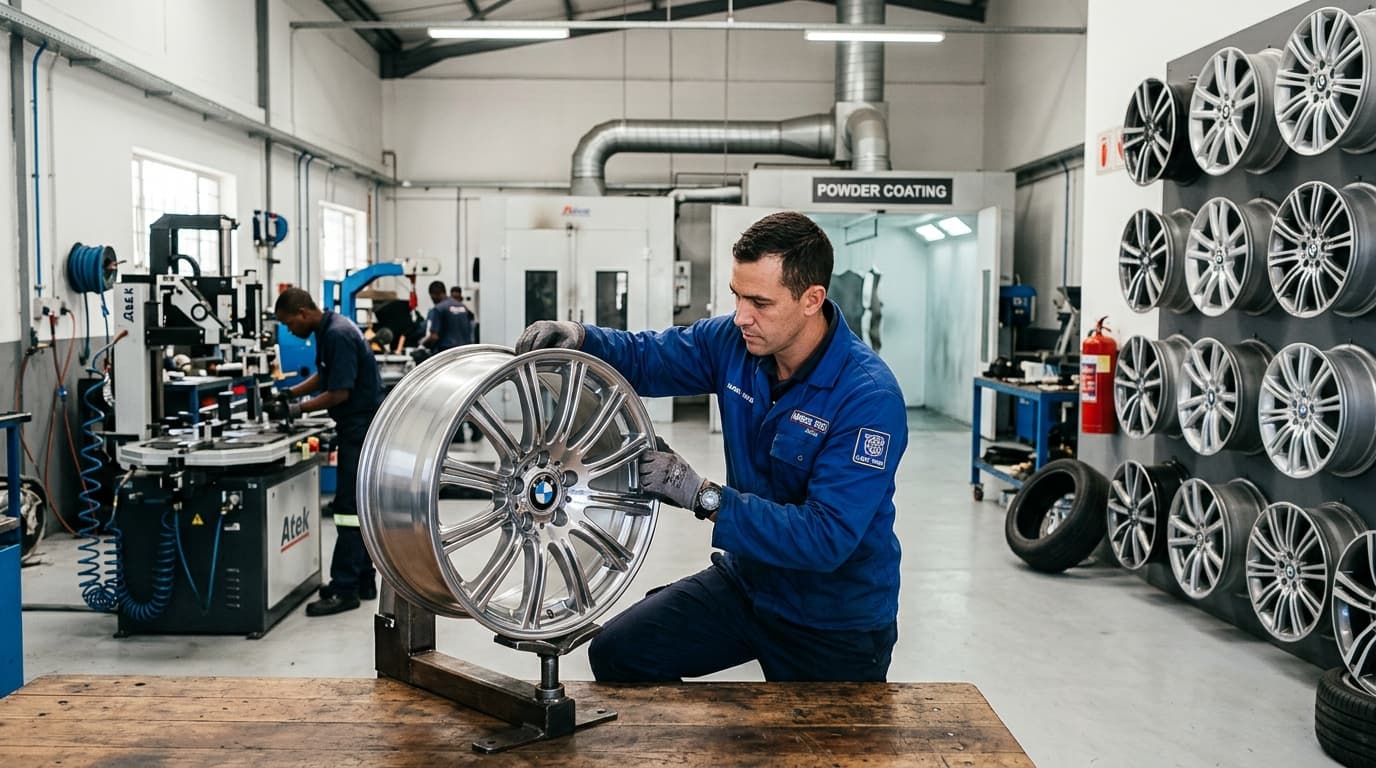
If you've landed on this page, there's a good chance your alloy wheels have seen better days. Whether it's a nasty scrape against a kerb, a pothole-induced buckle, or years of corrosion turning your polished rims a dull, flaking grey — you're probably wondering what's actually fixable, how much it'll cost, and where to go.
This is the guide we wish every South African driver had before Googling "mag wheel repairs near me" at 11pm after a bad day on the N1. We'll cover everything: what damage is repairable, how professional mag wheel repairs actually work, typical pricing in South Africa, and the questions you should ask any workshop before handing over your car.
What Are Mag Wheels, and Why Do They Need Repairs?
"Mag wheels" is a term South Africans use loosely to refer to alloy wheels — the cast or forged metal rims that come standard on most modern vehicles. The name comes from magnesium alloy wheels popular in motorsport decades ago, though today nearly all aftermarket and OEM alloy wheels are made from aluminium alloys.
Unlike steel wheels, alloy wheels are lighter, better-looking, and improve heat dissipation from brakes. But they're also more vulnerable to cosmetic and structural damage — especially in South Africa, where our roads serve up a particularly brutal combination of potholes, debris, and tight parking situations.
The most common types of damage that bring drivers to a mag wheel repair specialist include:
- Kerb rash and scuffs — the rough, ground-down surface left by clipping a pavement or parking stop
- Buckled or bent rims — caused by hitting a pothole or speed bump at the wrong angle
- Cracked wheels — usually from severe impact, more common on low-profile tyres
- Corrosion and oxidation — the chalky, flaking surface that forms when the wheel's protective coating breaks down
- Damaged or flaking finishes — powder coating, diamond cut, or painted surfaces that have peeled or deteriorated
The good news: most of these are repairable. The bad news: not all of them, and there's an important distinction between cosmetic repairs and structural ones.
What Damage Can Be Repaired on Alloy Wheels?
This is the first question any reputable workshop should answer honestly. Here's how to think about it:
Cosmetic Damage — Almost Always Repairable
Kerb rash, surface scuffs, light corrosion, faded or peeling finishes, and most cosmetic blemishes can be repaired to a very high standard. A good wheel repair specialist can strip back the damaged area, reshape or fill it, and refinish the wheel to match the original — or improve on it with a new colour or finish.
For curb rash and surface damage, the repair process typically involves machining or sanding back the damaged material, applying filler where needed, and then refinishing the wheel through powder coating or diamond cutting.
Buckled and Bent Wheels — Usually Repairable
A rim that has been buckled by a pothole or bent out of true can usually be straightened using specialist hydraulic presses. Wheel straightening is a precise process — a skilled technician will use a lathe or dial gauge to measure runout and work the wheel back to within manufacturer tolerances. If the bending is severe or involves cracking, replacement becomes the safer option.
Cracked Wheels — Case by Case
A cracked alloy wheel sits in more complicated territory. Small cracks in non-structural areas can sometimes be repaired through alloy wheel welding, but cracks near the barrel, spoke roots, or bead seat are a different matter entirely. These can compromise the structural integrity of the wheel and, in the wrong circumstances, cause a tyre blowout.
The honest answer: any reputable shop will assess the crack, its location, and its severity before recommending repair. If they wave a cracked wheel through without that assessment, walk away.
Severe or Safety-Critical Damage — Replace
There are cases where replacement is the only responsible recommendation: severe structural cracks, multiple cracks, deformation that can't be corrected within tolerance, or damage so extensive that repair costs exceed the wheel's value. A good wheel repair specialist will tell you this upfront rather than charge you for a repair that doesn't hold.
How the Mag Wheel Repair Process Works
Understanding what happens when you drop your car off helps you ask better questions and set realistic expectations for turnaround times.
Step 1: Assessment and Quote
Before any work begins, a qualified technician should inspect each wheel. They'll check for structural damage (cracks, severe bends), assess the finish, and determine what repair method is appropriate. This is when you should ask the questions we cover later in this guide.
A reputable workshop provides a written quote covering all four wheels (or however many need attention), the repair method, finish type, and turnaround time. Don't accept vague verbal estimates.
Step 2: Tyre Removal and Wheel Preparation
The tyre is dismounted and the wheel is cleaned, stripped of old coating or paint, and inspected closely under good lighting. This is often when hidden damage becomes visible — what looked like a scuff might reveal deeper scoring, or a minor vibration might trace back to a hairline crack.
Step 3: Structural Repairs (if required)
Buckled wheels go to a hydraulic press or wheel straightening lathe. Cracked wheels that qualify for welding are TIG-welded by a skilled operator and then machined to restore flatness and balance. Not every shop has this capability — check before booking.
Step 4: Surface Preparation and Finishing
This is the stage that varies most depending on the finish:
- Powder coating: The wheel is sandblasted, any filler applied, then electrostatically coated with powder and baked in an oven. The result is a tough, even, long-lasting finish. Powder coating is the most durable option and available in a wide range of colours.
- Diamond cut (CNC machined): The wheel face is machined on a lathe to remove a thin layer of metal and reveal a bright, polished aluminium finish. It's the factory look on many OEM wheels and looks exceptional — but it requires a lacquer topcoat that is more vulnerable to damage than powder coat.
- High polish: Similar to diamond cut, but done manually or mechanically to produce a mirror finish. Often used on classic or prestige vehicles.
- Spray paint/custom finishes: For two-tone looks, satin finishes, or custom colours, a combination of prep work, primer, colour coat, and lacquer is applied.
Step 5: Reassembly and Balancing
Once refinished, the tyre is remounted and the wheel is balanced. This step is non-negotiable — any competent workshop includes balancing as part of the repair process. A wheel that's been straightened and refinished but not balanced will still cause vibration.
Step 6: Quality Check and Handover
A final inspection should confirm the finish quality, structural integrity, and that there are no balance issues. Insist on seeing the wheels before they go back on the car.
Mag Wheel Repair Costs in South Africa
Let's talk rands. Pricing varies by workshop, wheel size, damage severity, and finish type — but here are realistic benchmarks for 2026:
Cosmetic Repair and Refinish (per wheel)
| Finish Type | Price Range | |---|---| | Powder coating (single colour) | R400 – R800 | | Diamond cut + lacquer | R600 – R1,200 | | Two-tone or custom colour | R800 – R1,500 | | High polish | R700 – R1,400 |
Note: larger wheels (18-inch and above) sit at the higher end. Sets of four are often discounted — always ask.
Structural Repairs
| Repair Type | Price Range | |---|---| | Wheel straightening (minor buckle) | R300 – R600 per wheel | | Crack welding + machining | R500 – R1,500 depending on severity |
Full Refurbishment (structural + cosmetic)
For a wheel that needs both straightening and refinishing, expect R800 – R2,500 per wheel, all in. A complete set of four on a mid-range vehicle (VW Polo, Toyota Corolla, Ford Ranger) would typically run R3,200 – R6,000 for a full powder coat refurbishment.
For a deeper breakdown, see our wheel repair cost guide for South Africa.
Can You Claim Wheel Repairs on Insurance?
In many cases, yes. If your wheels were damaged by a pothole or road hazard, some comprehensive insurance policies in South Africa cover repair or replacement. However, the process is rarely automatic — you'll need to submit a claim, the insurer may send an assessor, and excess payments apply.
Our full insurance claims guide for wheel damage walks through the process step by step, including what documentation you need and how to make sure the workshop's quote aligns with what insurers expect.
Questions to Ask Before Booking Your Wheels In
Walking into a workshop without asking the right questions is how drivers end up disappointed. Here's your checklist:
1. Do you do structural repairs on-site, or is straightening outsourced? Some shops do everything in-house; others outsource structural work. Outsourcing isn't necessarily bad, but it adds time and a potential quality-control gap. Know what you're getting.
2. What's your process for cracked wheels? You want to hear: "We assess the crack location and severity before recommending repair or replacement." Any shop that just says "we can weld it" without an assessment process should raise a flag.
3. Are you refinishing the whole wheel, or just the damaged area? Spot repairs on the damaged area look fine at first, but the colour and texture rarely match perfectly over time. A full strip and refinish gives a uniform result — ask which you're getting and price accordingly.
4. Is balancing included? It should be. If they say it's extra, factor it in.
5. What's the warranty on the finish? Reputable workshops typically offer a 6 to 12-month warranty on their workmanship. Ask for it in writing.
6. How long will it take? A realistic turnaround for cosmetic repair and powder coating is 2–4 days per set. Structural work or diamond cutting may take longer. If they promise same-day on a full refurbishment, be sceptical.
Mag Wheel Repairs for Different Vehicles
Different cars have different wheel designs and alloy compositions — here's a quick guide by vehicle type:
Bakkie Owners (Toyota Hilux, Ford Ranger, Isuzu D-Max)
Bakkie wheels take more punishment. They're larger, heavier, and more likely to see off-road use. The good news is that steel spoke designs on most bakkies are very repairable. See our guides for Toyota Hilux wheel repairs and Ford Ranger wheel repairs.
German Prestige (BMW, Mercedes-Benz, Audi, Volkswagen)
Prestige vehicle wheels often feature diamond cut or high-gloss finishes from the factory. Getting the repair right matters here — a poor refinish on a BMW 3 Series looks worse than it would on a standard hatch. Our guides for BMW wheel repairs and Mercedes-Benz wheel refurbishment go into the specifics. For VW Polo and Golf repairs, the standards are similar.
Everyday Hatchbacks and Sedans
VW Polo, Toyota Corolla, Hyundai i20, Kia Picanto — these vehicles make up the majority of mag wheel repairs at most Cape Town shops. Standard powder coating repairs are cost-effective, and there's no shortage of good options.
Where to Get Mag Wheel Repairs in Cape Town
If you're in the Cape Town area and searching for wheel repairs near me, Speedline Mags is based in Parow and serves the Northern Suburbs and beyond. We handle everything in-house — from wheel straightening and crack assessment to diamond cutting, powder coating, and custom finishes.
We work on all makes and models, from daily drivers to prestige vehicles, and our team will give you an honest assessment before recommending any repair.
Whether you're in Bellville, Durbanville, Table View, or coming from further afield — we're worth the trip. See our location pages for specific areas.
Wheel Repair vs Replacement: How to Decide
The wheel repair vs replacement decision comes down to three factors: the severity of damage, the cost of repair versus the cost of a replacement wheel, and safety. For cosmetic damage and minor buckles, repair nearly always wins. For severe structural damage, replacement is the safer call.
At Speedline Mags, we'll never recommend a repair we're not confident in. If your wheel isn't safely repairable, we'll tell you — and help you source a replacement if needed.
Final Thoughts
Mag wheel repairs in South Africa are a well-established industry, but quality varies significantly between workshops. The difference between a great repair and a disappointing one usually comes down to the skill of the operator, the quality of materials used, and whether the shop is honest about what's actually fixable.
Know what damage you have, ask the right questions, and choose a workshop with transparent pricing and a track record you can verify.
If you're in Cape Town and want a straightforward quote with no surprises, contact Speedline Mags today. We'll assess your wheels, give you honest advice, and get them looking better than they did before the damage.