
Understanding Mag Wheel Damage: Types, Causes & Prevention
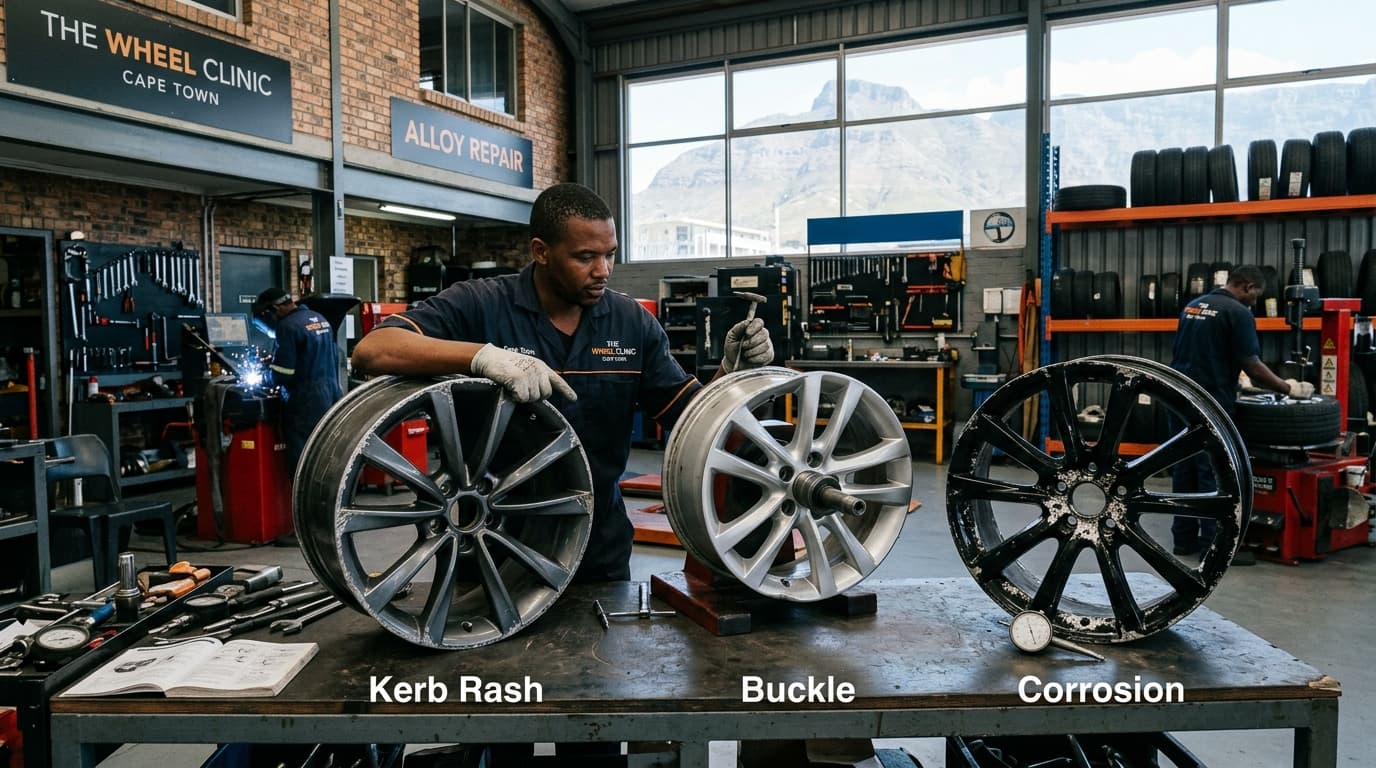
Your wheels are arguably the most vulnerable components on your car. They're in constant contact with the road, exposed to potholes, kerbs, grime, and the elements every single day. Yet most South African drivers only notice a problem when it's already become serious. Understanding the types of mag wheel damage — and what causes each — is the first step to protecting your investment and keeping your vehicle safe on the road.
At Speedline Mags in Parow, Cape Town, we see every imaginable form of alloy wheel damage come through our workshop. This guide breaks down the most common issues, explains how they happen, and gives you practical prevention tips that work on SA roads.
The 5 Most Common Types of Mag Wheel Damage
1. Kerb Rash (Scuff Damage)
Kerb rash is the most frequent form of wheel damage we encounter. It happens when the outer lip or face of the wheel makes contact with a kerb, parking island, or raised edge — scraping away the finish and sometimes gouging the metal itself.
What it looks like: A series of silver or raw-metal scratches along the rim edge, often with paint missing, rough gouges, or exposed aluminium. On powder-coated wheels, kerb rash presents as deep scratches through the coating. On diamond-cut wheels, you'll often see raw machined metal exposed.
What causes it:
- Parallel parking in tight urban spaces (this is the number one culprit in Cape Town)
- Misjudging the distance between your wheel and a raised kerb
- Low-profile tyres that leave less rubber buffer between the rim and road hazards
- Turning sharply near pavements or parking island edges
The risk: Beyond cosmetics, deep kerb rash can compromise the structural integrity of the rim lip. Moisture can also penetrate through damaged areas and accelerate corrosion, especially in Cape Town's coastal climate.
Prevention: Develop a habit of exiting your car and walking around to check wheel clearance when parking in unfamiliar, tight spots. Parking sensors and rear cameras help, but won't always catch lateral kerb proximity.
2. Buckled or Bent Rims
A buckled wheel is one of the most common consequences of South Africa's notoriously pothole-riddled roads. A buckle is a deformation of the wheel's structure — the rim is no longer perfectly round, causing it to wobble slightly during rotation.
What it looks like: You typically can't see a minor buckle by just looking at the wheel. The signs are felt rather than seen: vibration through the steering wheel at certain speeds (typically 60–100 km/h), uneven tyre wear, and a car that drifts slightly to one side.
What causes it:
- Hitting a pothole at speed — the impact force is transmitted directly to the rim
- Speed bumps taken too fast or at a severe angle
- Dropping off a kerb or raised surface without reducing speed
- Off-road driving on wheels not designed for rough terrain
The risk: A buckled wheel throws your vehicle out of balance, causing premature tyre wear and placing additional stress on wheel bearings, steering components, and suspension parts. In severe cases, a buckled rim can cause a tyre blowout.
Prevention: Slow down significantly before hitting speed bumps and potholes you can see. When driving on unfamiliar roads at night, reduce speed to give yourself reaction time. A well-inflated tyre provides slightly more cushioning than an underinflated one.
For detailed information on the repair process, see our guide on wheel straightening and bent rim repair.
3. Cracked Alloy Wheels
Cracks represent the most serious form of alloy wheel damage. Unlike a buckle (a structural bend), a crack is a fracture — either a hairline crack in the barrel, a crack around a bolt hole, or a more dramatic split in the rim face.
What it looks like: Hairline cracks can be nearly invisible and are often only detected during a professional inspection. More severe cracks may be visible as thin lines running from the tyre bead seat or bolt holes. Sometimes the only sign is a persistently slow tyre leak that doesn't trace to the tyre itself.
What causes it:
- Severe, single-impact pothole strikes — particularly at highway speed
- Kerb strikes with enough force to crack the alloy
- Driving on a flat or severely underinflated tyre (the metal takes the impact without any rubber cushioning)
- Metal fatigue from repeated, cumulative impacts over time
- Manufacturing defects (rare with reputable brands)
The risk: A cracked wheel is a safety issue, full stop. Driving on a cracked alloy risks sudden, catastrophic failure — especially under braking or cornering loads. Unlike a slow buckle, a structural crack can fail without warning.
What to do: If you suspect a cracked wheel, stop driving on it and have it professionally inspected immediately. Some cracks can be welded and repaired; others require replacement. See our guide on cracked alloy wheel repair or replace decision-making for more detail.
4. Corrosion and Oxidation
Corrosion is an insidious form of alloy wheel damage because it develops slowly and invisibly until it becomes a significant problem. Aluminium alloy wheels don't rust in the conventional sense, but they do oxidise — and when protective coatings are breached, the underlying metal becomes vulnerable.
What it looks like: Early-stage corrosion appears as a white powdery residue or hazy patches on the wheel face or inside the barrel. More advanced corrosion causes pitting, bubbling through the paint or powder coat, and dark discolouration. Behind the wheel (inside the barrel) you'll often find the worst corrosion — out of sight, out of mind.
What causes it:
- Brake dust is highly corrosive and the most common cause of wheel surface damage
- Salt from road spray — especially near the coast (Cape Town's coastal communities are particularly affected)
- Road chemicals, including de-icing compounds (less of an issue in SA, but still present)
- Acid-based wheel cleaners used incorrectly or left on too long
- Physical damage (kerb rash, stone chips) that exposes bare metal to moisture
The risk: Beyond aesthetics, corrosion weakens the structural integrity of the alloy over time. Severe corrosion in the tyre bead seat area can prevent a proper tyre seal, leading to slow leaks that are difficult to diagnose.
Prevention: Clean your wheels regularly — at least fortnightly — to remove brake dust before it bonds to the surface. Use a pH-neutral wheel cleaner, not acid-based products. After washing, consider applying a wheel sealant or wax to protect the coating. If you notice any chips or scratches in the coating, address them quickly before moisture gets in.
For a full guide to wheel corrosion, see our article on wheel corrosion causes, prevention and treatment.
5. Stone Chips and Paint Damage
Stone chips are minor but cumulative. The high-speed impact of road debris against your wheel face chips away at paint, powder coating, or lacquer — leaving tiny exposed areas that invite corrosion and look unsightly over time.
What it looks like: Small chips in the paint or coating, often with a silver or raw aluminium centre. Over time, the edges of chips start to lift and flake, spreading the damaged area.
What causes it:
- Gravel and loose aggregate on SA roads
- Following too closely behind vehicles on unpaved or freshly tarred roads
- Gravel thrown up by your own tyres inside the wheel arch
- Construction zones where road debris is unavoidable
Prevention: Keep a safe following distance on gravel roads. Consider mud flaps for vehicles frequently used on unpaved surfaces. Touch up minor chips quickly with a matching paint pen before they spread.
How SA Roads Specifically Damage Your Wheels
South African road conditions are genuinely harsh by global standards. Potholes are widespread and poorly maintained across many municipalities. Cape Town's combination of mountain roads, coastal salt air, and urban parking hazards creates a particularly demanding environment for alloy wheels.
The N1 and N2 corridors leading into Cape Town are notorious for pothole damage, especially after winter rain. Residential streets in older suburbs like Bellville, Parow, and parts of the Northern Suburbs often have uneven surfaces and raised drainage covers that can catch low-profile wheels off guard.
Understanding pothole wheel damage in South Africa and how to navigate it proactively is one of the most valuable things a Cape Town driver can do.
Which Wheels Are Most at Risk?
Not all wheels are equally vulnerable. Here's a quick breakdown:
Low-profile tyres (35 to 45 aspect ratio): These thin-walled tyres offer very little cushioning between the road and the rim. They look great on performance and luxury vehicles but are significantly more susceptible to buckles and cracks from pothole impacts. Audi, BMW, and Mercedes-Benz owners with large diameter wheels need to be particularly careful.
Diamond-cut wheels: These are beautiful but more maintenance-intensive. The machined surface has a very thin lacquer coating that's easily damaged by kerb rash and chemical cleaners. Once that lacquer is breached, corrosion can spread under the surface quickly. Read more in our diamond cut wheel repair guide.
High-polish chrome or polished alloys: Like diamond cut, the absence of a thick protective powder coating means these surfaces require more diligent cleaning and are more susceptible to pitting and corrosion.
Powder-coated wheels: Generally the most durable finish for everyday South African conditions. A quality powder coat is thick, impact-resistant, and well-suited to dusty, coastal, and pothole-heavy environments.
When to See a Professional
Some wheel damage can be monitored or managed at home. Other damage needs professional attention immediately. Here's a quick guide:
Seek professional assessment right away if:
- Your tyre develops a slow leak and you can't find the source in the tyre itself
- You feel persistent vibration through the steering wheel, particularly at highway speeds
- Your wheel has taken a severe pothole or kerb impact and you notice any handling change
- You can see a visible crack or fracture anywhere on the wheel
- Corrosion is bubbling through the paint or appearing inside the barrel
Can monitor at home:
- Minor kerb rash with no structural damage
- Small stone chips in good condition (not lifting or spreading)
- Surface discolouration that cleans off with proper wheel cleaner
Our guide on signs your wheels need professional repair covers this in more detail.
Can Damaged Wheels Be Repaired?
The good news: most types of mag wheel damage can be professionally repaired rather than requiring full replacement — which is significantly more expensive.
At Speedline Mags, we handle:
- Kerb rash repair: Filling, reshaping, and refinishing the rim edge to a factory standard
- Buckle straightening: Using specialist hydraulic equipment to restore the wheel's true shape
- Crack welding: Professional TIG welding of eligible cracks, followed by structural testing
- Corrosion treatment and refinishing: Stripping affected areas, treating the metal, and reapplying the correct finish
- Full wheel refurbishment: Complete strip, repair, and recoat — whether in powder coat, diamond cut, or custom colour
The key is catching damage early. A small kerb rash caught immediately is a straightforward repair. Left for months, corrosion can spread underneath the coating and turn what was a R500 job into something far more involved.
For a full breakdown of what repairs cost, see our wheel repair cost guide for South Africa.
Prevention Summary: 5 Habits That Protect Your Alloys
- Clean your wheels every two weeks — remove brake dust before it bonds and becomes corrosive
- Slow down on rough roads — most pothole buckle damage happens when drivers are too fast to react
- Check your tyre pressure monthly — properly inflated tyres cushion the rim from impact
- Park carefully in tight spots — take an extra 30 seconds to position properly rather than scraping a kerb
- Address damage early — small chips, minor rash, and early corrosion cost far less to fix than advanced damage
Get Your Wheels Assessed at Speedline Mags
If you've noticed any of the damage types described here — or you're simply not sure whether your wheels are in good shape — bring them in for a professional assessment. Our team at Speedline Mags in Parow, Cape Town has the expertise to diagnose the full extent of any damage and recommend the most cost-effective repair approach.
We work on all makes and models, from VW Polos and Toyota Hiluxes to BMW 3 Series, Mercedes-Benz C-Classes, and everything in between. Whether it's a quick kerb rash repair or a full set of refurbished wheels, we'll get your mags looking and performing their best.
Contact Speedline Mags today for a quote or to book your wheel assessment. We're here to help you stay safe and keep your vehicle looking sharp on Cape Town's roads.