
Diamond Cut Rims: The Complete Restoration Guide for SA Drivers
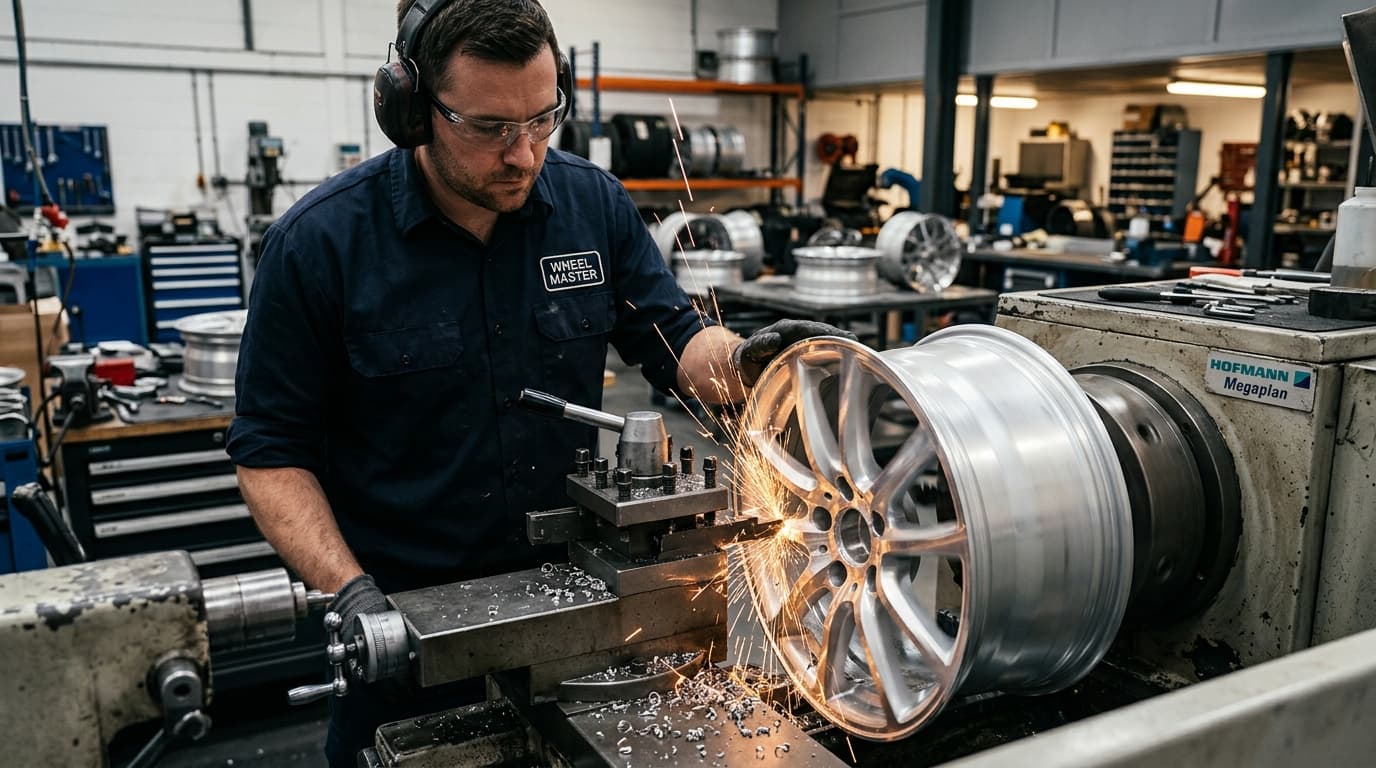
If you've ever admired the gleaming, almost mirror-like face of a freshly machined alloy wheel, you've seen diamond cut rims at their best. That crisp, two-tone look — polished silver cutting face against a contrasting painted barrel — is one of the most popular wheel finishes on the road today. It's factory-fitted to everything from entry-level VW Polos to high-end BMWs and Mercedes-Benzes. And, like any precision finish, it needs proper care and expert repair when it gets damaged.
This guide covers everything South African drivers need to know about diamond cut rims: what the finish actually is, how the restoration process works, how much it costs, how many times a wheel can be diamond cut, and how to protect the finish once it's done.
What Exactly Are Diamond Cut Rims?
The term "diamond cut" refers to a wheel finishing method that uses a CNC (Computer Numerical Control) lathe to machine the face of the alloy wheel to a very fine, precise tolerance. The cutting tool — tipped with industrial diamond, which is the hardest material available — removes a thin layer of metal from the wheel face, leaving behind a bright, polished surface with an ultra-smooth texture.
The result is a high-contrast, two-tone appearance: the machined face is left bare and lacquered (giving a bright silver-chrome-like sheen), while the recessed areas, spokes, and barrel of the wheel are finished in a complementary colour — typically gunmetal grey, gloss black, or anthracite. This combination looks stunning on both sporty hatches and luxury SUVs.
Diamond cut wheels are sometimes called "diamond turned" or "CNC-machined" wheels, and all three terms refer to the same process. The finish became extremely common in the mid-2010s and is now standard on a huge range of vehicles sold in South Africa, from the Toyota Fortuner to the Audi Q5.
Why Diamond Cut Finishes Get Damaged
The issue with diamond cut rims is that the machined face is essentially bare metal under a thin layer of lacquer. That lacquer is there to prevent oxidation, but it's vulnerable to a few very specific threats:
Kerb rash and abrasion. Scraping a diamond cut rim against a kerb is painful to look at. The lacquer and polished metal face both get scuffed, leaving marks that immediately break the mirror-like appearance. This is by far the most common form of damage — it happens to even the most careful drivers, especially on tight Cape Town streets.
Lacquer peeling and flaking. Over time, the lacquer can begin to lift at the edges, particularly around spoke tips or where there's been a small chip. Once the lacquer starts peeling, moisture gets beneath it, and the exposed aluminium begins to oxidise and pit. This can spread quickly, especially in coastal environments like Cape Town where salt air accelerates corrosion.
Pothole and buckle damage. SA roads — particularly the Northern Suburbs — are hard on alloy wheels. A pothole hit can buckle the rim (deforming it out-of-round) and crack or chip the machined face. A buckled diamond cut wheel needs to be straightened first before any cosmetic repair is done.
Chemical damage. Harsh wheel cleaning products, tar remover, or even brake dust if left too long can etch into the lacquer and stain the polished face. Always use pH-neutral cleaners on diamond cut rims.
How Diamond Cut Wheel Repair Works
Restoring a diamond cut rim is a multi-step process that requires specialist equipment. It's not something that can be done at home with a tin of silver paint — a proper restoration goes back to bare metal and re-machines the face to factory spec.
Step 1: Inspection and Straightening
Before any cosmetic work begins, the wheel is inspected for structural damage. If there's a buckle (a bent or out-of-round section), it must be straightened using a hydraulic wheel press. A structurally compromised wheel cannot be safely put back on the road, regardless of how good it looks. At Speedline Mags in Parow, this inspection is always done first.
Step 2: Stripping the Old Finish
The wheel goes into a chemical strip bath or is sandblasted to completely remove all existing lacquer, paint, and oxidation. This gives the team a clean surface to work with and reveals any hidden pitting or cracks. The barrel is stripped back to bare alloy as well.
Step 3: CNC Diamond Cutting
With the wheel cleaned and mounted on the CNC lathe, the machine's programme follows the exact profile of the wheel face — matching the original OEM geometry. The diamond-tipped cutting tool moves across the face in precise passes, removing a very thin layer of metal (typically 0.1–0.3mm per pass) and leaving behind the characteristic bright, machined finish. This is the step that requires the most skill and specialist equipment. The programme must be accurate; too aggressive a cut removes too much material, while an incorrect profile will change the look of the spokes entirely.
Step 4: Painting the Barrel and Spokes
After machining, the recessed areas, spokes, and barrel are prepared and sprayed in the correct colour. Most diamond cut wheels come from the factory in gunmetal, anthracite, or gloss black — and a good wheel refurbisher will match the original colour as closely as possible. At Speedline Mags, this is done using a professional spray booth to ensure a dust-free, even finish.
Step 5: Lacquering
The freshly machined face is then sealed with a clear lacquer — usually a two-pack (2K) automotive lacquer that cures hard and provides durable UV and corrosion protection. This step is critical: without quality lacquer properly applied, the wheel will begin to corrode within months. The complete wheel is lacquered, not just the machined face, to seal the entire surface.
Step 6: Quality Check and Curing
Once the lacquer has cured (typically 24–48 hours), the wheel is inspected and cleaned. A quality repair should look indistinguishable from a factory-fresh wheel.
How Much Does Diamond Cut Wheel Repair Cost in South Africa?
Diamond cut wheel repair is one of the more expensive wheel refurbishment services because it requires a CNC lathe and skilled operator, not just spray equipment. That said, it's still significantly cheaper than replacing a wheel, which can cost anywhere from R3,000 to R15,000+ for OEM rims on premium vehicles.
As a general guide for Cape Town in 2026:
- Single wheel diamond cut repair (kerb damage, standard 17"): R900 – R1,400
- Single wheel diamond cut (larger 19"–20" rim): R1,400 – R2,200
- Full set of four wheels (17"): R3,200 – R5,200
- Buckle repair + diamond cut combo: Add R400 – R800 per wheel
Pricing varies depending on the size of the wheel, the extent of the damage, and whether the barrel also needs repainting. It's always worth getting a proper quote after a visual inspection — photos can help, but hands-on assessment is the only reliable way to price a repair.
For a precise quote, bring your vehicle into Speedline Mags in Parow — we'll inspect all four wheels and give you a clear, itemised price.
How Many Times Can a Wheel Be Diamond Cut?
This is one of the most common questions we hear at Speedline Mags, and the honest answer is: it depends on the wheel, but typically three to five times maximum over a wheel's lifetime.
Each time a wheel is diamond cut, a thin layer of metal is removed from the face — usually around 0.1–0.3mm per restoration. Alloy wheels are not infinitely thick; the face has a minimum material specification below which the wheel could be compromised structurally. A reputable workshop will measure the remaining material before cutting and advise if a wheel is too thin to cut again safely.
As a rough guide:
- Most new alloy wheels have enough material for 3–5 diamond cut restorations before the face becomes too thin.
- Large, thick wheels (common on bakkies and SUVs) often have more material and can sometimes take more cuts.
- Thin, lightweight sports wheels (common on performance vehicles) may only safely tolerate 2–3 cuts.
An experienced technician can assess this during the initial inspection. If a wheel has already been cut multiple times, powder coating or a full respray might be the more appropriate (and safer) option.
Diamond Cut vs. Powder Coating: Which Should You Choose?
If your diamond cut finish is damaged and you're weighing up options, it's worth comparing diamond cut restoration against alternative finishes:
Diamond cut restoration is the right choice if:
- You want to restore the original factory look
- The wheel has only surface damage (kerb rash, lacquer peel)
- Your vehicle is under warranty or you plan to resell it
- The wheel still has sufficient material for another cut
Powder coating is worth considering if:
- The wheel has already been cut multiple times
- You want a different colour or a fresh look
- The damage is too deep for diamond cutting alone
- You want a more durable, chip-resistant finish
Powder coating is baked on at high temperature and is generally more durable day-to-day than a diamond cut finish, but it doesn't replicate the bright-machined look. Many drivers choose powder coating in anthracite or gloss black precisely because they want something tougher and easier to maintain. You can read more about this decision in our detailed diamond cut vs powder coating comparison.
Aftercare: Keeping Your Diamond Cut Rims in Top Condition
Diamond cut rims require a bit more care than standard painted or powder-coated wheels, primarily because the lacquer is thinner and the machined face is more vulnerable to chemical etching. Here's how to protect the finish:
Use only pH-neutral wheel cleaners. Acidic or alkaline cleaners — including many "all-purpose cleaners" — will attack the lacquer and can permanently etch the bright face. Look for products specifically marked safe for diamond cut or clear-coated alloys.
Rinse wheels before scrubbing. Brake dust is mildly abrasive and acidic. Rinsing first loosens it so you're not grinding it into the lacquer when you scrub.
Avoid pressure washing directly onto the face. High-pressure water jets can drive moisture under any micro-cracks in the lacquer. Use a lower pressure setting and don't point the nozzle straight at the wheel face.
Dry your wheels after washing. Leaving water to dry on a diamond cut rim can leave water spots that are difficult to remove. A soft microfibre cloth is ideal.
Apply a sealant or wax. A ceramic spray sealant or a quality alloy wheel wax adds a sacrificial layer over the lacquer, making it easier to clean and providing extra protection from brake dust and UV degradation.
Inspect the lacquer regularly. Catch any peeling or lifting early — a small lacquer repair is far cheaper than a full re-cut. If you spot a chip where the lacquer has lifted, keep it dry and bring the wheel in sooner rather than later.
Common Diamond Cut Repair Mistakes to Avoid
Not all wheel repair shops have proper CNC equipment or the experience to match your OEM profile correctly. Here's what to watch out for when choosing a diamond cut repair specialist:
Mismatched cutting profile. If the CNC programme doesn't accurately follow the wheel's original geometry, the spokes can end up looking thicker, narrower, or with a different taper than stock. This is immediately obvious and irreversible without another full cut.
Cheap lacquer. Some shops apply single-stage lacquer to speed up turnaround. This will peel within months, especially in Cape Town's coastal climate. Always ask what grade of lacquer is being used — a two-pack (2K) automotive lacquer is the standard for longevity.
Skipping the strip. Painting or lacquering over an existing damaged finish without stripping back to bare metal is a shortcut that will fail quickly. The new lacquer won't bond properly and will lift along with the old finish.
No structural check. A buckled or cracked wheel repaired cosmetically but not structurally is a safety risk. Make sure any workshop you use inspects for structural integrity before cosmetic work begins.
Speedline Mags: Diamond Cut Wheel Specialists in Cape Town
Speedline Mags, based in Parow in Cape Town's Northern Suburbs, is a specialist wheel repair and refurbishment workshop with professional CNC equipment for diamond cut restorations. We service vehicles from across the Northern Suburbs — Bellville, Durbanville, Brackenfell, Goodwood, Kraaifontein and beyond — as well as the broader Cape Town metro.
Our team works on all makes and models: VW Polo and Golf, Toyota Hilux and Fortuner, BMW 3 Series and X3, Mercedes-Benz C-Class and GLC, Audi A4 and Q5, and everything in between. Every job starts with a full inspection, honest assessment of whether diamond cutting is the right option, and a clear quote upfront.
If your diamond cut rims are scuffed, peeling, or corroded, bring them to Speedline Mags. We'll restore them to factory standard — or talk you through the alternatives if a different approach is better for your wheels.
Contact Speedline Mags to book an inspection or get a quote. We're located in Parow, Cape Town, and our team is ready to help you get your wheels looking their best again.
Related reading: Diamond Cut vs Powder Coating: Which Is Best for Your Alloy Wheels? | Signs Your Wheels Need Professional Repair | How Potholes Damage Your Wheels and What to Do About It