
Cracked Rim Repair: Is It Safe? Costs & Options in SA
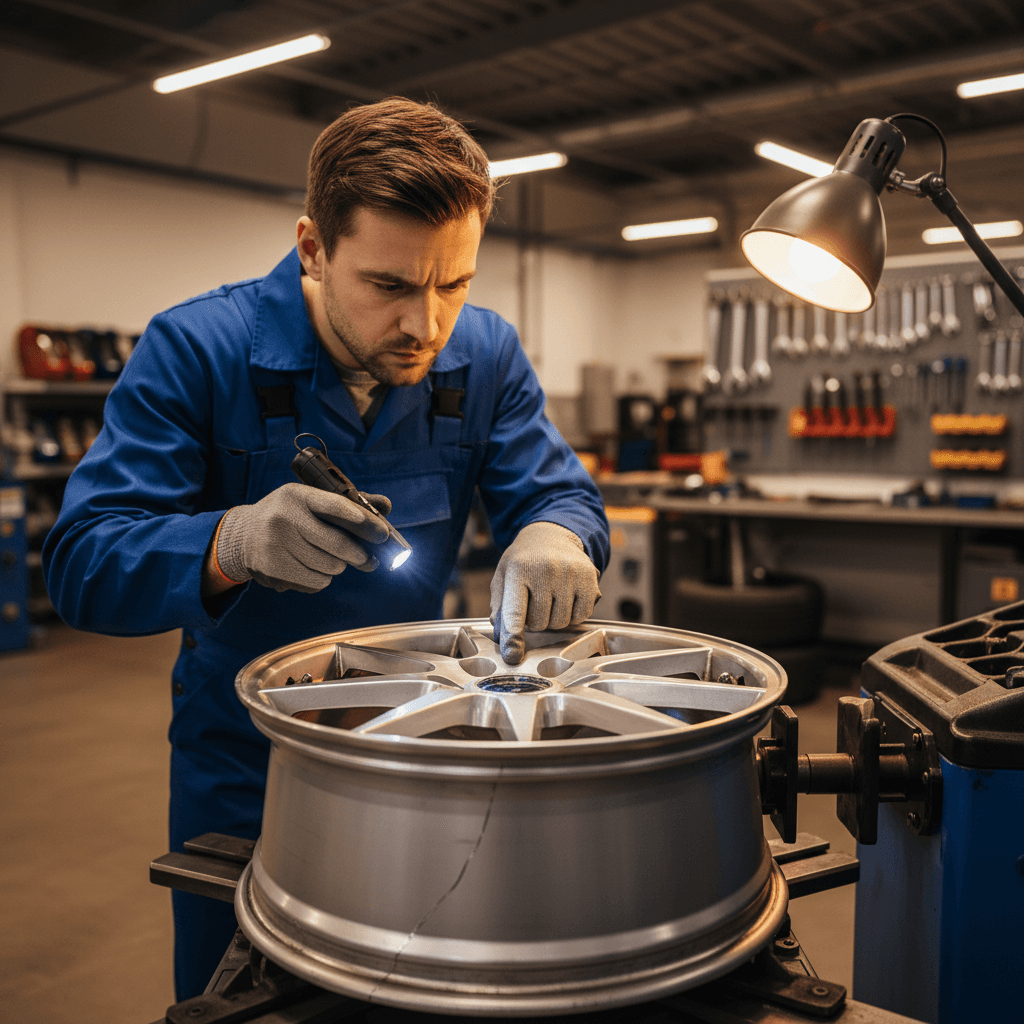
South Africa's roads are punishing. Between the potholes of the N1, the kerbs in Cape Town's tighter suburbs, and the general wear of daily driving, cracked rims are a reality many drivers eventually face. The question is almost always the same: is cracked rim repair safe, and is it worth doing?
The honest answer is: it depends on the crack. Not every cracked alloy wheel is repairable, and not every repair shop will give you a straight answer about when to walk away. This guide covers everything you need to know — structural vs cosmetic cracks, the TIG welding process, when a crack is too far gone, and realistic costs in South Africa.
What Causes a Cracked Rim?
Understanding why rims crack helps you avoid future damage and gives you context when a technician assesses your wheel.
Pothole impact is the leading cause in South Africa. When a tyre drops into a deep pothole at speed, the force transfers directly into the rim — often causing an immediate crack on the inner barrel or the lip. The Northern Suburbs of Cape Town, as well as arterial roads across the Western Cape, are notorious for this.
Kerb strikes are another major culprit. Parallel parking mishaps, tight corners, and misjudged turns all put lateral stress on the wheel. This tends to produce cracks along the wheel face or the outer lip rather than the barrel.
Metal fatigue is less dramatic but just as real. Older alloy wheels — especially those that have been previously bent and straightened — develop micro-fractures over time. What looks like a hairline crack may actually be the final stage of a longer stress cycle.
Manufacturing defects are rare but not unheard of in lower-quality aftermarket wheels. These cracks tend to appear earlier in the wheel's life and in consistent locations across multiple units.
Structural vs Cosmetic Cracks: The Critical Distinction
The most important question a technician will answer before doing anything else is whether your crack is structural or cosmetic.
Cosmetic Cracks
Cosmetic cracks are surface-level — they affect the finish or the decorative face of the wheel but do not penetrate through the alloy. These are often the result of kerb scrapes and may look alarming but carry minimal safety risk. They're primarily an aesthetic concern and can usually be repaired alongside a full diamond cut or powder coat refurbishment.
Structural Cracks
Structural cracks go through the full thickness of the rim material. These compromise the integrity of the wheel and are a direct safety hazard. A structurally cracked rim can:
- Lose air pressure gradually or suddenly
- Fail completely under load, especially at speed
- Compromise tyre bead seating, increasing blowout risk
The barrel, bead seat area, and spoke roots are the most critical zones. A crack in any of these locations demands immediate professional assessment — and in many cases, the wheel should be taken out of service entirely until it's been evaluated.
Can a Cracked Alloy Wheel Be Repaired?
Yes — many cracked alloy wheels can be repaired successfully, but it requires the right equipment and a skilled welder. The process is not a simple patch job.
TIG Welding for Cracked Rim Repair
TIG (Tungsten Inert Gas) welding is the industry standard for cracked alloy wheel repair. Alloy wheels are typically made from aluminium alloy (A356 or similar), which requires precise heat control to weld without warping, burning, or weakening the surrounding material.
The process at a professional shop like Speedline Mags typically involves:
- Inspection and cleaning — the crack is examined under bright lighting, and in some cases dye penetrant is used to reveal the full extent of the fracture.
- Stripping — the wheel is stripped of its tyre and any existing finish in the crack zone.
- Pre-heating — aluminium alloy requires controlled pre-heating to prevent thermal shock during welding.
- TIG welding — the crack is filled and fused using a compatible aluminium filler rod. This is precision work; an experienced welder will run multiple passes to ensure full penetration.
- Grinding and smoothing — excess weld material is ground back flush with the wheel surface.
- Pressure testing — the repaired wheel is typically inflated and submerged to check for air leaks before any refinishing takes place.
- Refinishing — once structurally sound, the wheel goes through powder coating or diamond cutting to restore the finish.
A well-executed TIG weld on an alloy wheel is strong — in many cases stronger than the base material in the repaired area. But the skill of the welder matters enormously. A rushed or poorly done weld can introduce new stress points or fail to fully close the crack.
When Is a Cracked Rim Beyond Repair?
Not every cracked alloy wheel can be saved. Situations where repair is not recommended include:
- Multiple cracks in the same zone — indicating widespread fatigue that welding cannot fully address
- Cracks through the bead seat — this is the surface the tyre seals against; any compromise here creates a chronic leak risk
- Large or branching cracks — fractures that have propagated across a wide area may not weld cleanly
- Previously welded and re-cracked wheels — a wheel that has cracked in the same place after a prior repair is telling you something about the underlying stress pattern
- Severely bent and cracked — if the wheel also has significant structural distortion, the combined damage often exceeds what repair can safely address
A reputable technician will tell you honestly when replacement is the better option. If a shop promises to fix every crack without any caveats, treat that as a red flag.
Is It Safe to Drive on a Cracked Rim?
No. A structurally cracked rim should not be driven on until it has been professionally assessed and either repaired or replaced.
Even a hairline crack can grow rapidly under the cyclical stress of driving. The risk isn't just a slow puncture — it's a sudden tyre failure at speed. A rim that fails on the highway creates an extremely dangerous situation for the driver and everyone around them.
If you suspect your rim is cracked, the safest approach is:
- Check your tyre pressure immediately — an unusual drop points to a compromised bead seal
- Have the vehicle towed or driven very slowly to a wheel repair specialist
- Don't inflate the tyre to driving pressure until the rim has been inspected
A cracked rim should be treated with the same urgency as a cracked brake disc — it's a safety-critical component, not a cosmetic one.
Cracked Rim Repair Cost in South Africa
Pricing for cracked rim repair in South Africa depends on several factors: the severity and location of the crack, the size and type of wheel, and whether refinishing is included.
As a general guide for 2026 pricing in Cape Town:
- Basic structural crack weld (single crack, no refinishing): R800 – R1 500 per wheel
- Crack repair + powder coat refinish: R1 500 – R2 800 per wheel
- Crack repair + diamond cut refinish: R1 800 – R3 200 per wheel
- Complex multi-crack or large fracture repair: R2 000 – R4 000+ depending on scope
These figures are estimates. Wheels with unusual alloy composition, very large diameters (20"+), or cracks in difficult locations may cost more. The only way to get an accurate number is to bring the wheel in for assessment.
Compare this to replacement cost: a single OEM alloy for a BMW 3 Series, Mercedes C-Class, or VW Tiguan can run R3 000 – R8 000 or more, and that's before mounting and balancing. For many drivers, quality repair is a meaningful saving — provided the crack is actually repairable.
For more on how wheel repair and replacement costs compare, see our wheel repair vs replacement guide.
What to Expect at a Professional Assessment
When you bring a cracked rim to Speedline Mags in Parow, the process starts with a proper inspection — not a five-second glance and a quote.
Visual inspection under adequate lighting is the first step. Many cracks that look minor reveal themselves as more extensive under bright directional light or a UV dye penetrant test.
Location mapping — the technician will note exactly where the crack is relative to the wheel's critical load zones (spoke roots, barrel, bead seat, hub bore area). This determines whether repair is structurally sound.
Damage history — if the wheel has been repaired before or shows signs of previous bending, that history matters for the assessment.
Honest recommendation — a good workshop will give you a clear answer: repairable with confidence, repairable with caveats, or replace. They should be able to explain why.
At Speedline Mags, we're based in Parow and serve drivers from across the Cape Town Northern Suburbs — Bellville, Durbanville, Goodwood, and beyond. We also see customers from the Southern Suburbs, Table View, and the Winelands who want a proper assessment before committing to a costly replacement.
Insurance and Cracked Rim Repair
South African comprehensive car insurance policies vary significantly in how they handle wheel damage. Some insurers will cover a cracked rim under accidental damage, particularly if it resulted from a pothole or collision.
Key things to know:
- You typically need to log the claim promptly and provide photos of the damage
- Some insurers require a quote from an approved repairer before authorising work
- Excess amounts often make it impractical to claim for a single wheel unless the repair cost is high
- A few policies have specific wheel and tyre add-ons that provide better coverage
For a full breakdown of how to navigate insurance for wheel damage in South Africa, see our insurance claims guide for wheel damage.
Prevention: How to Reduce Your Risk of Cracking a Rim
While you can't fully control South Africa's road conditions, you can reduce the risk:
Maintain correct tyre pressure. An under-inflated tyre provides less cushioning between the wheel and the road. Many pothole cracks happen because the tyre had too little air to absorb the impact. Check your pressures at least monthly.
Slow down over bad surfaces. Speed dramatically increases impact force. Halving your speed over a pothole reduces the energy transferred to the rim by approximately 75%.
Choose the right wheel size. Ultra-low-profile tyres (30 or 35 series) look great but offer almost no buffer between the rim and road imperfections. If you drive frequently on poor roads, a slightly higher profile tyre gives your wheels meaningfully better protection. See our wheel size and fitment guide for more detail.
Get your wheels inspected after a significant impact. If you've hit a pothole hard enough to feel it through the steering wheel or body of the car, have the affected wheels checked even if you can't see obvious damage. Internal cracks can be invisible until they worsen.
Summary: Is Cracked Rim Repair Worth It?
In most cases, yes — if the crack is structural and limited in scope, TIG welding by a skilled technician produces a safe and durable result at a fraction of replacement cost. The key is getting an honest assessment from a shop that will tell you when a wheel isn't worth saving.
The risks of leaving a cracked rim unaddressed — or having it poorly repaired — far outweigh the cost of doing it properly. A wheel failure at highway speed is catastrophic. Don't compromise on this.
Get Your Cracked Rim Assessed at Speedline Mags
Speedline Mags is based in Parow, Cape Town, and specialises in alloy wheel repair, welding, and refurbishment. Whether you've hit a pothole on the N1 or clipped a kerb in Bellville, we'll give you a straight answer on whether your rim can be safely repaired — and at what cost.
Contact us today to book an assessment, or drop in with your wheel for a no-obligation inspection. We serve drivers across Cape Town's Northern Suburbs and beyond.