
Buckled Wheel vs Buckled Rim: What's the Difference and How to Fix It
If you've ever hit a pothole on the N1 or scraped a kerb in a tight parking bay, you've probably heard the term "buckled wheel" — and perhaps "buckled rim" too. Many drivers use these phrases as if they mean the same thing, but there's actually an important distinction. Understanding the difference can help you have a more informed conversation with your wheel repair specialist and make better decisions about repair versus replacement.
At Speedline Mags in Parow, Cape Town, we deal with buckled wheels on a daily basis — from daily drivers to prestige vehicles. This guide breaks down the terminology, explains the causes, and walks you through the entire straightening process, including what it's likely to cost you in South Africa in 2026.
What Is a Buckled Wheel?
The term buckled wheel is broadly used to describe any wheel that has been deformed out of its original round shape. When a wheel is buckled, it no longer spins true — meaning it wobbles or vibrates as it rotates. This can affect your steering, your tyre wear, your fuel efficiency, and ultimately your safety.
In everyday South African usage, "buckled wheel" and "buckled rim" are used interchangeably. But technically speaking:
- The rim refers to the outer edge of the wheel — the part that holds the tyre bead in place.
- The wheel is the complete assembly, including the rim, spokes, and the hub mounting section.
So a buckled rim usually means the outer lip or barrel has been bent — most commonly from kerb strikes or potholes. A buckled wheel is a broader term that can include distortion anywhere in the wheel structure, including the spoke area or the face.
In practice, both terms refer to the same problem: your wheel is bent and needs professional attention.
What Causes a Buckled Wheel?
South Africa's roads are notoriously unforgiving, and Cape Town is no exception. Here are the most common causes of buckled wheels we see at our Parow workshop:
Potholes
This is the number-one culprit. When a tyre drops into a pothole at speed, the impact force is transmitted directly into the wheel. The sharper and deeper the pothole, the greater the risk of buckling. Low-profile tyres offer less cushioning, making the wheels they're fitted on even more vulnerable. Read our full guide on protecting your wheels from pothole damage.
Kerb Strikes
Rolling a wheel against a raised kerb — especially at an angle — can bend the rim's outer flange inward or outward. This is extremely common in urban areas, tight parking garages, and along the older road edges in suburbs like Bellville and Parow.
Speed Bumps
Speed bumps taken too fast or at the wrong angle can cause significant impact damage, particularly on vehicles with lower ride heights.
Overloading
Exceeding a vehicle's load capacity puts excess stress on all four wheels. Over time, or in a single overload event, this can cause deformation — especially to cast alloy wheels.
Previous Poor Repair
A wheel that was repaired incorrectly — or repaired more times than it structurally allows — can fail or re-buckle. This is why it's important to use a reputable wheel repair specialist from the outset.
How to Tell If Your Wheel Is Buckled
The symptoms of a buckled wheel are usually hard to miss once you know what to look for:
Steering wheel vibration — especially at highway speeds (80–120 km/h), a buckled wheel often produces a rhythmic vibration that travels through the steering column. This is one of the most reliable indicators.
Visible wobble — if you can see one of your wheels wobbling while the car is on a lift, it's buckled. Sometimes this is visible at low speeds on very badly buckled wheels.
Pulling to one side — a significantly buckled wheel can affect your vehicle's tracking, causing it to pull left or right.
Uneven tyre wear — a wheel running out of true will cause the tyre to wear unevenly, often faster on one edge.
Loss of tyre pressure — if the rim flange is bent, it may no longer seal properly with the tyre bead, causing a slow or rapid loss of air.
If you're experiencing any of these symptoms, bring the vehicle in for a wheel inspection. At Speedline Mags, we can assess the damage quickly and give you an honest recommendation. See our full list of signs your wheels need professional repair.
Can a Buckled Wheel Be Repaired?
The short answer: in most cases, yes — but it depends on the severity of the damage and the type of wheel.
Mild to Moderate Buckling
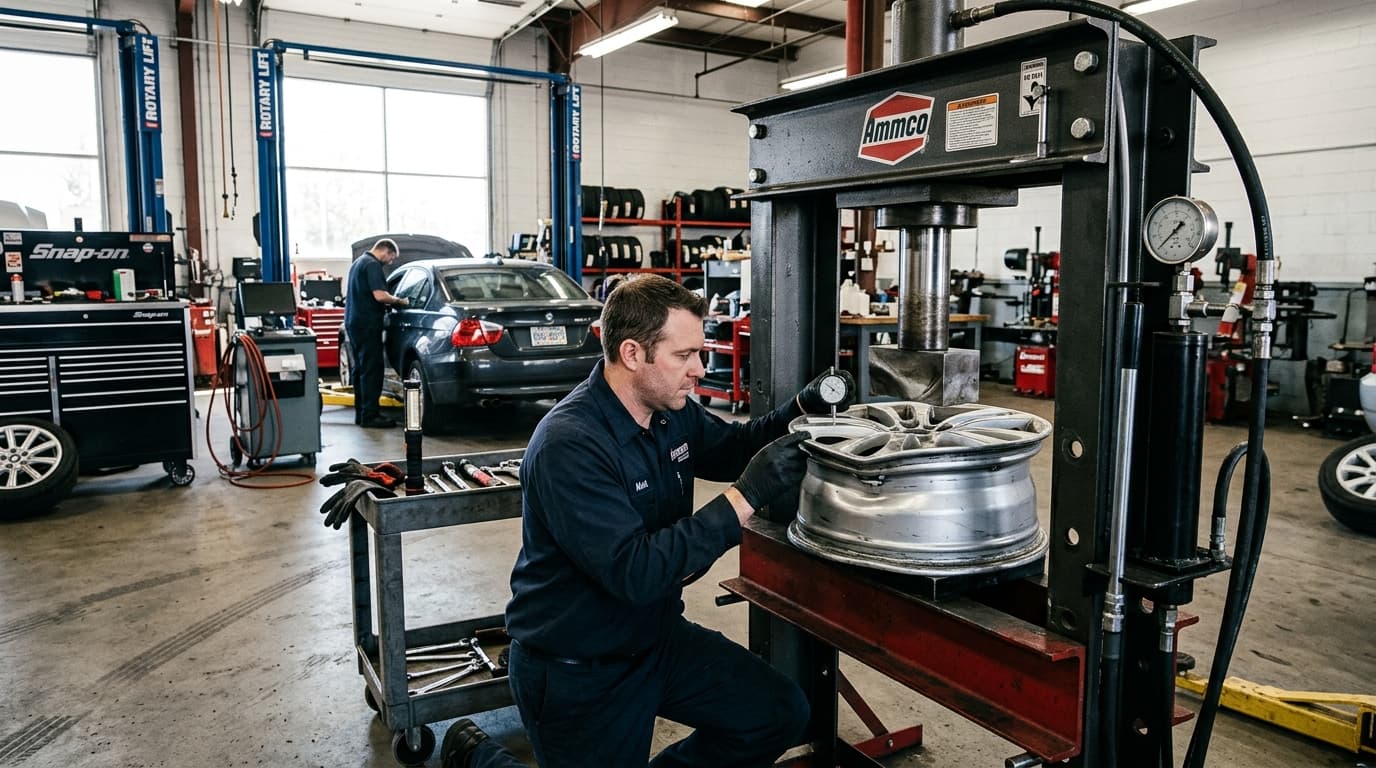
Most buckled alloy wheels with moderate deformation (the outer rim is bent, but the spokes and hub area are unaffected) can be straightened using a hydraulic wheel press. This process involves applying controlled pressure to the distorted area, gradually returning the wheel to its original profile.
Severe Buckling or Cracking
If the buckling is severe, or if there are cracks in the wheel — particularly in the spoke area or near the hub — repair becomes more complicated. Cracks in structural areas of the wheel can compromise safety, and in these cases, we often recommend replacement. Read more about when to repair vs replace a cracked alloy wheel.
Steel Wheels
Steel wheels are generally more malleable and easier to straighten than alloys. They're less prone to cracking under impact but can distort more significantly.
Forged vs Cast Alloy Wheels
Forged alloy wheels are typically more repairable because of their denser grain structure. Cast alloy wheels are more brittle and more likely to crack when severely deformed.
How Wheel Straightening Works
The wheel straightening process at Speedline Mags follows a precise sequence to ensure the wheel is returned to factory specification:
1. Initial Assessment
We mount the wheel on our diagnostic equipment to measure run-out — how far the wheel deviates from true as it rotates. This gives us an accurate picture of the extent of the damage.
2. Inspection for Cracks
Before any pressing begins, the wheel is carefully inspected for hairline cracks using visual inspection and sometimes dye penetrant testing. A cracked wheel should never be pressed, as the straightening process can propagate the crack.
3. Controlled Heating (if required)
For alloy wheels, the distorted section may be carefully and locally heated to increase malleability before pressing. This is done with precision — excessive heat can weaken the alloy.
4. Hydraulic Press Straightening
The wheel is positioned on the press, and controlled pressure is applied incrementally to the buckled area. Our technicians work slowly, checking run-out measurements between presses to avoid over-correction.
5. Final Run-Out Check
Once the wheel is straightened, it's measured again. Industry standard is a run-out of less than 1.5mm. We aim for under 1mm wherever possible.
6. Cosmetic Repair (Optional)
Straightening addresses the structural issue. If the wheel also has kerb rash, scratches, or paint damage, we can carry out a full cosmetic refurbishment — powder coating, diamond cutting, or repainting — at the same time. Learn more about our diamond cut wheel refurbishment service.
Wheel Straightening Cost in South Africa (2026)
Here's what you can expect to pay for buckled wheel repair in South Africa:
The cost of wheel straightening varies depending on the wheel size, severity of damage, and the type of finish involved. As a general guide in 2026:
- Basic wheel straightening (steel or alloy, single wheel): R350 – R650
- Alloy wheel straightening with minor cosmetic repair: R600 – R1,200
- Severe bend with full refurbishment (powder coat or diamond cut): R1,200 – R2,500+
Prestige or large-diameter wheels (20"+) may attract a premium. If multiple wheels require straightening — common after a significant pothole impact — most workshops offer a per-wheel rate.
Keep in mind that even a single buckled wheel left unrepaired can cause accelerated tyre wear, meaning your cost of inaction is higher than the repair. See our full wheel repair cost guide for South Africa.
Is It Safe to Drive on a Buckled Wheel?
The answer depends on the severity. A very mildly buckled wheel (under 2mm run-out) may be driveable at lower speeds, but you should still get it repaired promptly. A severely buckled wheel — especially one that's lost tyre pressure or has a bent bead seat — can be dangerous.
If your tyre is deflating due to a bent rim seal, do not drive on it. A sudden tyre deflation at highway speed is a significant accident risk.
As a general rule: if you notice steering vibration or visible wobble after hitting a pothole or kerb, get the vehicle checked before your next long journey.
Buckled Wheels on Common South African Cars
Different vehicles have different wheel constructions, which affects how they respond to impact damage:
Toyota Hilux and Fortuner — These bakkies and SUVs often run larger wheels with more tyre profile, which provides better cushioning. However, heavy loads and off-road use increase the risk of buckling on rougher roads. Read our Toyota wheel repair guide.
VW Polo and Golf — These popular cars often come with lower-profile tyres, making their alloy wheels more susceptible to pothole damage. The Golf GTI's 18" and 19" wheels are common visitors to our workshop. More on VW wheel repair.
BMW 3 Series and X3 — BMW alloys tend to be attractive but can be brittle when cast. They buckle quite readily on Cape Town's pothole-riddled roads. See our BMW wheel repair guide.
Mercedes-Benz C-Class and GLC — Mercedes wheels are often larger and heavier, and repair requires precision. Read about Mercedes wheel refurbishment.
Ford Ranger — South Africa's top-selling bakkie for good reason, but its larger wheels can still buckle under hard impacts. Ford Ranger wheel repair guide.
How Many Times Can a Wheel Be Straightened?
This is a common question. The answer depends on the wheel's construction and the extent of each repair.
As a rule of thumb, most alloy wheels can be straightened once or twice without significant loss of structural integrity — provided the repair is done correctly and there are no cracks. After that, the metal fatigue risk increases, and we'll typically recommend replacement rather than further repair.
We always carry out a thorough inspection before recommending a repair, and we'll tell you honestly if we believe a wheel is past the point of safe repair.
Why Choose Speedline Mags for Buckled Wheel Repair?
Speedline Mags is based in Parow, Cape Town, and serves the Northern Suburbs — including Bellville, Durbanville, Goodwood, Brackenfell, and surrounding areas. Here's what sets us apart:
- Specialist equipment — hydraulic wheel presses calibrated for precision straightening, not makeshift solutions
- Experienced technicians — our team works on everything from budget hatchbacks to prestige European vehicles
- Honest assessments — we won't recommend a repair if the wheel should be replaced
- Turnaround — most straightening jobs are completed same-day or next-day
- Full refurbishment option — if your wheel needs cosmetic work too, we do it all in one place
Conclusion: Don't Ignore a Buckled Wheel
Whether you call it a buckled wheel or a buckled rim, the result is the same: a wheel that's out of round, potentially unsafe, and causing unnecessary wear on your tyres and suspension. The good news is that in most cases, professional wheel straightening is a cost-effective solution — far cheaper than buying a new wheel.
If you're in the Cape Town area and suspect you have a buckled wheel, bring it into Speedline Mags in Parow for a no-obligation assessment. We'll measure the run-out, inspect for cracks, and give you a straight answer about what the best course of action is.
Contact Speedline Mags today to book your wheel inspection or to get a quote for buckled wheel repair. We're here to get your wheels running true again.