
Buckled Rim: Causes, Safety Risks, and Repair Options
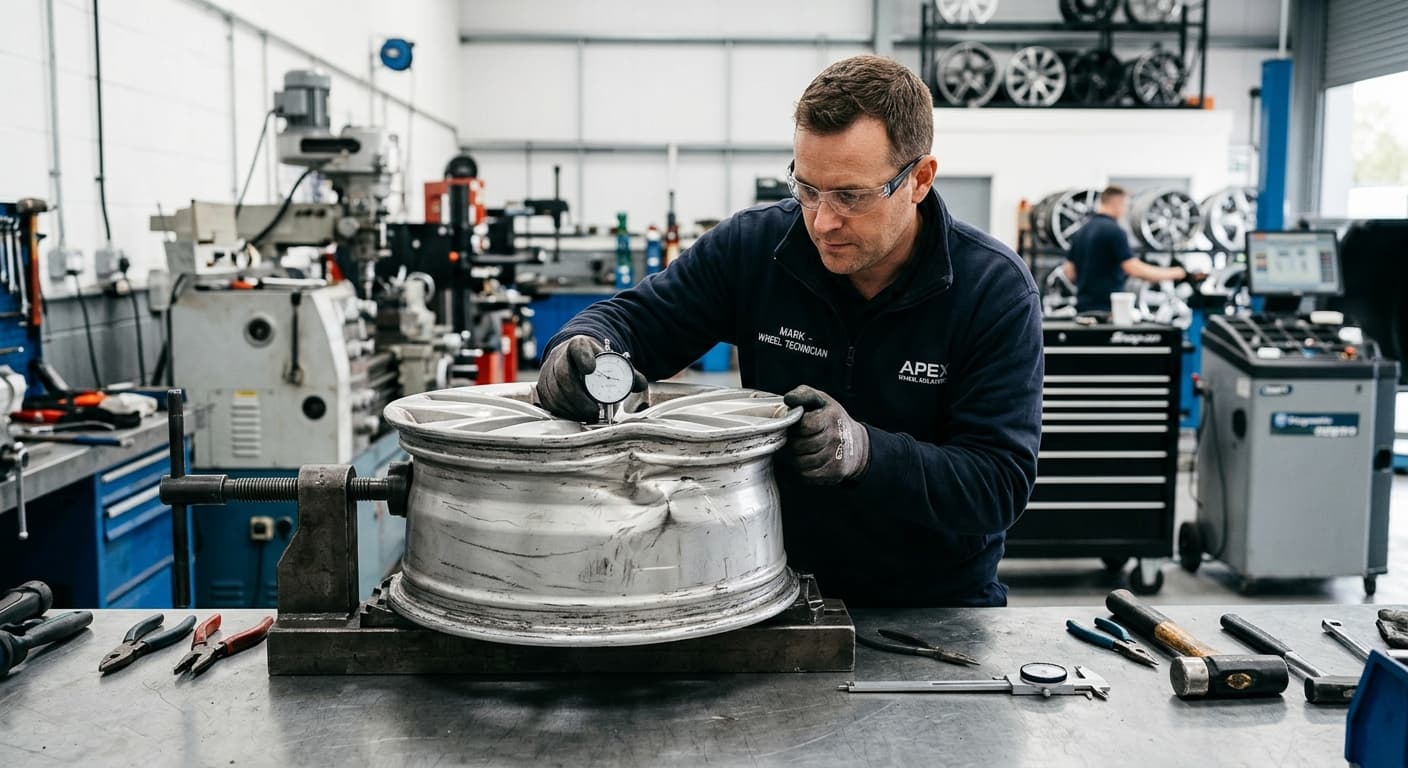
South Africa's roads are not kind to wheels. Between the pothole-riddled highways, uneven gravel side streets, and poorly maintained suburban roads, wheel damage is practically a national pastime. One of the most common — and most misunderstood — types of wheel damage is the buckled rim.
Many drivers feel the vibration, notice the car pulling slightly, and carry on. That's a mistake. A buckled rim isn't just an aesthetic problem: it's a structural issue that can compromise your safety, your tyres, and your fuel economy. In this guide, we'll break down exactly what causes buckled rims on South African roads, how to identify one, what the real risks are, and what your repair options look like.
What Is a Buckled Rim?
A buckled rim — also called a bent rim or bent wheel — occurs when the metal of an alloy wheel deforms out of its original round shape. Unlike a crack or a chip, which you can sometimes see with the naked eye, a buckle is often a subtle structural deformation. The wheel no longer rotates in a perfect circle; instead, it wobbles or hops, creating that characteristic vibration you feel through the steering wheel or seat.
Buckles almost always affect the bead seat area — the inner lip of the rim where the tyre sits — or the face of the wheel. When the bead seat is deformed, the tyre can't seal properly, leading to slow air leaks or sudden blowouts.
The severity of a buckle ranges from minor (a few millimetres of runout that you can barely feel) to severe (visually obvious deformation that makes the car nearly undriveable). In both cases, the wheel's structural integrity is compromised.
What Causes a Buckled Rim in South Africa?
Potholes — The Number One Cause
Let's be direct: potholes are the biggest cause of buckled rims in South Africa, and Cape Town drivers know this better than most. A sharp-edged pothole at speed creates what engineers call a "hammer blow" — the wheel drops into the hole and the lip of the pothole strikes the rim with tremendous force on the rebound. Low-profile tyres, which are increasingly common on modern vehicles, offer even less protection because there's less rubber to absorb the impact.
The N1, N2, and various routes through the Northern Suburbs (Bellville, Parow, Goodwood) are notorious for pothole damage, particularly after Cape Town's wet winters. Read more about protecting your wheels from pothole damage.
Kerb Strikes
Parallel parking mishaps, tight turns in parking garages, and poor road markings all lead to kerb strikes. When the side of your rim makes hard contact with a raised kerb edge, the lateral force can buckle the inner or outer rim lip. This is especially common in lower vehicles where the tyre provides minimal clearance between the rim and the kerb.
Speed Bumps Taken at Speed
South Africa has speed bumps everywhere — school zones, residential streets, private estates. Hit one too fast, especially at an angle, and you're distributing uneven force across the wheel. Over time, repeated hard impacts on speed bumps can introduce gradual deformation.
Overloading the Vehicle
Exceeding your vehicle's load rating puts excessive stress on every wheel. If you're regularly carrying heavy loads — contractors hauling materials, families loading up for a long trip — and your wheels are already slightly weakened from previous impacts, the additional weight can worsen or trigger a buckle.
Manufacturing Defects or Substandard Aftermarket Wheels
Not all wheels are created equal. Cheap aftermarket rims (often imported with attractive price tags) are sometimes cast with lower-grade aluminium alloys and substandard manufacturing tolerances. These can buckle under loads that a quality OEM or reputable aftermarket wheel would handle without issue.
How to Tell If Your Rim Is Buckled
Catching a buckled rim early can save you from a more expensive repair — or a dangerous situation. Here are the key signs to watch for:
Steering Wheel Vibration
The most common complaint from drivers with a buckled rim is a pulsing or vibrating steering wheel, usually felt most acutely at certain speeds (often between 80–120 km/h). Unlike tyre balance issues, which tend to be more consistent across a speed range, buckled rim vibration sometimes has a "beat" — it comes and goes rhythmically as the wheel rotates through its deformed section.
Pulling to One Side
If a front wheel is buckled, the uneven rotation can cause the car to pull or drift to one side. This gets confused with wheel alignment problems. The key difference: alignment issues are usually consistent, while buckle-related pulling can fluctuate.
Visible Wobble
Park the car, crouch down beside a wheel, and ask someone to roll the car slowly forward. If you can see the tyre or rim wobbling side-to-side as it rolls, you have a buckled rim. This is a conclusive visual test.
Slow Tyre Pressure Loss
A buckle in the bead seat area means the tyre cannot seal uniformly against the rim. You'll notice your tyre losing air more quickly than normal — not from a puncture, but from air seeping around the compromised seal. If you find yourself inflating one tyre more frequently than others, suspect the rim.
Uneven Tyre Wear
A buckled rim creates irregular load distribution on the tyre as it rotates, leading to uneven wear patterns. This is often only apparent once you're getting close to replacement time, but it's a clear indicator that something mechanical was wrong for a while.
The Real Safety Risks of Driving on a Buckled Rim
This is where we need to be direct: driving on a significantly buckled rim is dangerous. Here's why.
Risk of Tyre Failure
When the bead seat is deformed, the tyre's airtight seal is compromised. A slow leak can become a sudden blowout, particularly under high speed or high load conditions. A tyre blowout at highway speed is one of the most dangerous events that can happen to a driver.
Loss of Vehicle Control
The vibrations and pulling caused by a buckled rim aren't just uncomfortable — they degrade your control of the vehicle. In an emergency braking or evasive manoeuvre, predictable, stable vehicle dynamics are critical. A buckled wheel introduces an element of unpredictability that can be the difference between avoiding an accident and being in one.
Suspension and Steering Component Stress
Wheels transmit road forces into the suspension. A buckled rim rotates unevenly, sending abnormal vibrations and impacts through your wheel bearings, control arms, tie rods, and other steering components. Over time, this accelerates wear on these parts — and they are not cheap to repair on most modern vehicles.
Secondary Damage to Tyres
Running on a buckled rim dramatically shortens tyre life. The uneven load and flex caused by the deformation breaks down the tyre's internal structure, potentially leading to delamination or sidewall failure — again, a serious safety risk.
Buckled Rim Repair: Your Options
Professional Wheel Straightening
This is the most effective solution for the vast majority of buckled rims. At Speedline Mags in Parow, Cape Town, we use hydraulic wheel straightening equipment to carefully reform the deformed metal back to its original geometry. Our technicians work under controlled pressure, checking runout readings with precision measurement equipment throughout the process.
The result: a wheel that is structurally sound and within manufacturer tolerances for lateral and radial runout. Wheel straightening is cost-effective — typically significantly less than replacement — and in most cases, the repaired wheel is as strong as the original. Learn more about our wheel straightening process.
Not every buckled rim can be straightened. Severe buckles, wheels with existing cracks, or wheels that have already been heated (from a braking incident, for example) may not be candidates. Our technicians will assess each wheel individually and give you an honest assessment.
Crack Assessment and Welding
Sometimes a buckle comes accompanied by a crack — the impact was severe enough to deform the metal and initiate a fracture. If a crack is identified, it needs to be addressed through specialist alloy welding before or alongside the straightening process. Read our guide on alloy wheel welding safety to understand when this is appropriate.
Full Wheel Replacement
If a rim is too severely deformed, cracked beyond repair, or has been repaired multiple times before, replacement is the right call. We can advise on OEM replacement options or quality aftermarket alternatives that match your vehicle's specifications. While replacement is more expensive upfront, it's sometimes the safest and most practical choice.
What We Don't Recommend: DIY Hammer Methods
You'll find videos online showing people hammering buckled rims with mallets or using makeshift jigs. We strongly advise against this. Alloy aluminium is not like steel — it doesn't flex and spring back. Improper force application can worsen the deformation, introduce cracks that aren't visible to the naked eye, or compromise the wheel's internal structure in ways that only become apparent under load at speed. Your wheels are the only thing connecting your vehicle to the road. This isn't the place for DIY experiments.
How Much Does Buckled Rim Repair Cost?
The cost of wheel repair in South Africa varies depending on the severity of the buckle and whether any additional work (crack repair, refurbishment) is needed. As a general guide, straightening a single buckled rim at Speedline Mags is a fraction of the cost of replacing the wheel — making it excellent value for a high-quality fix.
Factors that influence the price include wheel size (larger diameter wheels require more complex equipment setups), the extent of the deformation, and whether the wheel needs cosmetic refurbishment after the structural repair.
We offer upfront quotes with no obligation. Bring your vehicle in for an assessment and we'll tell you exactly what we're working with.
Can a Repaired Buckled Rim Be Trusted?
This is the question most drivers want answered. Yes — a professionally straightened wheel is safe and reliable, provided:
- The straightening was done by a skilled technician using proper equipment
- Runout measurements confirm the wheel is within manufacturer tolerances
- The wheel was assessed for cracks before and after the process
- The tyre was properly reseated and inflated to spec
At Speedline Mags, we check runout readings before we begin and confirm they're within tolerance before we release the wheel. If we're not confident in the result, we'll tell you — and we won't let a wheel leave our workshop that we wouldn't put on our own vehicles.
After Repair: Preventive Steps
Once your buckled rim has been repaired, there are practical steps to reduce the risk of it happening again:
Drive to the conditions. On pothole-heavy roads or after rain (when potholes are hidden by water), slow down — especially on routes like the N2 and R300 where large potholes are common.
Maintain correct tyre pressure. Properly inflated tyres absorb more impact before it transfers to the rim. Check your pressures monthly and before long trips.
Check your wheels regularly. A quick visual inspection every time you fill up — looking for obvious cracks, significant kerb damage, or unusual bulges in the tyre sidewall — can catch problems early.
Consider lower-profile tyre upgrades cautiously. If you've moved to very low-profile tyres for aesthetic reasons, understand that you've reduced the impact buffer between the road and your rims. Balance the look against the practical reality of South Africa's roads.
When to See a Specialist Immediately
Get your wheels inspected without delay if:
- You feel a sudden, severe vibration after hitting a pothole or speed bump
- Your car develops an immediate pull to one side after a road impact
- You hear a rhythmic thumping or scraping from a wheel
- You see visible deformation in the rim
- A tyre that was holding pressure normally starts losing air rapidly
Don't wait and monitor the situation. A buckled rim under stress is unpredictable.
Get Your Buckled Rim Assessed in Cape Town
Speedline Mags is based in Parow, Cape Town, and we've been straightening, repairing, and refurbishing alloy wheels for drivers across the Northern Suburbs and the wider Cape Town metro. Whether you're driving a VW Polo, a Toyota Hilux, a BMW 3 Series, or anything in between, we have the equipment and experience to assess and repair your buckled rim correctly.
Book an assessment with Speedline Mags today. Bring your vehicle in, and we'll give you an honest evaluation and upfront quote. No pressure, no unnecessary repairs — just expert wheel repair advice and professional workmanship you can trust.
Contact Speedline Mags to schedule your wheel inspection in Parow, Cape Town.