
Brake Caliper Respray Cape Town: Colour Options, Cost and What to Expect
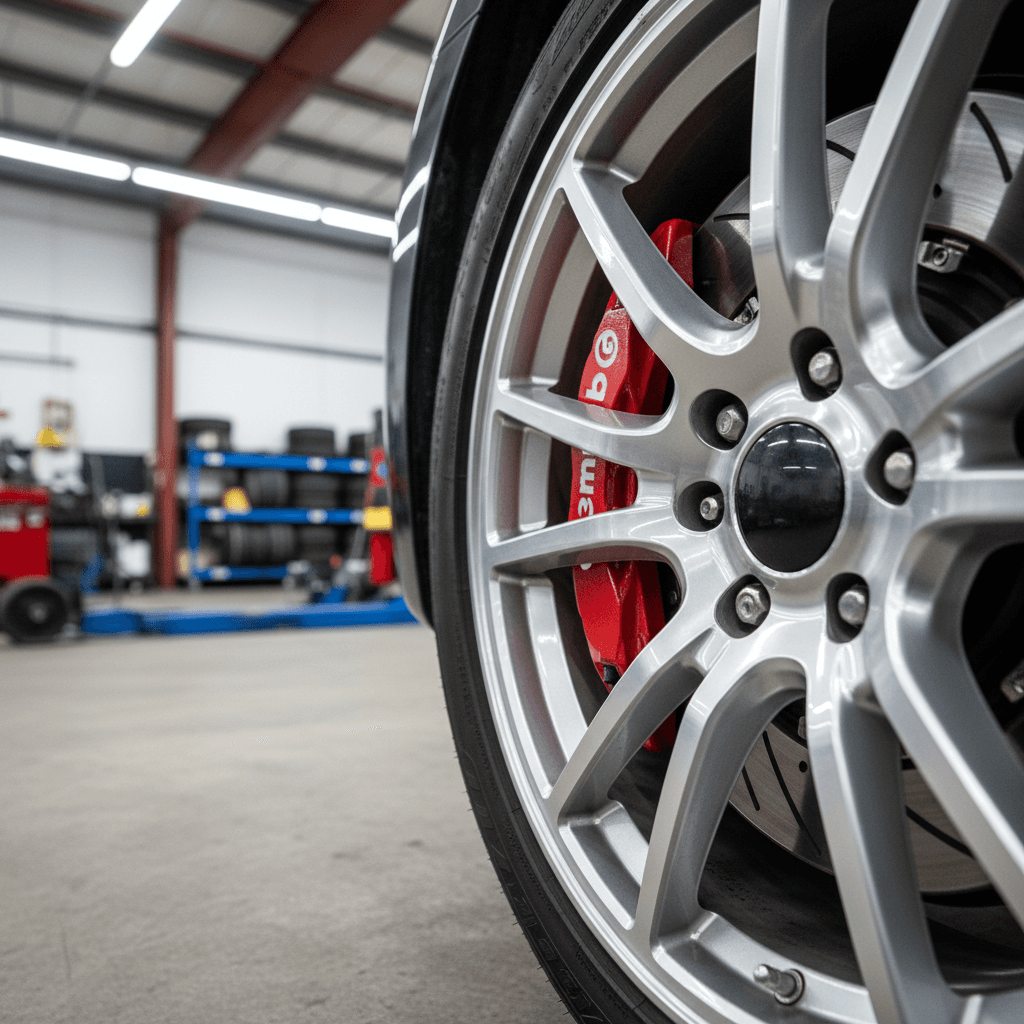
Coloured brake calipers have gone from a supercar exclusive to one of the most popular visual upgrades for everyday drivers in Cape Town and across South Africa. A brake caliper respray gives your car a purposeful, track-ready look without touching the wheels themselves — and when done correctly, it lasts for years even under the punishing heat generated by modern disc brakes.
At Speedline Mags in Parow, we handle wheel repairs and finishing work every day. Caliper resprays are a natural extension of that work, and we get a lot of questions about the process, the paint, and the cost. This guide answers all of them.
Why Repray Your Brake Calipers?
The visual case is obvious: a set of red, yellow, or gloss-black calipers peeking through open-spoke alloys immediately elevates the look of almost any car. But there are practical reasons too.
Factory calipers are typically painted with a thin, low-cost coating that fades, chips, and corrodes within a few years. In Cape Town's coastal environment — salt air, humidity, and the occasional downpour — that deterioration happens faster than in inland cities. A quality caliper respray applies a purpose-formulated, heat-resistant finish that protects the metal underneath while looking sharp.
A respray also adds resale value. Buyers notice the details, and clean, vibrant calipers signal a well-maintained vehicle. It costs considerably less than aftermarket performance calipers yet delivers most of the visual impact.
What Makes Caliper Paint Different From Regular Paint?
This is where corners get cut by inexperienced workshops — and where those jobs fail within months.
Brake calipers regularly reach temperatures between 150°C and 400°C during heavy braking. Normal automotive paint, including standard spray cans from a hardware store, will blister, bubble, and peel under that heat. A proper caliper respray uses high-temperature brake caliper paint or powder coat formulated to withstand sustained heat exposure.
The main options are:
1. Heat-Resistant Caliper Paint (Brush or Spray)
This is the most accessible option and, when applied by a skilled technician, produces excellent results. Quality products are rated to 200°C–260°C continuous heat. The calipers are cleaned, degreased, sanded, and primed before multiple coats are applied. A clear lacquer coat is often added for gloss and UV resistance.
Turnaround is typically quick — one to two days depending on drying and cure time.
2. Powder Coating
Powder coating involves applying electrostatically charged powder to the caliper, which is then cured in an oven at around 200°C. The result is a thicker, more durable finish than paint, with excellent chip and corrosion resistance.
The catch is that powder coating requires the calipers to be removed from the car and fully prepared — it's a more involved job. For drivers who want the longest-lasting result, it's worth the extra cost and time.
3. Vinyl Caliper Covers
We don't recommend these. They look good in photos but trap heat, crack under real-world braking temperatures, and can be a safety concern. Stick to paint or powder coat.
Colour Options: What's Popular in Cape Town?
The range of available colours has expanded significantly. The most popular choices we see at Speedline Mags include:
Red — the classic high-performance look. Works especially well on silver, white, and black cars. It's what most people picture when they think of performance calipers.
Yellow — bold and highly visible. Popularised by Porsche and Ferrari. Excellent on darker vehicles like navy, charcoal, and black.
Gloss Black — understated and versatile. Works on almost any car colour and doesn't compete with the wheel finish. A favourite for premium European vehicles like BMW and Mercedes-Benz.
Satin Black — similar to gloss black but with a matte sheen. Very popular on blacked-out builds and custom wheel colour setups.
Gunmetal / Dark Grey — a sophisticated choice that reads as an upgrade without being showy.
White or Silver — uncommon but striking on certain builds, particularly dark-coloured performance hatchbacks.
Custom Colours — two-tone finishes, custom mixing, and branded colours (matching manufacturer brake caliper colours like Brembo's distinctive red or the Porsche Sport Chrono yellow) are all possible.
We always recommend selecting a colour that complements your wheel finish rather than competing with it. A diamond cut wheel with a red caliper, for example, is a well-balanced pairing.
The Brake Caliper Respray Process at Speedline Mags
Understanding what goes into a proper respray helps you identify shortcuts when comparing quotes. Here's the full process we follow:
Step 1: Wheel and Caliper Inspection
Before any painting begins, we assess the caliper condition. Heavy rust, deep pitting, or damaged hardware needs to be addressed first. Cosmetics on top of a compromised caliper is a waste of money.
Step 2: Masking or Removal
For a paint respray, calipers are carefully masked in place — brake lines, pistons, bleed nipples, and all contact surfaces are protected. For powder coating, the calipers must be removed.
Step 3: Surface Preparation
This is the most important step and where many quick-turnaround jobs cut corners. We degrease thoroughly, sand back any existing coating, treat any surface rust, and apply a suitable etch primer. Paint adhesion depends on this stage.
Step 4: Application
Multiple thin coats of heat-resistant paint are applied. Rushing this stage causes runs, uneven coverage, and early peeling. Each coat is allowed to flash off before the next is applied.
Step 5: Clear Coat and Cure
A clear lacquer protects the colour and adds depth. After application, a heat cure (either oven or careful use of a heat gun) activates the paint chemistry and locks in the finish.
Step 6: Final Inspection
We check for coverage, sharpness on the caliper face, and confirm brake function is fully unaffected before returning the car.
How Much Does a Brake Caliper Respray Cost in Cape Town?
Pricing varies based on the method (paint vs powder coat), the number of calipers, vehicle type, and condition.
Approximate guideline pricing in South Africa:
- Standard 4-caliper brush/spray respray: R800–R1,800
- Quality multi-coat spray application with clear: R1,500–R3,000
- Powder coat (4 calipers, removal required): R2,500–R5,000+
- High-performance vehicles or large calipers (e.g., 6-pot): add 30–50%
These are market-range estimates. Your exact quote from Speedline Mags will depend on the vehicle and condition of the calipers. We provide written quotes before any work begins — no surprises.
A caliper respray is one of the better-value cosmetic upgrades available. Compare it to the cost of aftermarket calipers (R15,000–R80,000+ per axle for quality big-brake kits) and the respray delivers significant visual impact for a fraction of the investment.
Which Cars Benefit Most?
Almost any car with visible calipers through open-spoke wheels benefits. The effect is most dramatic on:
- VW Golf GTI / R — red calipers are factory-spec on some models; owners of base Golfs often want the same look
- BMW 3 Series, 5 Series, X3, X5 — BMW owners in Cape Town frequently pair caliper resprays with wheel refurbishment
- Toyota Hilux and Fortuner — a gloss black caliper adds a tough-but-refined look to bakkies on larger wheels
- Mercedes-Benz C-Class and GLC — gloss black or gunmetal calipers complement AMG-style wheel packages perfectly; see our Mercedes-Benz wheel guide
- Ford Ranger Raptor — the Raptor's wide arches and large wheels frame coloured calipers very well
- Hyundai i30 N / Kia Stinger — performance hatchbacks where factory calipers are already statement pieces; resprays refresh or customise that look
- Porsche Cayenne and Macan — where the OEM yellow or red calipers fade or chip over time
Common Questions
Can I drive immediately after a caliper respray?
With a paint respray, you should allow the clear coat to cure for at least 24 hours before driving. The first few heat cycles from normal driving will complete the cure — avoid aggressive braking for the first 100–200km.
Will the paint affect braking performance?
No, if done correctly. The paint is applied only to the external surfaces of the caliper body — never on friction surfaces, pistons, or brake hardware. Proper masking is essential.
How long does a caliper respray last?
A quality paint respray lasts 3–5 years with normal use. Powder coating typically lasts longer — 5–8 years or more. Longevity depends on the quality of preparation and products used, and how aggressively the car is driven.
Can faded or chipped calipers be re-sprayed?
Yes. Existing paint is stripped back and the surface is prepared from scratch. Rust is treated before repainting. This is a routine part of our process.
Does my car need to be at the workshop?
Yes — caliper resprays require physical access to the vehicle. We're based in Parow in Cape Town's Northern Suburbs, convenient for clients from Bellville, Durbanville, Table View, and the wider metro area.
Signs It's Time to Respray Your Calipers
Not sure if your calipers need attention? Look through your wheels and check for:
- Faded, chalky, or uneven colour
- Chips or flaking paint
- Visible surface rust (orange or brown staining)
- Dull, unfinished factory appearance that lets down an otherwise clean set of refurbished alloys
If you're already investing in a wheel refurbishment, adding a caliper respray at the same time makes sense — the vehicle is already at the workshop and the visual impact of the combination is significant.
Get a Quote for Caliper Respray in Cape Town
Speedline Mags is based in Parow, Cape Town, and serves customers across the Northern Suburbs, including Bellville, Durbanville, Table View, Blouberg, and the broader Cape Town metro area.
We offer written quotes, honest advice on method selection, and quality workmanship on every job — whether it's a single caliper touch-up or a full four-corner respray with powder coating.
Contact Speedline Mags today to book your inspection or request a quote. Bring your car in, tell us the colour you have in mind, and we'll take care of the rest.