
Bent Rim Repair: Can Your Wheel Be Straightened or Does It Need Replacing?
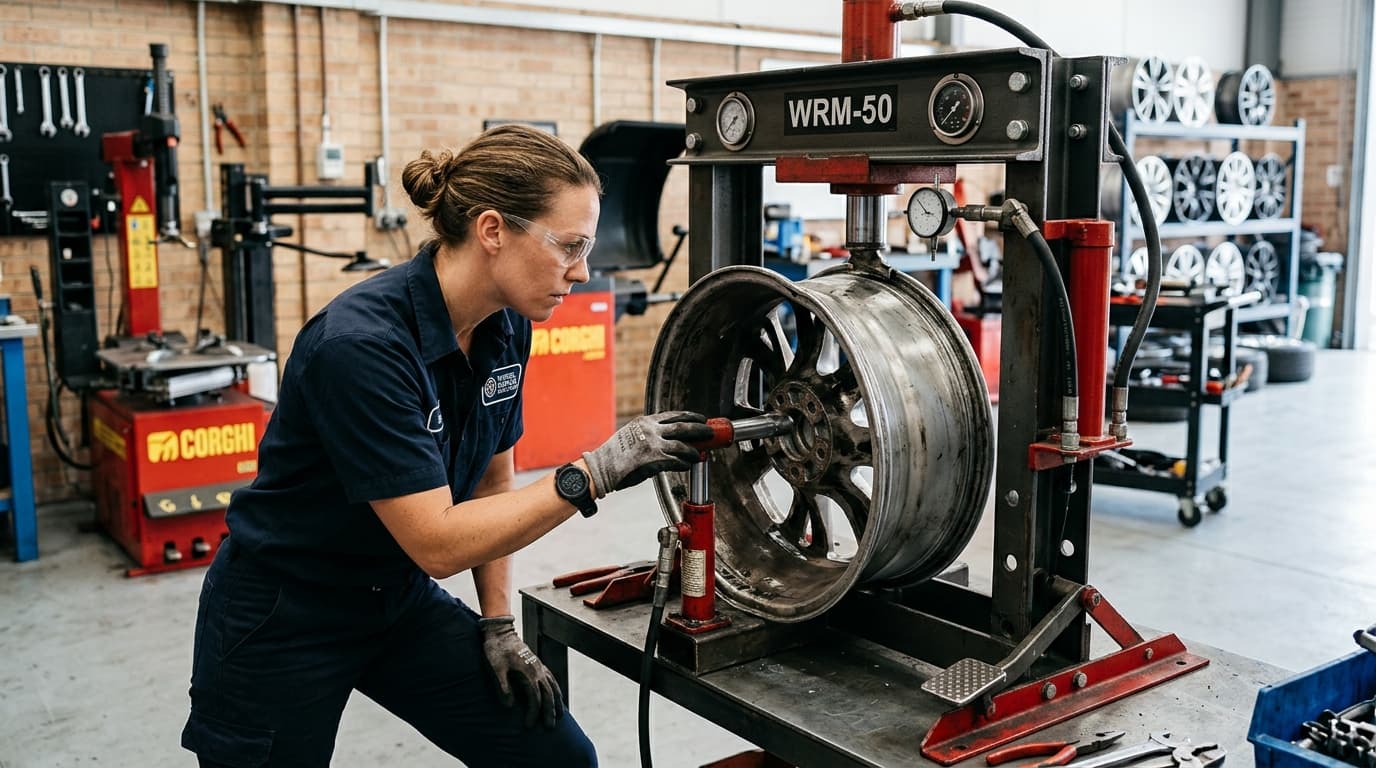
South Africa's roads are unforgiving. Between Cape Town's notorious potholes, speed bumps that appear from nowhere, and the occasional kerb encounter in a tight parking lot, bent rims are one of the most common wheel problems we see at Speedline Mags. The good news is that not every bent rim means an expensive replacement. The bad news is that not every bent rim is safe to repair either.
This guide walks you through everything you need to know about bent rim repair — how technicians assess the damage, when straightening is structurally sound, when it isn't, and what you should realistically expect to pay in South Africa.
What Actually Happens When a Rim Gets Bent?
When your wheel strikes a hard object — a pothole edge, a raised kerb, or road debris — the impact force gets absorbed by the tyre and the wheel structure. If the force is significant enough to overcome the tyre's cushioning, the alloy or steel of the rim deforms. This is what we call a buckled or bent rim.
The deformation can take several forms:
- Lateral bend — the rim is pushed inward or outward along its width (like a dish warping)
- Radial bend — a localised dent or flat spot on the rim's circumference
- Combined damage — both lateral and radial deformation together, often from a severe impact
The type and extent of the bend directly determines whether repair is viable.
Can a Bent Rim Be Straightened? The Honest Answer
Yes — in many cases, a bent rim can be safely straightened. Hydraulic wheel straightening equipment applies controlled pressure to reform the metal back to its original shape. When done correctly by experienced technicians, the structural integrity of the wheel is maintained and the repair is perfectly safe for road use.
However, "can be" and "should be" are not the same thing. The answer depends on several factors.
Factors That Determine Repairability
1. Severity of the bend
Minor to moderate bends — where the deformation is visible but hasn't created cracks or metal fatigue — are generally good candidates for straightening. Severe bends, where the rim has folded significantly or the inner barrel has collapsed, are a different story.
2. Location of the damage
The spoke area and outer lip of the rim can typically handle the straightening process well. Damage to the hub mounting area (where the wheel bolts to the car) is far more critical. If the hub face is warped or cracked, replacing the wheel is the only safe option.
3. Presence of cracks
This is the big one. During assessment at our workshop in Parow, we use both visual inspection and dye penetrant testing to check for cracks. A rim with cracks — even hairline cracks — should never be straightened and returned to service. The straightening process itself can propagate cracks further, and a cracked rim under driving stress can fail catastrophically.
4. Material of the rim
Cast alloy wheels (the most common type on standard road cars like the VW Polo, Toyota Corolla, and BMW 3 Series) are generally repairable when the bend is not extreme. Forged alloy wheels are more resilient and often repair better. Flow-formed wheels sit somewhere in between.
Chrome-plated wheels present complications — the plating process involves coating over a base alloy, and repair often damages the chrome finish beyond restoration.
5. Previous repairs
A rim that has been straightened before is structurally compromised compared to a virgin wheel. If the same area has been repaired twice, we typically recommend replacement on the third incident.
When Replacement Is the Right Call
Even if a bent rim could technically be straightened, there are situations where we recommend replacement outright:
- Cracks of any size — even small hairline cracks indicate metal fatigue that makes the rim unsafe
- Severe crushing or fold damage — where the metal has been displaced so dramatically that straightening would leave residual stress concentrations
- Damage to the hub face — which affects how the wheel seats against the brake rotor
- Visible porosity or previous weld repairs in the damage zone — the base metal is compromised
- The bend is causing tyre bead damage — meaning the tyre cannot seal properly even after straightening
We see a lot of customers who've had a rim "repaired" elsewhere, only to find the wheel still vibrates or wobbles at speed. In many of these cases, the rim was beyond safe repair but the customer wasn't told honestly. At Speedline Mags, we'd rather lose a repair job than send someone back on the road with an unsafe wheel.
The Wheel Straightening Process: Step by Step
When a bent rim does qualify for repair, here's how the process works at a professional workshop:
Assessment and measuring The wheel is mounted on a measurement rig to quantify the runout (how far out of round the wheel is, both laterally and radially). This gives technicians a precise target.
Heating (for aluminium alloys) Controlled, localised heat is applied to bring the alloy to a workable temperature. This step requires skill — too much heat and you weaken the alloy; too little and you risk cracking it during straightening.
Hydraulic press straightening The wheel is mounted in a specialised hydraulic press. Technicians apply graduated pressure to reform the metal, checking measurements throughout the process.
Re-measuring and verification The wheel is re-measured to confirm it meets manufacturer tolerances. Runout specifications vary by manufacturer, but generally anything under 1.5mm lateral runout is considered acceptable.
Visual and dye penetrant crack check After straightening, a final crack inspection is performed before the wheel is returned to service.
The whole process typically takes two to four hours per wheel, depending on complexity.
Bent Rim Repair Cost in South Africa: What to Expect
Pricing for bent rim repair varies based on the severity of the bend and the wheel size. As a general guide for Cape Town in 2026:
- Minor bend (small lateral deformation): R600 – R900 per wheel
- Moderate bend (more significant deformation, multi-area): R900 – R1,400 per wheel
- Severe bend (near the limits of repairability): R1,400 – R2,000+ per wheel
Compare this to the cost of a new alloy wheel, which can range from R2,500 for a budget aftermarket option to R8,000+ for an OEM replacement on a premium vehicle like a Mercedes-Benz or BMW. For most standard vehicles, repair is significantly more cost-effective than replacement when the wheel qualifies.
It's also worth noting that insurance policies sometimes cover pothole damage. If you believe a pothole caused your bent rim, check your comprehensive insurance policy — some will reimburse wheel repair or replacement costs. We can provide you with an itemised quote and job card for insurance submission. See our guide on insurance claims for wheel damage for more detail.
Warning Signs That Your Rim Might Be Bent
Not every bent rim is obvious from the outside. Sometimes the deformation is subtle but still causes problems. Watch for these signs:
Vibration at specific speeds A buckled rim creates an imbalance that shows up as vibration, often most noticeable at 80–120 km/h. Unlike tyre imbalance, which can be fixed with wheel balancing, rim damage requires actual straightening.
Visible tyre deflation A badly bent rim may not seal properly against the tyre bead, causing slow or persistent pressure loss. If you're repeatedly topping up the same tyre with no puncture visible, the rim could be the culprit.
Pulling to one side A bent rim can cause uneven tyre wear and affect how your car tracks in a straight line.
Visible flat spot or wobble Park the car and look at the wheel from the side while spinning it slowly. Any noticeable wobble or deviation from round is a flag.
Knocking or thumping at low speed Severe buckling creates a noticeable rhythm that often presents as a low-frequency thump that matches your wheel rotation speed.
If you're noticing any of these, it's worth getting your wheels checked. Driving on a significantly bent rim causes accelerated tyre wear, stresses your wheel bearings, and affects braking performance. For more on signs your wheels need professional repair, see our dedicated guide.
Bent Rim vs Cracked Rim: Know the Difference
These two issues are sometimes confused but have very different implications.
A bent rim is a physical deformation of the wheel — the shape has changed. In suitable cases, this can be corrected mechanically.
A cracked rim is a fracture of the metal itself — a structural failure. Cracks cannot be repaired by straightening. While some shops offer alloy wheel welding as a repair option for cracks, this is a contentious area. For load-bearing structural cracks (particularly near spokes or the hub), welding a wheel and returning it to service is not something we do at Speedline Mags — the safety implications are too serious. For cosmetic cracks on the outer lip that don't compromise structural integrity, welding may be considered case by case, but always with a full structural assessment first.
Read more about this in our guide to alloy wheel repair vs replacement.
DIY Bent Rim Repair: Can You Do It at Home?
You'll find videos online showing people hammering bent rims back into shape or using DIY tools to attempt straightening. Let's be direct: this is not a good idea for a wheel that goes on a public road.
The risk isn't just about getting the shape right. It's about the hidden metal fatigue and micro-cracks that form during impact and during improper repair attempts. These can't be detected by eye and can lead to sudden wheel failure — a catastrophic event at highway speeds.
Home attempts also typically produce uneven results, leaving runout that causes persistent vibration and accelerated tyre wear.
For a repair you can trust, use a professional workshop with hydraulic straightening equipment and proper measurement tools.
Speedline Mags: Wheel Straightening in Parow, Cape Town
At Speedline Mags, based in Parow in the Northern Suburbs of Cape Town, we assess every bent rim honestly before recommending a course of action. If a wheel can be safely straightened, we'll do it to manufacturer tolerances. If it can't, we'll tell you that clearly rather than doing a repair that puts you at risk.
We work with all makes and models — from Toyota Hilux bakkies and VW Polos to BMW X5s and Mercedes-Benz GLC-Class vehicles. Whether you're in Bellville, Durbanville, Parow, or coming through from Blouberg or Table View, we're easily accessible for Northern Suburbs customers.
Our wheel straightening service is often completed same-day for straightforward cases, and we can provide a quote before any work begins.
Frequently Asked Questions
Can a cracked rim be repaired? In most cases involving structural cracks, no. Cracks near spokes, the hub, or the inner barrel are replacement territory. Cosmetic cracking on the outer lip may be assessed individually.
Is it safe to drive on a bent rim? A minor bend causing slight vibration may be driveable for a short distance to get to a workshop. A severe bend that's causing tyre deflation or significant handling changes should not be driven on.
How long does wheel straightening take? Most repairs are completed within two to four hours. We can advise on turnaround time when you bring the vehicle in.
Does wheel straightening affect the finish? The straightening process itself doesn't damage a standard painted or powder-coated finish. If your wheel also needs a cosmetic refurbishment — like a new powder coat or a diamond cut finish — that can be done at the same time.
Will my tyre survive a bent rim impact? Sometimes yes, sometimes no. It's worth having both the rim and tyre inspected after a significant impact.
Get Your Bent Rim Assessed at Speedline Mags
If you've hit something and you're not sure whether your rim can be saved, the best next step is a professional assessment. At Speedline Mags in Parow, Cape Town, we offer a no-obligation inspection so you know exactly what you're dealing with before spending a cent.
Contact us to book an assessment or bring your wheel in directly. We'll give you a straight answer on whether bent rim repair is the right call — or whether replacement is the smarter move.