
Alloy Wheels vs Steel Wheels: Which Is Better for South African Roads?
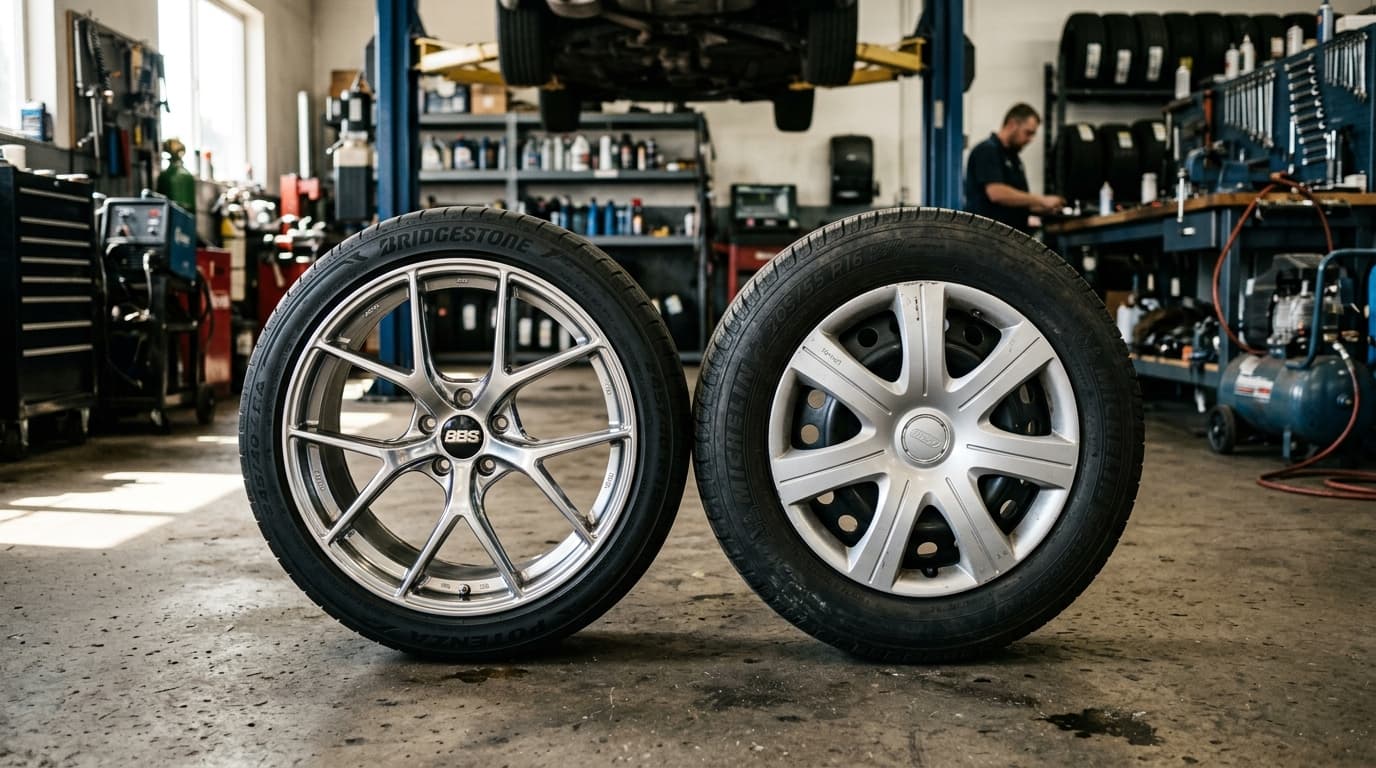
If you've ever browsed the tyre and wheel section at a dealership or fitment centre, you've almost certainly faced the alloy wheels vs steel wheels question. It seems straightforward — alloys look better, right? But for South African drivers dealing with Cape Town's notorious potholes, gravel roads, and the general punishment of local driving conditions, the answer is more nuanced than you might expect.
This guide breaks down the real differences between alloy and steel wheels across every factor that matters: performance, durability, repairability, aesthetics, and cost — all through the lens of what South African roads actually demand.
What Are Alloy Wheels?
Alloy wheels are manufactured from aluminium or magnesium alloys (sometimes a blend of both). The term "alloy" simply refers to a metal compound — in the wheel world, it almost always means an aluminium-based alloy wheel.
They became mainstream in the 1980s and are now standard fitment on most mid-to-upper range vehicles sold in South Africa. If your VW Polo, BMW 3 Series, or Toyota Fortuner came with stylish multi-spoke or split-spoke rims, those are alloy wheels.
Manufacturing methods matter. Cast alloy wheels (the most common) are produced by pouring molten aluminium into a mould. Forged alloy wheels — used on performance and luxury vehicles — are pressed under high pressure, making them stronger and lighter. For most daily drivers in South Africa, cast alloys are the norm.
What Are Steel Wheels?
Steel wheels are stamped from sheets of steel and welded together. They're heavier, simpler in design, and significantly cheaper to produce. Steel wheels are typically the base fitment on budget vehicles, bakkies used for heavy work, and spare wheels across virtually every car on the road.
If you've ever seen a car with plain "hubcaps" — those plastic covers that clip over a wheel — the wheel underneath is almost certainly a steel rim.
Alloy vs Steel Wheels: The Key Differences
1. Weight
This is where alloys have a clear, measurable advantage. Alloy wheels are significantly lighter than their steel equivalents — often 30–50% lighter for the same rim size.
Why does weight matter? Unsprung mass (the weight of components not supported by the suspension) directly affects handling, ride quality, and fuel consumption. Lighter wheels mean:
- Better steering response and handling precision
- Reduced vibration transferred into the cabin
- Marginally better fuel efficiency
- Faster acceleration (less rotational inertia)
On South African highways and Cape Town's winding routes, this difference is genuinely felt — especially in larger vehicles.
2. Appearance and Customisation
There's no contest here: alloy wheels are vastly more attractive than bare steel rims. The casting process allows for complex designs — multi-spoke, split-spoke, mesh, turbine, and everything in between. Finishes range from high-gloss silver and gloss black to diamond cut and two-tone powder coat combinations.
Steel wheels, by contrast, are functional. Their simple stamped design doesn't lend itself to decorative finishes. Most drivers cover them with plastic hubcaps, which are purely cosmetic and offer no performance benefit.
For many South African drivers, especially those in Cape Town's Northern Suburbs where car pride runs high, alloys are a baseline expectation rather than an upgrade.
3. Performance and Ride Quality
Alloy wheels conduct heat more efficiently than steel, which is relevant for performance driving — cooler brakes under heavy use. They also tend to offer better road feel and handling at speed.
However, on poorly surfaced roads — think N1 highway expansion joints, Cape Flats backstreets, or gravel driveways in the Cape Winelands — steel wheels absorb impact better without cracking or bending catastrophically. Steel deforms under extreme impact; alloys are more likely to crack.
For a Ford Ranger bakkie used on farm roads or off-road tracks, steel wheels are genuinely the more practical choice. For a VW Polo or BMW 320i used predominantly on tarred roads, alloys win on every performance metric that matters.
4. Durability on South African Roads
This is where the local context really matters.
South Africa's road infrastructure is under severe strain. Potholes are a genuine epidemic — the City of Cape Town receives thousands of pothole reports monthly. Roads in areas like Bellville, Parow, and parts of the Northern Suburbs can be particularly hard on low-profile tyres and wide alloy wheels.
Steel wheels are more resistant to catastrophic failure on impact. They bend rather than crack. A badly buckled steel wheel is still structurally safer (in the short term) than a cracked alloy, and bending can sometimes be reversed.
Alloy wheels are more susceptible to cracking from sharp pothole impacts, particularly when combined with low-profile tyres that offer less cushioning. Kerb strikes — incredibly common in congested Cape Town traffic — also cause alloy damage more readily. See our guide to protecting your wheels from pothole damage for practical tips.
The practical upshot: alloy wheels require more care and attention on South African roads, but the damage is usually repairable rather than catastrophic — provided you act quickly.
5. Repairability
This is one of the most underappreciated factors in the alloy vs steel debate — and it's where a professional workshop like Speedline Mags in Parow comes in.
Steel wheels can be straightened by a panelbeater or wheel shop relatively easily. Welding cracked steel is also more straightforward than welding alloy. However, significant cosmetic damage is hard to repair attractively — a straightened and painted steel wheel rarely looks as good as it did originally.
Alloy wheels are highly repairable by a specialist. Common damage types include:
- Kerb rash and scuffing — repaired via sanding, filling, and repainting or powder coating
- Buckled/bent rims — hydraulic straightening restores roundness on most cast alloys
- Cracked alloys — TIG welding can repair many cracks; structural integrity is assessed first
- Diamond cut refurbishment — restores the factory-machined face finish on OEM diamond cut wheels
The key point: alloy wheel damage that looks severe is frequently repairable at a fraction of replacement cost. A set of factory BMW or Mercedes alloys can cost R15,000–R40,000+ to replace; professional refurbishment typically runs R800–R2,000 per wheel depending on the damage type and finish required.
Steel wheels are cheaper to replace outright but offer fewer attractive repair options.
6. Corrosion Resistance
Alloys don't rust — they oxidise, which causes a dull, chalky appearance over time, but is far less structurally damaging than the rust that affects steel wheels. In Cape Town's coastal environment (salt air from the Atlantic and False Bay), steel wheels corrode faster than in inland cities like Johannesburg.
Steel wheels painted with standard factory paint will begin showing rust at chip points within a few years, particularly if the vehicle is used near the ocean. Alloys, with proper maintenance, resist this far better.
Which Is Better for Different Vehicle Types?
Passenger Cars (VW Polo, Toyota Corolla, Hyundai i20)
Go alloy. The weight advantage improves fuel efficiency, the handling benefits are real, and damage from urban driving (kerbs, shallow potholes) is repairable. Steel wheels on a modern hatchback look cheap and are rarely the right choice unless budget is severely constrained.
SUVs (Toyota Fortuner, Ford Everest, Haval H6)
Alloy with appropriate tyre profile. Most SUVs come with alloys from the factory. If you're doing occasional gravel driving, consider fitting slightly more sidewall — a taller tyre profile provides more buffer against pothole damage.
Bakkies Used Off-Road (Toyota Hilux, Ford Ranger, Isuzu D-Max)
Steel for serious off-road use; alloy for daily/road use. Many bakkie owners keep steel wheels shod with all-terrain tyres for off-road use, swapping back to alloys for everyday driving. It's the most practical approach. See our guide to Ford Ranger wheel repair for more.
Performance Vehicles (BMW 3 Series, VW GTI, Audi A3)
Forged or high-quality cast alloy only. The performance characteristics of alloys align perfectly with what these cars are designed to deliver. The weight reduction and brake cooling benefits are meaningful at the driving pace these vehicles encourage.
Budget Buyers
Steel for initial cost savings; plan to upgrade. If you're buying a used vehicle and replacing one damaged wheel, steel is the cheaper immediate fix. But factor in the long-term: one good set of refurbished alloys from a workshop like Speedline Mags may cost less over five years than repeatedly replacing damaged steel wheels plus the hubcaps that keep getting lost or cracked.
The Cost Reality in South Africa
Let's talk rands.
New steel wheels: R500–R1,500 per wheel depending on size and vehicle fitment. Universal steel wheels for common sizes are widely available.
New aftermarket alloy wheels: R1,200–R5,000+ per wheel for quality units. Premium brands (OZ Racing, Konig, TSW) cost more. Budget Chinese-made alloys are cheaper but often heavier and less well-finished.
OEM replacement alloys: Often R3,000–R10,000 per wheel from a dealer, depending on the vehicle. A full set of replacement factory BMW 3 Series alloys from BMW SA can cost R20,000–R45,000.
Alloy wheel refurbishment at Speedline Mags: R800–R2,000 per wheel, depending on the repair type and finish. Powder coating is typically more affordable than diamond cut. This is frequently the smartest financial choice when factory alloys are damaged.
The maths heavily favour repairing quality alloys over replacing them — particularly for vehicles with bespoke factory fitment that's expensive to source through a dealer.
Common Questions
Can cracked alloy wheels be safely repaired?
In many cases, yes — provided the crack is in a repairable location and the wheel passes structural inspection. A specialist will assess whether the crack compromises the bead seal or load-bearing areas before proceeding. Cracks near the centre bore or spokes are more frequently repairable than those across the bead area. Read our full guide to cracked alloy wheel repair for a complete breakdown.
Are alloy wheels safe on South African potholes?
Yes, when paired with an appropriate tyre profile. The danger is primarily when low-profile performance tyres (e.g., 35 or 40 series) offer minimal sidewall cushioning. A 45 or 50 series tyre on the same alloy is meaningfully more forgiving on rough surfaces.
Do alloy wheels affect insurance premiums?
Generally not in South Africa — your vehicle's declared value is what insurers care about. However, if you've fitted significantly more expensive aftermarket alloys, it's worth declaring the modification to ensure you're adequately covered in a claim. See our insurance and wheel damage guide for more.
Are steel wheels better for the spare?
Most manufacturers still supply steel spares (often smaller "space-saver" spares) because they're cheap, light, and durable. This is sensible — a spare is used rarely and briefly, so aesthetics are irrelevant.
Alloy or Steel: Our Verdict for Cape Town Drivers
For the vast majority of Cape Town drivers — whether you're commuting from Durbanville to the CBD, running errands in Bellville, or cruising the N2 to Somerset West — alloy wheels are the better choice across almost every dimension that matters.
They're lighter, better-looking, more resistant to corrosion, and — crucially — highly repairable when the inevitable pothole or kerb encounter happens. The reputation for being fragile is somewhat overstated; with appropriate tyre profiles and professional repair when damage occurs, alloy wheels are a smart long-term investment.
Steel wheels remain the right choice for heavy-duty off-road use, base-model budget vehicles, and spares. But for everyday South African driving, the benefits of alloys are clear.
Damaged Alloys? Speedline Mags Can Help
If you're dealing with kerb rash, a buckled rim, or corrosion damage on your alloy wheels, bring your vehicle to Speedline Mags in Parow, Cape Town. We specialise in alloy wheel repair, straightening, powder coating, diamond cut refurbishment, and full wheel restoration for all makes and models.
Serving drivers from Parow, Bellville, Durbanville, Table View, and across the Cape Peninsula — our team has the experience and equipment to restore your wheels to factory condition at a fraction of replacement cost.
Get in touch with Speedline Mags today for a no-obligation assessment and quote on your wheel repairs.