
Alloy Wheel Refurbishment: The Complete Process Explained
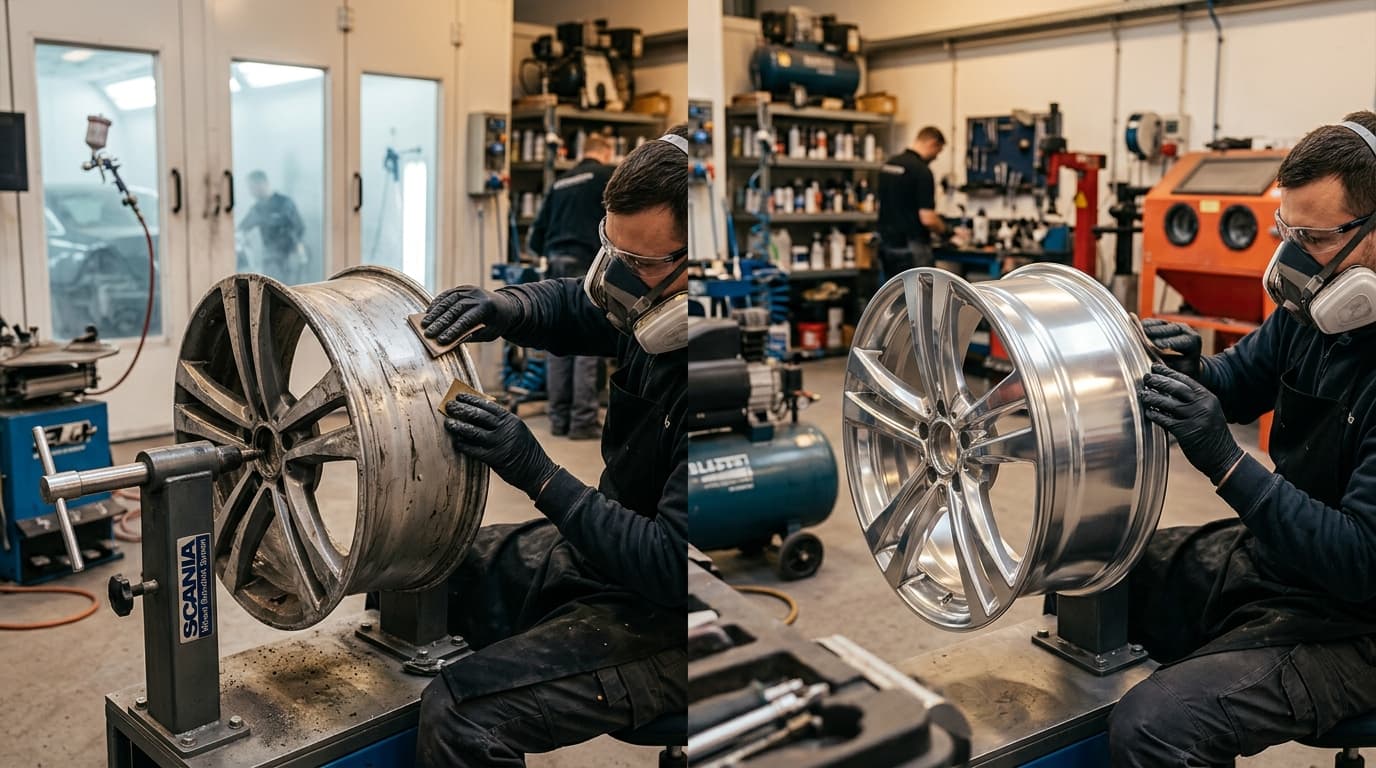
If you've ever driven over a Cape Town pothole or clipped a kerb in a Bellville parking lot, you'll know just how quickly a set of alloy wheels can go from showroom-fresh to embarrassingly scuffed. The good news is that alloy wheel refurbishment can bring even badly damaged rims back to life — often at a fraction of the cost of replacement.
But what exactly happens during the refurbishment process? Most people drop their wheels off, come back a day or two later, and are handed gleaming rims. The transformation feels almost magical. In reality, it's a multi-step technical process that requires skill, the right equipment, and attention to detail at every stage.
This guide walks you through the complete alloy wheel refurbishment process from start to finish — so you know exactly what you're paying for, what to expect, and how to tell a quality job from a rushed one.
What Is Alloy Wheel Refurbishment?
Alloy wheel refurbishment (sometimes called mag wheel refurbishment or rim restoration) is the process of repairing and refinishing a damaged alloy wheel to restore it to its original appearance — or sometimes better. It covers everything from cosmetic scuffs and kerb damage to structural repairs like straightening buckled rims and welding cracked spokes.
Unlike a simple touch-up or DIY respray, professional refurbishment involves stripping the wheel down to bare metal, addressing any structural issues, and applying a new finish that's designed to last. When done properly, you shouldn't be able to tell the wheel has ever been repaired.
Alloy wheel refurbishment is different from simply replacing wheels. It's environmentally friendlier, significantly more affordable, and often the smarter choice — especially for performance or prestige vehicles where matching original rims matters.
Step 1: Initial Assessment
The process begins with a thorough inspection of each wheel before any work starts. This is critical — not all damage can or should be repaired.
At Speedline Mags, every wheel goes through a visual and physical check that covers:
- Structural integrity: Is the wheel buckled, cracked, or bent? Cracks along the spokes or near the barrel require welding. Badly buckled rims need straightening on a hydraulic press.
- Extent of cosmetic damage: How deep are the gouges? Is there corrosion beneath the paint? Are multiple spokes affected?
- Type of existing finish: Diamond cut, powder coat, painted, or chrome? Each finish has different stripping requirements.
- Tyre condition: In many cases the tyre is already removed; if not, it must be carefully dismounted before work begins.
If a wheel is too severely cracked or structurally compromised, a reputable workshop will tell you it cannot be safely repaired. Driving on a structurally unsound wheel is dangerous — no cosmetic fix is worth the risk.
Step 2: Tyre Removal and Valve Strip
Before any refurbishment work begins, the tyre must come off. This is done using a tyre-changing machine to avoid any risk of damage to the rim flange during the process.
The valve stem is also removed at this stage, as it would be damaged or destroyed during subsequent heat processes. A new valve is always fitted before the tyre goes back on.
Step 3: Stripping the Old Finish
This is one of the most important steps in the entire alloy wheel refurbishment process. Stripping removes every trace of old paint, lacquer, corrosion, and contamination — leaving bare metal that can be properly inspected and prepared for a new finish.
There are a few stripping methods used in professional workshops:
Chemical Stripping
The wheel is submerged in or coated with a chemical paint stripper that breaks down the existing finish. This is effective and gentle on the metal, preserving the wheel's original profile and any fine machined detail.
Bead Blasting (Shot Blasting)
After chemical stripping — or instead of it — the wheel is placed in a bead blasting cabinet. Fine abrasive media (glass beads or aluminium oxide) are propelled at high pressure across the wheel surface, removing any remaining paint, corrosion, oxidation, and surface imperfections right down to bare alloy.
Bead blasting creates a uniformly clean, slightly textured surface that provides excellent adhesion for primer and paint. It also reveals hidden damage — hairline cracks, pitting, and corrosion that might not be visible through paint.
At Speedline Mags, bead blasting is a standard part of our refurbishment process. It's one of the things that separates a proper refurb from a cosmetic cover-up.
Step 4: Straightening and Structural Repair
With the wheel stripped bare, any structural repairs happen now — before any new finish is applied.
Rim Straightening
Buckled or bent rims are placed on a specialised wheel straightening machine. Heat is applied to make the alloy more pliable, and hydraulic pressure is used to carefully reshape the rim to its original profile. Done correctly, a straightened rim is as strong as the original.
See our guide on wheel straightening and bent rim repair for more detail on this process.
Crack Welding
If the inspection revealed cracks — typically from pothole impact or kerb strikes — these are repaired using TIG welding. Alloy welding requires skill and the right filler material to ensure the repair maintains the wheel's strength. After welding, the repair area is ground smooth and blended into the surrounding surface.
Not all workshops offer crack welding. It's a specialist service that requires proper equipment and training — so make sure you ask if structural repair is included in your quote.
Step 5: Sanding and Surface Preparation
Once the wheel is structurally sound, the surface is carefully sanded to smooth out any remaining imperfections, remove bead blast texture in finishing areas, and prepare the alloy for primer.
This stage involves progressively finer grits of sandpaper — starting coarser to remove material and finishing fine to achieve the smooth base required for a quality paint job. Any low spots or gouges are filled with specialist alloy filler and sanded flush.
Surface prep is where most of the skill is. Rushing this step leads to a finish that looks fine in the workshop but shows imperfections in sunlight.
Step 6: Priming
A quality etch primer or self-etching primer is applied to the clean bare metal. Primer serves several functions:
- It bonds chemically to the bare alloy, providing a foundation that paint can grip
- It seals the surface against moisture, preventing future corrosion
- It fills minor surface texture to create a smooth base
- It helps the topcoat achieve even coverage and colour consistency
Multiple thin coats of primer are applied and allowed to cure fully before the next stage. Any imperfections are lightly sanded between coats.
Step 7: Applying the Finish
This is where the wheel's look is defined. Depending on the finish chosen, the process differs significantly.
Powder Coating
The wheel is hung in a powder coating booth, where electrostatically charged powder particles are sprayed on and cling to the earthed metal surface. The wheel is then baked in an oven at around 180–200°C, causing the powder to flow and cure into a hard, durable finish.
Powder coating is extremely tough, resistant to chips and scratches, and available in hundreds of colours. It's typically the most durable finish option for alloy wheels. Read our full guide to powder coating wheels for a deep dive.
Paint (Wet Spray)
For custom colours, OEM colour matching, or two-tone finishes, wet spray painting is used. Multiple thin coats are applied in a spray booth, with flash-off time between coats. A skilled painter achieves a factory-smooth result.
Diamond Cutting
For wheels with a factory diamond cut finish — common on BMW, Mercedes, VW, and Audi OEM wheels — a precision CNC lathe removes a thin layer from the face of the wheel, exposing fresh bright aluminium. The result is the distinctive mirror-bright machined face you see on premium wheels.
Diamond cutting cannot be done without the right CNC equipment and is typically followed by a clear lacquer coat to protect the bare aluminium. Our guide to diamond cut wheel refurbishment covers this in detail.
Combination Finishes
Many premium wheels have a combination finish — for example, a painted or powder coated barrel with a diamond cut face. Refurbishing these correctly requires both processes to be done in the right sequence.
Step 8: Lacquering and Clear Coat
After the colour coat or diamond cutting process, a clear protective lacquer is applied over the entire wheel. This clear coat:
- Protects the finish from UV damage, brake dust, road chemicals, and moisture
- Adds depth and gloss to the paint or machined surface
- Provides a sacrificial layer that can be polished or refinished without touching the colour coat
Multiple coats of lacquer are applied and left to cure fully. Rushing the cure time is a common shortcut that leads to lacquer peeling — a tell-tale sign of a poor quality refurb.
Step 9: Quality Inspection
Before the tyre goes back on, every wheel is given a final quality inspection. At Speedline Mags this includes:
- Visual inspection in controlled lighting for any runs, fish-eyes, or thin spots in the finish
- Check for complete coverage on all surfaces including the barrel interior and bolt holes
- Verification of colour match against customer requirements or OEM specification
- Physical inspection for any remaining imperfections that need correction before handover
If anything doesn't meet the standard, it goes back. A reputable workshop won't rush this step.
Step 10: Tyre Remounting, Balancing, and Final Check
With the refurbishment complete and inspected, the tyre is remounted on the wheel. This is done carefully to avoid any contact between the new finish and the tyre machine — protection tape or rim guards are used by quality workshops.
New valve stems are fitted. The wheel is then balanced, weights are applied, and the completed wheel is ready for handover.
How Long Does Alloy Wheel Refurbishment Take?
A full professional alloy wheel refurbishment typically takes 1–2 working days per set of four wheels, assuming no major structural repairs. Here's a rough timeline:
- Assessment and stripping: 2–4 hours
- Bead blasting: 30–60 minutes
- Structural repairs (if needed): 2–8 hours depending on severity
- Surface prep and priming: 2–4 hours
- Finish application and curing: 4–8 hours (longer for powder coating)
- Final inspection, tyre fitting, and balancing: 1–2 hours
Some workshops offer a same-day service for light cosmetic damage — typically a single wheel with minor kerb rash and no structural work needed.
How Much Does Alloy Wheel Refurbishment Cost in South Africa?
Mag wheel refurbishment cost in South Africa varies depending on the type of repair, the finish chosen, and the size of the wheels. As a general guide for Cape Town:
- Basic cosmetic repair (single wheel, powder coat): R400–R700
- Full set of four wheels, powder coat: R1,800–R3,500
- Diamond cut refurbishment (per wheel): R600–R1,200
- Crack welding or straightening (per wheel): R500–R1,500 depending on severity
- Custom colour or two-tone finish: Premium applies, typically R500–R900 per wheel additional
These are indicative ranges. For an accurate quote based on your specific wheels and damage, contact Speedline Mags directly. Our wheel repair cost guide provides more detailed pricing information.
How to Tell a Quality Refurbishment from a Bad One
Not all wheel refurbishment is created equal. Here's what to look for:
Signs of a quality job:
- Smooth, even finish with no visible brush marks, runs, or thin spots
- Complete coverage including the barrel and bolt holes
- Finish matches original spec or your chosen colour accurately
- Correct lacquer curing — no soft or tacky areas
- Wheel balances correctly — no heavy spots from uneven material
Red flags to watch for:
- Paint peeling within weeks (indicates surface wasn't properly stripped or primed)
- Finish flaking around edges or bolt holes (insufficient prep)
- Visible sanding marks under the paint (rushed surface prep)
- Colour mismatch on diamond cut face (incorrect lathe settings)
- Rattle or vibration after fitting (poor balancing)
Our guide to spotting a badly repaired alloy wheel covers this in more detail.
Is It Worth Refurbishing Your Alloy Wheels?
For most drivers, yes — absolutely. Consider that a set of four OEM alloy wheels for a VW Polo or Toyota Hilux can cost R8,000–R30,000 or more to replace new. A quality refurbishment at R2,000–R4,000 for the set delivers a like-new result at a fraction of the price.
The exception is wheels with severe structural damage — deep cracks through the barrel or structural area, or wheels that have been in a serious impact. In those cases, replacement may be the safer option. See our guide on wheel repair vs replacement to help you decide.
For vehicles where appearance matters — prestige cars, company vehicles, or simply a set of wheels you're proud of — a professional alloy wheel refurbishment is one of the best-value upgrades you can make.
Get Your Wheels Refurbished at Speedline Mags
Speedline Mags is based in Parow, Cape Town, and serves drivers across the Northern Suburbs — including Bellville, Durbanville, Goodwood, and the greater Cape Town area. We offer the full refurbishment process covered in this guide: bead blasting, straightening, crack welding, powder coating, diamond cutting, and custom paint finishes.
Every set of wheels we touch goes through a proper multi-step process — no shortcuts, no cover-ups. If you're looking for alloy wheel refurbishment in Cape Town that's done right the first time, we'd love to help.
Contact us for a quote: speedlinemags.co.za or call us directly to discuss your wheels.