
Acid-Free Wheel Cleaners: Why They Matter (And Which Brands Work in SA)
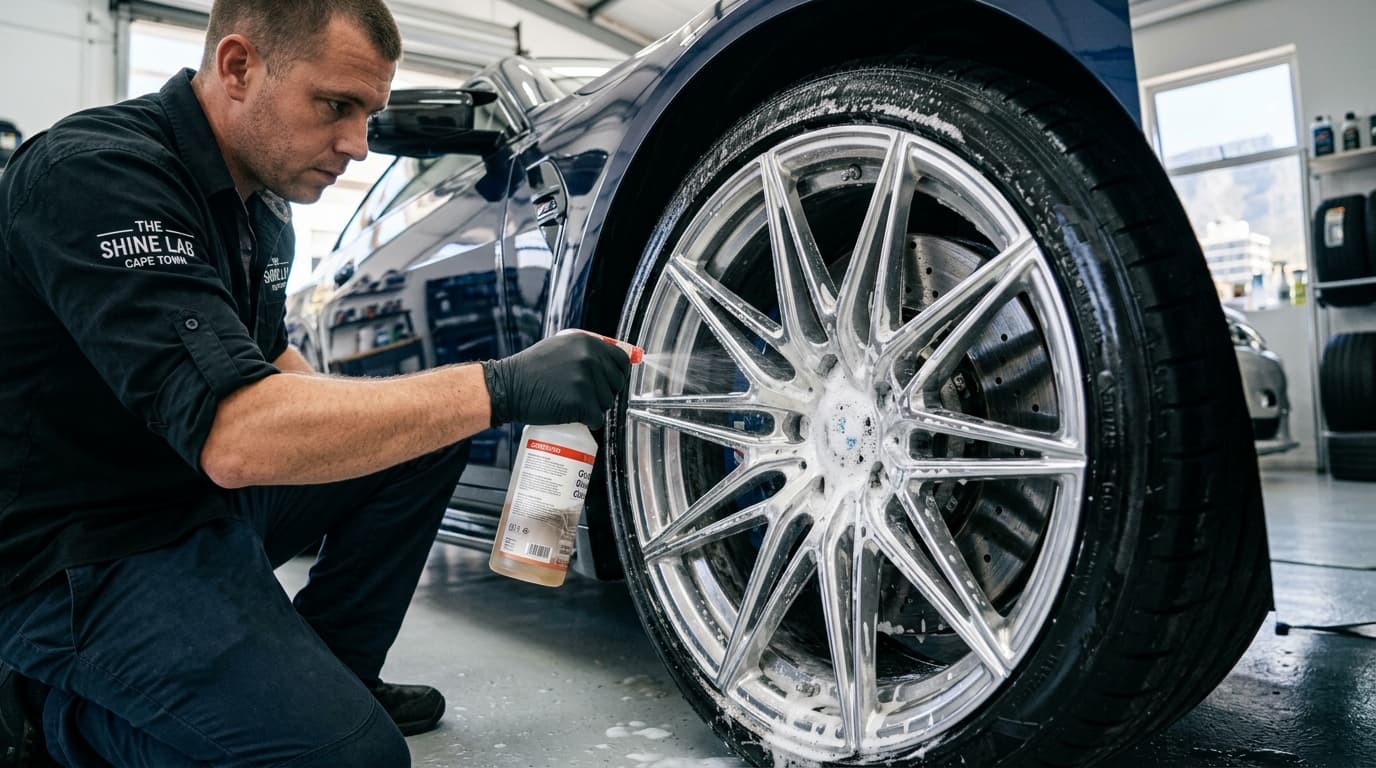
If you care about your wheels — and you should — the cleaner you reach for matters more than most people realise. Acid-based wheel cleaners are everywhere on South African shelves and online marketplaces. They're often cheap, they foam dramatically, and they cut through brake dust fast. The problem is they also quietly strip the clear coat, pit the surface, and accelerate corrosion on your alloy wheels. Over time, that "clean" result costs you far more in refurbishment or replacement.
Using the right acid-free wheel cleaner in South Africa is one of the simplest and most effective ways to extend the life of your alloys. This guide walks you through why pH-neutral formulas are worth the switch, which products are actually available in SA, how to use them correctly, and what to avoid.
Why Acid Cleaners Are Bad for Your Wheels
Most budget wheel cleaners are acid-based. The active ingredient is typically hydrofluoric acid (HF) or sulphuric acid, which dissolves brake dust chemically on contact — that's why they work so fast. The red or purple colour-change reaction you see on some products is the acid reacting with ferrous particles from your brake pads.
Here's the issue: that same chemical reaction isn't selective. It attacks:
- Clear coat — the protective layer applied over your alloy's painted or machined finish
- Polished and diamond-cut surfaces — acid etches exposed metal and leaves a dull, pitted finish
- Anodised finishes — the anodising layer is dissolved, exposing bare aluminium to oxidation
- Chrome plating — acid causes pitting, bubbling, and eventually flaking
On diamond-cut wheels in particular, the damage is almost irreversible without a full diamond cut wheel refurbishment. Cape Town's climate — with its combination of salt air and summer heat — already puts alloys under pressure. Repeatedly using acid cleaners accelerates the corrosion cycle dramatically.
What "pH Neutral" Actually Means
A pH of 7 is neutral — neither acidic nor alkaline. Most safe alloy wheel cleaners sit between pH 6 and pH 8. Some are slightly alkaline (pH 8–9), which is still gentle on clear coat but effective on oil and grime. True acid-based cleaners often sit at pH 2–4.
A pH-neutral or mildly alkaline formula works by lifting and suspending brake dust and grime without chemically attacking your wheel's surface. It takes slightly more dwell time and a good brush to agitate, but the result is a clean wheel that hasn't been silently damaged.
Signs Your Current Cleaner May Be Too Acidic
Before we get into products, check whether your current cleaner has already been doing damage:
- Chalky or dull patches on what should be a glossy or polished finish
- White or grey oxidation appearing faster than expected after cleaning
- Pitting on the spokes, particularly near the barrel where brake dust collects
- Clear coat peeling around the lip or spoke edges
- Staining that won't clean off, even with a detail clay bar
If you're seeing any of these, your wheels may already need professional attention. At Speedline Mags in Parow, we see this regularly — customers who've been using aggressive cleaners for years and are surprised that what they thought was "normal wear" is actually preventable chemical damage. A wheel corrosion assessment can tell you where your wheels stand.
Acid-Free Wheel Cleaner Brands Available in South Africa
The South African detailing market has improved significantly in recent years. Here are the main pH-neutral and acid-free wheel cleaners you can actually source in SA, either from detailing shops, auto parts stores, or online:
1. Sonax Full Effect Wheel Cleaner
Sonax is a German brand and one of the most widely available premium detailing products in South Africa. Their Full Effect Wheel Cleaner is pH-neutral and colour-change (the red reaction indicates it's lifting ferrous brake dust — not acid, but an iron-reactive compound). It works well on painted, lacquered, and polished wheels.
Where to find it: Midas, Goldwagen, Auto Zone, and most large detailing suppliers in Gauteng and the Western Cape. Price: Approximately R280–R380 per 500ml.
2. CarPro Iron X
Iron X is a cult product in the detailing community and is available through specialist online retailers in SA. It's pH-neutral and highly effective on ferrous contamination. The distinctive red reaction is theatrical but genuinely effective. Works on all wheel finishes including diamond cut.
Where to find it: Detail SA, TDW Detailing, and various Takealot resellers. Price: Approximately R350–R500 per 500ml.
3. Meguiar's Hot Rims All Wheel Cleaner
Meguiar's is well-distributed in South Africa through Retail Capital and various auto shops. Hot Rims is non-acid and safe for all wheel types. It's not the most powerful option for heavily contaminated wheels, but for regular maintenance cleaning it's reliable and widely available.
Where to find it: Builders Warehouse, Midas, auto retailers nationwide. Price: Approximately R200–R280 per 709ml.
4. Gtechniq W6 Iron and Fallout Remover
Gtechniq is a British brand with a growing presence in SA through premium detailing suppliers. W6 is pH-neutral and very effective on bonded ferrous fallout — the kind that embeds in your wheel surface over time. Particularly good for maintenance cleaning before a protective coating is applied.
Where to find it: Select detailing suppliers in Cape Town and Johannesburg. Price: Approximately R400–R550 per 500ml.
5. Autoglym Custom Wheel Cleaner
Autoglym is a long-established brand in South Africa and widely available. Their Custom Wheel Cleaner is non-acidic and suitable for all wheel types. It's a solid, affordable option for weekly use. Apply, let it dwell for a few minutes, agitate with a wheel brush, and rinse.
Where to find it: Midas, Autozone, Builders, Pick n Pay Auto, Makro. Price: Approximately R150–R200 per 500ml.
6. Turtle Wax Wheel & Tyre Cleaner
Turtle Wax's wheel cleaner is acid-free and widely available in South Africa at mass-market price points. It won't deliver the iron-reactive results of Sonax or Iron X, but for a regular maintenance clean on painted or powder-coated wheels, it's a reasonable budget option.
Where to find it: Most petrol stations, Checkers, Makro, Builders Warehouse. Price: Approximately R100–R150.
Products to Avoid
If a wheel cleaner's label includes any of the following, treat it with caution:
- "Rapid acid action" or "acid-based formula"
- No pH information at all
- Very low prices from unknown brands on Takealot — often contain diluted HF
- Warning labels mentioning hydrofluoric acid or sulphuric acid
- "Do not use on polished, chrome, or lacquered wheels" — this is often a sign the formula is too aggressive
Generic workshop sprays and some tyre shop products fall into this category. They're often used for quick turnarounds and aren't designed for long-term alloy health.
How to Clean Alloy Wheels Properly with a pH-Neutral Cleaner
Getting the best results from an acid-free cleaner takes slightly more technique than the spray-and-rinse approach that acid products allow. Here's the process:
What You'll Need
- pH-neutral wheel cleaner
- A dedicated wheel brush (long-handled for the barrel, a soft brush for spokes)
- A bucket with clean water
- A microfibre cloth or drying towel
- Optional: detail spray for finishing
Step-by-Step Process
1. Cool the wheels first. Never clean hot wheels — thermal shock can crack lacquer and cause water spotting. If you've just driven, wait 15–20 minutes.
2. Rinse with water. A pre-rinse removes loose debris and lets the cleaner work on bonded contamination rather than surface dust.
3. Apply the wheel cleaner generously. Coat the entire wheel including barrel, spokes, and face. For iron-reactive products like Sonax or Iron X, you'll see the colour change as it works.
4. Dwell time. Let it sit for 2–4 minutes. Don't let it dry on the wheel — if you're in direct sun, work one wheel at a time.
5. Agitate. Use your wheel brush to scrub spokes, barrel, and lug nut recesses. A smaller detailing brush is useful around valve stems and tight spoke profiles.
6. Rinse thoroughly. High-pressure rinse if possible. Make sure no product remains in crevices.
7. Dry immediately. Use a clean microfibre cloth or blow dry to prevent water spotting, particularly important in Cape Town's hard tap water areas.
8. Protect. Apply a wheel sealant or dedicated wheel wax for lasting protection. Products like Gtechniq W5 or CarPro Reload create a hydrophobic barrier that makes future cleaning significantly easier.
Frequency and Maintenance
For most Cape Town drivers, cleaning alloy wheels every two to three weeks is sufficient for maintenance. If you're in heavy traffic or do a lot of highway driving — both of which generate more brake dust — weekly cleaning is better.
The key rule: never let brake dust sit for extended periods. Ferrous particles from brake pads are acidic in themselves and will bond to your wheel surface over time, especially in the heat. Regular cleaning with a safe product is far easier than trying to remove embedded contamination later.
If you drive a VW Polo, Toyota Hilux, or BMW 3 Series, be aware that higher-performance brake pads — OEM or upgraded — produce more ferrous dust than budget pads. You'll see the colour-change reaction much more strongly on vehicles with progressive braking systems.
When Cleaning Isn't Enough
There's a point at which cleaning alone can't restore a wheel. If yours have reached that point through years of acid cleaner use, sun damage, or general neglect, the options are:
- Powder coating — a full respray that gives a durable, uniform finish. Ideal for painted wheels. See our guide to powder coating wheels in Cape Town.
- Diamond cutting — restores the machined face on diamond-cut wheels to factory condition. This requires specialised lathe equipment. See our diamond cut wheel refurbishment guide.
- Full refurbishment — strip, repair, and refinish. Covers everything from curb rash repair to corrosion treatment and repainting.
At Speedline Mags, we handle all of these in our Parow workshop, serving customers from Bellville, Durbanville, Table View, and across Cape Town's Northern Suburbs. Our wheel repair cost guide gives you an idea of current pricing in ZAR.
Frequently Asked Questions
Can I use household cleaners like dish soap on my alloys? In a pinch, yes — dish soap is generally pH neutral and won't damage clear coat. But it doesn't remove ferrous brake dust effectively and strips any protective wax or sealant. Use it only when nothing else is available.
Are all "non-acid" cleaners safe for diamond-cut wheels? Not necessarily. Some alkaline cleaners (pH 9–11) can still affect polished aluminium surfaces over time. Look specifically for pH 6–8 products, or products that explicitly state "safe for diamond cut" on the label.
What's the colour-change reaction in some cleaners? It's an iron-reactive compound (not acid) that changes from colourless to purple or red when it contacts ferrous particles. It's a visual indicator that the product is lifting brake dust. Products like Sonax Full Effect and CarPro Iron X use this technology safely.
My wheels are powder coated — does it matter? Less than with lacquered or diamond-cut wheels, but still yes. Acid cleaners can degrade powder coat over time, leading to early chipping and fading. A pH-neutral cleaner extends the life of your powder coat significantly.
The Bottom Line
Switching to an acid-free wheel cleaner is a small, inexpensive change with meaningful long-term benefits. South Africa's growing detailing market means you're no longer stuck with harsh products — Sonax, CarPro, Autoglym, and others are accessible through local retailers and online suppliers.
If you're already seeing damage from past cleaning mistakes, or your wheels just need a full refresh, contact the team at Speedline Mags in Parow. We offer free assessments and can advise whether a clean-up detail, a powder coat, or a diamond cut refurbishment is the right call for your wheels. Get in touch today and we'll sort it out.